

In Rus, pectoral crosses were rarely made of gold and silver — mostly they were rather simple objects that ended with special decorations that were rounded and divided into three, thereby resembling a lily flower. Copper-cast objects were prevalent, since copper was cheap, available and malleable. Such crosses were in great demand.
Artisans also made crosses from bronze and an alloy of lead and tin. Simple and inexpensive pectoral crosses were in line with the Slavic cultural tradition with its pagan motifs still widespread during the period of Old Rus. However, this style was not an opposition — it was rather a kind of synthesis.
The cross was regarded not only as a symbol of Christian faith and belonging to the Christian community, but it was also endowed with additional meaning, in particular, it acted as a talisman. This is confirmed by the crosses that were found along with other traditional pagan amulets, as well as the combination of a cross with a lunnitsa — crescent-shaped ornaments or axe-shaped pendants.
Quite often, researchers came across crosses that had been carved out of stone. Such objects were small and had simple shapes. Sometimes the ends of the cross were decorated with a silver frame.
Crosses were made of slate, as well as marble. The most ancient type of stone crosses are the so-called “korsunchiki” — crosses that were made in Korsun. Such crosses were discovered in large numbers in the territory of Southern Rus.
Based on the numerous finds, some researchers suggested that stone crosses were also made in Kyiv, a center of stone-cutting. Crosses were worn on laces, which were woven from threads of organic origin. They were frayed and torn, so crosses were lost. That was how personal devotional objects ended up in the cultural layer.
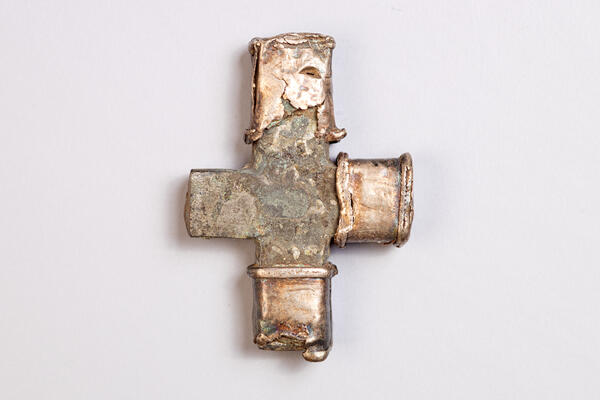
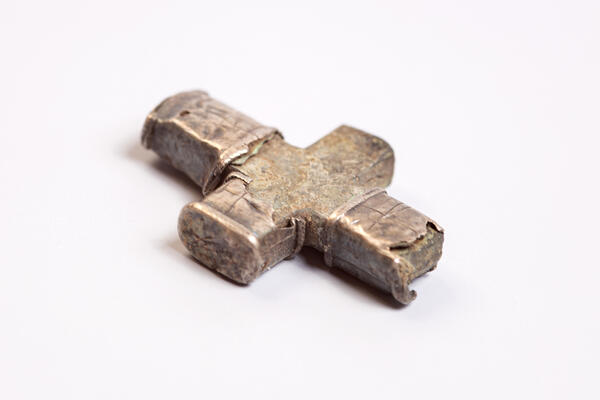
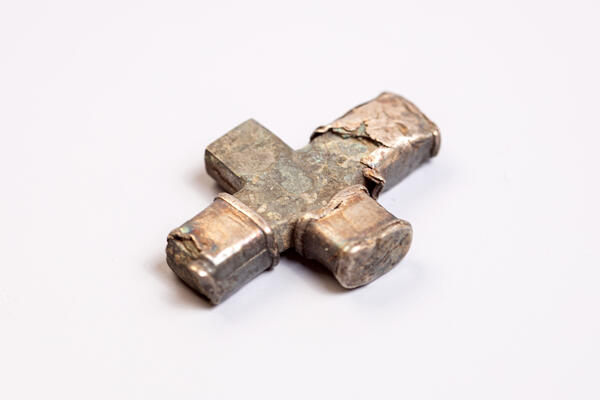
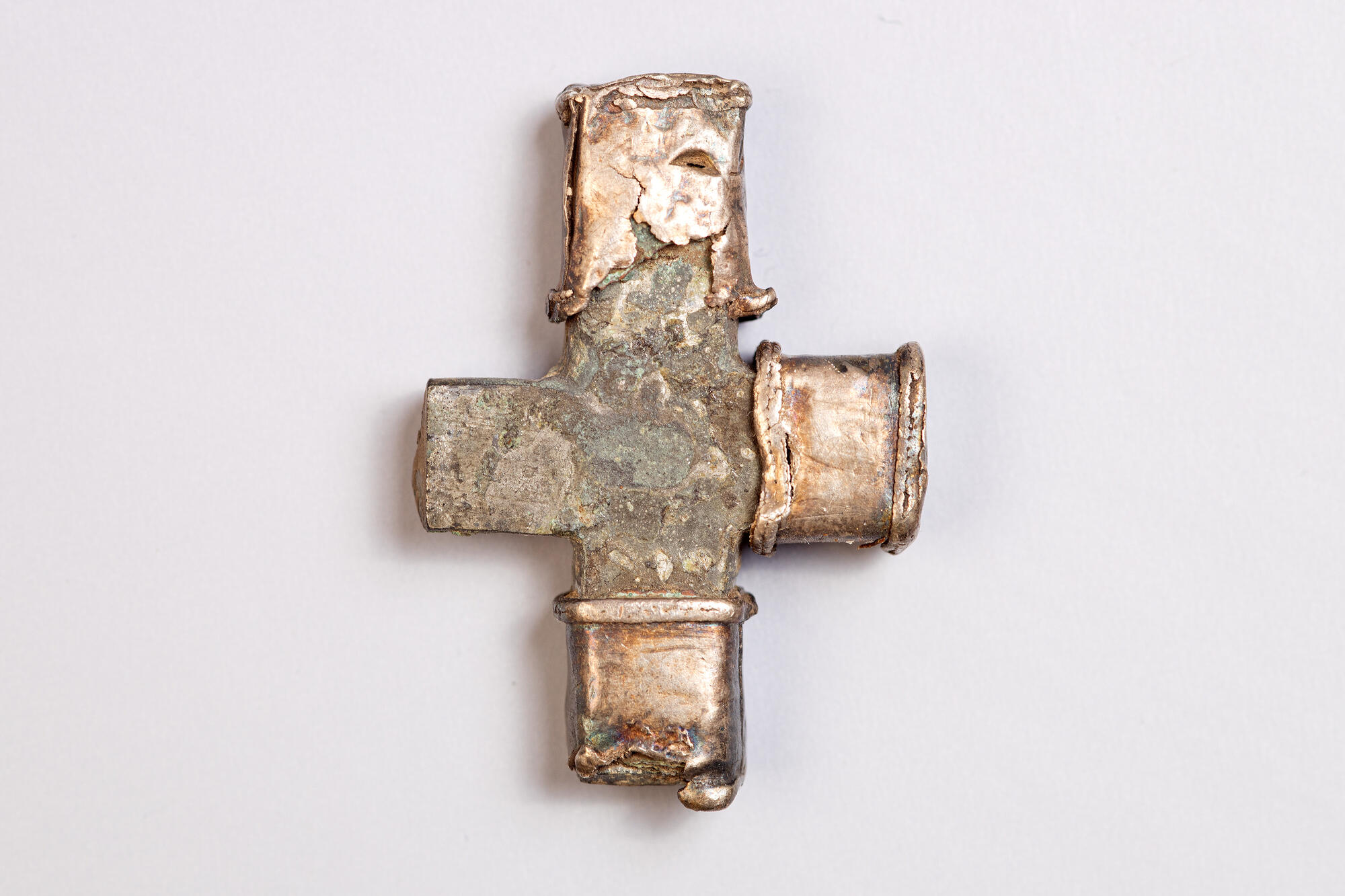
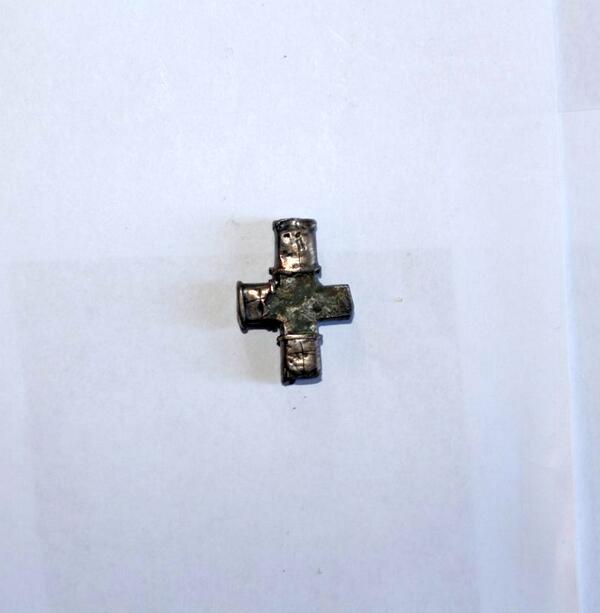
The exhibit from the museum’s collection is made of stone (presumably agalmatolite). It is a straight-ended cross with straight arms and a simple middle part. The vertical bar is longer than the horizontal bar. The stone part is smooth and features no decorative elements. The chapes are made of silver.
Artisans also made crosses from bronze and an alloy of lead and tin. Simple and inexpensive pectoral crosses were in line with the Slavic cultural tradition with its pagan motifs still widespread during the period of Old Rus. However, this style was not an opposition — it was rather a kind of synthesis.
The cross was regarded not only as a symbol of Christian faith and belonging to the Christian community, but it was also endowed with additional meaning, in particular, it acted as a talisman. This is confirmed by the crosses that were found along with other traditional pagan amulets, as well as the combination of a cross with a lunnitsa — crescent-shaped ornaments or axe-shaped pendants.
Quite often, researchers came across crosses that had been carved out of stone. Such objects were small and had simple shapes. Sometimes the ends of the cross were decorated with a silver frame.
Crosses were made of slate, as well as marble. The most ancient type of stone crosses are the so-called “korsunchiki” — crosses that were made in Korsun. Such crosses were discovered in large numbers in the territory of Southern Rus.
Based on the numerous finds, some researchers suggested that stone crosses were also made in Kyiv, a center of stone-cutting. Crosses were worn on laces, which were woven from threads of organic origin. They were frayed and torn, so crosses were lost. That was how personal devotional objects ended up in the cultural layer.
The exhibit from the museum’s collection is made of stone (presumably agalmatolite). It is a straight-ended cross with straight arms and a simple middle part. The vertical bar is longer than the horizontal bar. The stone part is smooth and features no decorative elements. The chapes are made of silver.