Ancient Greek and Roman authors described the Black Sea coast near Sochi and mentioned the peoples living there. In early antiquity (the 6th–1st centuries BCE), the northeastern coast of the Black Sea was inhabited by the Achaean, Zig, and Heniokh tribes, and in the first centuries CE, the main territory of modern Sochi was occupied by the Sanigs, who had previously belonged to the group of the Heniokh tribes. In the Middle Ages, tribes of the Abkhaz-Adyghe language group lived in the Sochi region. In the first half of the 19th century, it was inhabited by the Adyghe (Black Sea Shapsugs), Ubykhs, and Abazins (Sadzy).
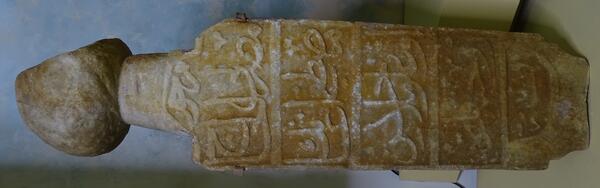
A local legend, recorded in the 1930s, said that three brothers lived in the upper reaches of the Belaya River: Shapsug, Ubykh, and Abdzakh. When they could no longer comfortably share their native land, they went their separate ways: Abdzakh to the north, Shapsug to the west, and Ubykh to the south. Thus, new settlers appeared in the areas of Sochi. The ancestors of the Ubykhs were primarily pagans, but with the arrival of Christian preachers from Byzantium, some of the local population converted to Christianity. Despite the long process of Christianization that lasted until the 16th century, the Ubykhs, Adyghe, and Shapsugs never fully embraced Orthodox Christianity; instead, their beliefs merged elements of Christianity with traditional ethnic practices. Between the 16th and 18th centuries, the Black Sea coast came under the influence of the Ottoman Empire, leading to the Sunni Islamization of the region, which primarily affected the local aristocracy. Arabic script began to spread among the population, and Muslim names started to be adopted. One such beautiful female name — Havva — was carved on a tombstone found near Sochi. This Jewish-Arabic name translates to “life-giver” and corresponds to the non-Muslim form Eve, the foremother of all people in the Abrahamic religions.
The gravestone features an inscription in Arabic, which was copied by the ethnographer Natalya Volkova at the Sochi Museum in 1962 and later published by Leonid Lavrov. The inscription reads: “Berzek Muhammad-aga’s deceased daughter (married) Havva. Al-Fatihah to her soul! 1207.” This indicates that the tombstone was installed between August 18, 1792, and August 7, 1793, on the grave of a member of the Berzek family, one of the most influential noble Ubykh families that resided in the territory of modern Sochi.