#5
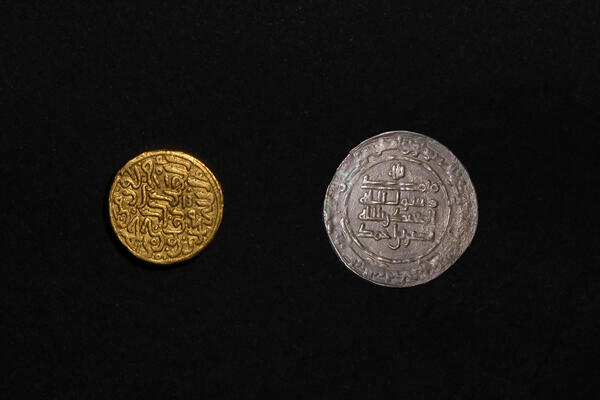
Coin Muhammad bin Tughluq. India, Coin Dirham Nasr ibn Ahmad. Samarqand
#6
#7
#8
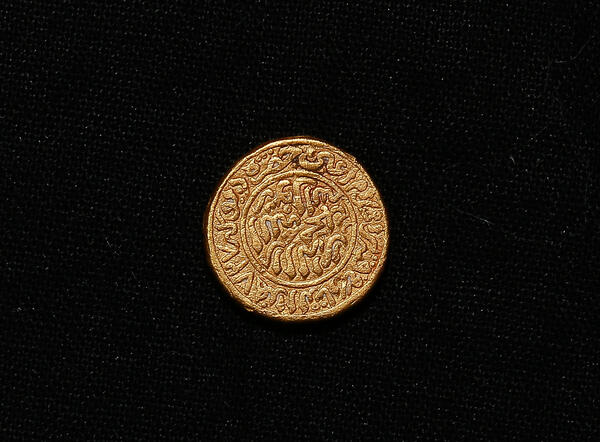
The gold dinar was found on the banks of the AkhtUba River within the SelItrennoye archeological site in the KharabalInsky District of the Astrakhan region. The coin was bought by the Astrakhan Museum Reserve in 1971.
Scientists date the coin to 727 according to the Hegira Muslim calendar (years 1326 - 1327) and to Muhammad bin Tughluq ruling at Deli Sultanate.
Giyas ad-din Muhammad Shah II bin Tughluq (before accession to the throne his name was Jauna Khan) was the Sultan of Delhi in 1325-1351. He came to power after he orchestrated the death of his father, Sultan of Delhi, Giyas ad-din Tughluq Shah. He tried to carry out an agricultural reform, but due to too high taxes and corrupted officials, the reform failed. He tried to move the capital from Delhi to Daulatabad, but this initiative also failed.
An accurate portrait of this Delhi Sultan has come to us. The famous Arab traveler Ibn Battuta who at one time traveled across the entire Islamic world from Morocco to China spent seven years at the court of Muhammad Tughluq. He left a vivid description of the Sultan, his character, his court, and the ruling methods he used.
Muhammad bin Tughluq was one of the most educated people of his time. His Persian and Arabic letters were considered a model of grace and were valued long after his death. He was a renowned calligrapher, knew Persian poetry well, remembered many poems by heart and quoted often and tastefully. He was equally interested in mathematics and physics, logic and philosophy of the Greeks.
The Delhi Sultanate under Muhammad bin Tughluq spread over vast territories. However, the expansion of the country also required funding for military campaigns. The taxes were dramatically increased under Muhammad bin Tughluq, which resulted in leaving the villages by the peasants and uncultivated fields. To replenish the treasury, the ruler introduced a substandard coin made of copper and bronze, which had a negative impact on the country’s economy. However, at the same time, high-grade gold coins were also produced in the country - apart from India, such coins were minted at that time only in Egypt. The Golden Horde traded closely with the Delhi Sultanate, mainly with horses.
Scientists date the coin to 727 according to the Hegira Muslim calendar (years 1326 - 1327) and to Muhammad bin Tughluq ruling at Deli Sultanate.
Giyas ad-din Muhammad Shah II bin Tughluq (before accession to the throne his name was Jauna Khan) was the Sultan of Delhi in 1325-1351. He came to power after he orchestrated the death of his father, Sultan of Delhi, Giyas ad-din Tughluq Shah. He tried to carry out an agricultural reform, but due to too high taxes and corrupted officials, the reform failed. He tried to move the capital from Delhi to Daulatabad, but this initiative also failed.
An accurate portrait of this Delhi Sultan has come to us. The famous Arab traveler Ibn Battuta who at one time traveled across the entire Islamic world from Morocco to China spent seven years at the court of Muhammad Tughluq. He left a vivid description of the Sultan, his character, his court, and the ruling methods he used.
Muhammad bin Tughluq was one of the most educated people of his time. His Persian and Arabic letters were considered a model of grace and were valued long after his death. He was a renowned calligrapher, knew Persian poetry well, remembered many poems by heart and quoted often and tastefully. He was equally interested in mathematics and physics, logic and philosophy of the Greeks.
The Delhi Sultanate under Muhammad bin Tughluq spread over vast territories. However, the expansion of the country also required funding for military campaigns. The taxes were dramatically increased under Muhammad bin Tughluq, which resulted in leaving the villages by the peasants and uncultivated fields. To replenish the treasury, the ruler introduced a substandard coin made of copper and bronze, which had a negative impact on the country’s economy. However, at the same time, high-grade gold coins were also produced in the country - apart from India, such coins were minted at that time only in Egypt. The Golden Horde traded closely with the Delhi Sultanate, mainly with horses.
#13
Date: XIV century AD
Technique: repoussé work
Dimensions: Diameter — 1,7cm
Collection: Astrakhan State Joint Historical and Architectural Museum Reserve
Copyright: Astrakhan State Joint Historical and Architectural Museum Reserve
Goskatalog Number: 17112935
Dimensions: Diameter — 1,7cm
Collection: Astrakhan State Joint Historical and Architectural Museum Reserve
Copyright: Astrakhan State Joint Historical and Architectural Museum Reserve
Goskatalog Number: 17112935
#9
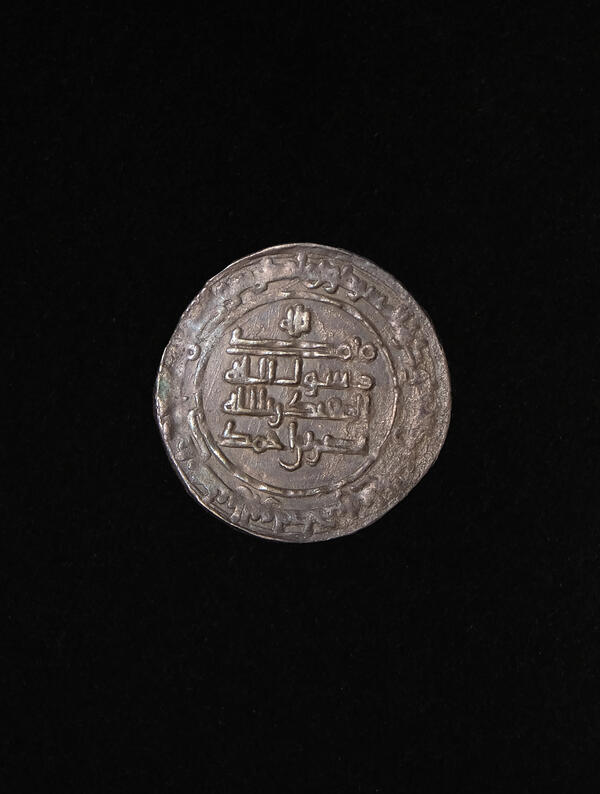
Coin Dirham Nasr ibn Ahmad. Samarqand
#10
#2
A treasure trove containing 12 silver dirhams was found near the village of DosAng of the KrasnoYArsky District in the Astrakhan Region. The find was handed over to the Astrakhan Museum Reserve in 1982.
The dirham was coined in Samarkand in 306 AH (Hegira calendar), according to the Muslim calendar (years 918 - 919) during the reign of Nasr ibn Ahmad from the Samanid dynasty.
The Samanid state existed in Central Asia in 875–999. The capital of the country was the city of Bukhara, today it is located in Uzbekistan. The reign of the Samanids marked a new period in the history of the ‘Iranian cultural continent’. It lasted from the 9th to the 11th centuries, and its peculiarity was that the indigenous Iranian dynasty came to power. The Persian language and culture were reborn. It was under the Samanids that the Iranian poet Ferdowsi began to create the national epic Shahnameh (the Book of Kings). Samarkand and Bukhara became recognized cultural centers.
The political situation in the country has become stable and secure. Changes occurred in agriculture, trade, architecture, urban construction, coinage, fabric making, and metalworking. Merchants began to trade not only with their closest neighbors, but also with distant countries and peoples, for example, with the Volga Khazars and even the Scandinavian Vikings. Fabrics and metal products were exchanged for furs and amber from the Baltic lands. Among Persian goods, ceramics from Nishapur and Samarkand were known. At this time, a new technique for handling clay products appeared. Now it became to preserve the painting after firing and glazing. Vases and plates were the main products, they were decorated with stylized Samanid motifs: horsemen, birds, lions; they also scribed Arabic words. Bronze casting and other metalworking flourished.
Together with merchants, the Samanid coin spread throughout Russia, Scandinavia, the Baltic States and even the British Isles. It was coined in huge quantities. The most important silver veins of Central Asia in Badakhshan and Fargan were controlled by the Emirs of the Samanids — Iranian rulers. Dirham - an Arab silver coin - was introduced into circulation at the end of the 7th century AD. The name is an Arabicized Greek word for drachma. This silver coin was the currency of the Golden Horde.
The dirham was coined in Samarkand in 306 AH (Hegira calendar), according to the Muslim calendar (years 918 - 919) during the reign of Nasr ibn Ahmad from the Samanid dynasty.
The Samanid state existed in Central Asia in 875–999. The capital of the country was the city of Bukhara, today it is located in Uzbekistan. The reign of the Samanids marked a new period in the history of the ‘Iranian cultural continent’. It lasted from the 9th to the 11th centuries, and its peculiarity was that the indigenous Iranian dynasty came to power. The Persian language and culture were reborn. It was under the Samanids that the Iranian poet Ferdowsi began to create the national epic Shahnameh (the Book of Kings). Samarkand and Bukhara became recognized cultural centers.
The political situation in the country has become stable and secure. Changes occurred in agriculture, trade, architecture, urban construction, coinage, fabric making, and metalworking. Merchants began to trade not only with their closest neighbors, but also with distant countries and peoples, for example, with the Volga Khazars and even the Scandinavian Vikings. Fabrics and metal products were exchanged for furs and amber from the Baltic lands. Among Persian goods, ceramics from Nishapur and Samarkand were known. At this time, a new technique for handling clay products appeared. Now it became to preserve the painting after firing and glazing. Vases and plates were the main products, they were decorated with stylized Samanid motifs: horsemen, birds, lions; they also scribed Arabic words. Bronze casting and other metalworking flourished.
Together with merchants, the Samanid coin spread throughout Russia, Scandinavia, the Baltic States and even the British Isles. It was coined in huge quantities. The most important silver veins of Central Asia in Badakhshan and Fargan were controlled by the Emirs of the Samanids — Iranian rulers. Dirham - an Arab silver coin - was introduced into circulation at the end of the 7th century AD. The name is an Arabicized Greek word for drachma. This silver coin was the currency of the Golden Horde.
#12
Date: X century AD
Technique: repoussé work
Dimensions: Diameter — 2,7cm
Collection: State budgetary institution of culture of the Astrakhan region ‘Astrakhan Museum-Reserve’
Copyright: State budgetary institution of culture of the Astrakhan region ‘Astrakhan Museum-Reserve’
Goskatalog Number: 17112943
Technique: repoussé work
Dimensions: Diameter — 2,7cm
Collection: State budgetary institution of culture of the Astrakhan region ‘Astrakhan Museum-Reserve’
Copyright: State budgetary institution of culture of the Astrakhan region ‘Astrakhan Museum-Reserve’
Goskatalog Number: 17112943
read morehide
00:00
00:00
1x
0
 Point your smartphone camera to open in the app
Open in app
Share