

A thaler is a large silver coin, which was in circulation in Europe and in international trade in the 16th–19th centuries. In 1524, the Esslingen Imperial Coin Charter was adopted in the Holy Roman Empire. It fixed the weight at 29.43 g (27.41 g of pure silver).
In Russia, large silver coins from Europe were called “yefimki”: the first part of the word “Joachimsthaler”. The mining of precious metal in Siberia amounted to only a few poods per year, which could not cover the needs of the state. Silver was imported in the form of ingots and coins of the thaler type — yefimki. In Russia, they became a form of raw material for the production of local kopecks.
A trading book contained a chapter “On Yefimki”. It said that a foreign merchant had several opportunities to dispose of thalers. He could hand them over to the state for 36–36.5 kopecks. In the event that the merchant gave his full-weight Reichsthaler weighing 29 g to the mint for redistribution, he received 38–38.5 kopecks. The Mint also made profit, as it minted yefimki at 43.5–44.5 kopecks.
The use of foreign coins directly in trading operations was prohibited. If found, the coin was subject to confiscation, and the merchant was subject to a fine. Such legislative restrictions reduced the market rate of yefimka to 33–33.5 kopecks on the domestic market.
Ort (translated from German as “one fourth”) was a German silver coin of the 16th–18th centuries. It was equal to a quarter of a thaler. The obverse of the ortstaler featured the imperial eagle and the number 4, and the reverse — the inscription “Ortstaler”.
Since 1608, the ort began to be minted in Gdansk, after which it became widespread in the Polish–Lithuanian Commonwealth. Since 1618, such coins began to be made in Bydgoszcz, then in other mints in Poland.
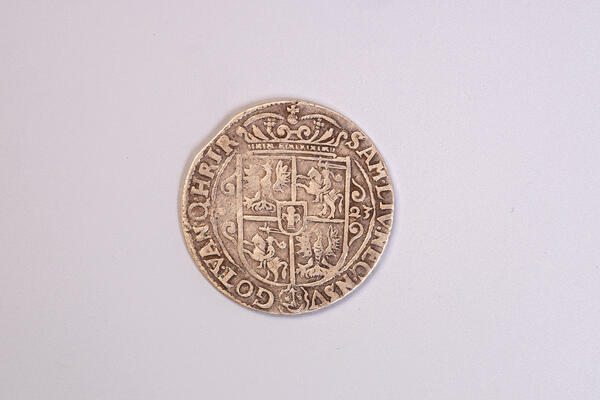
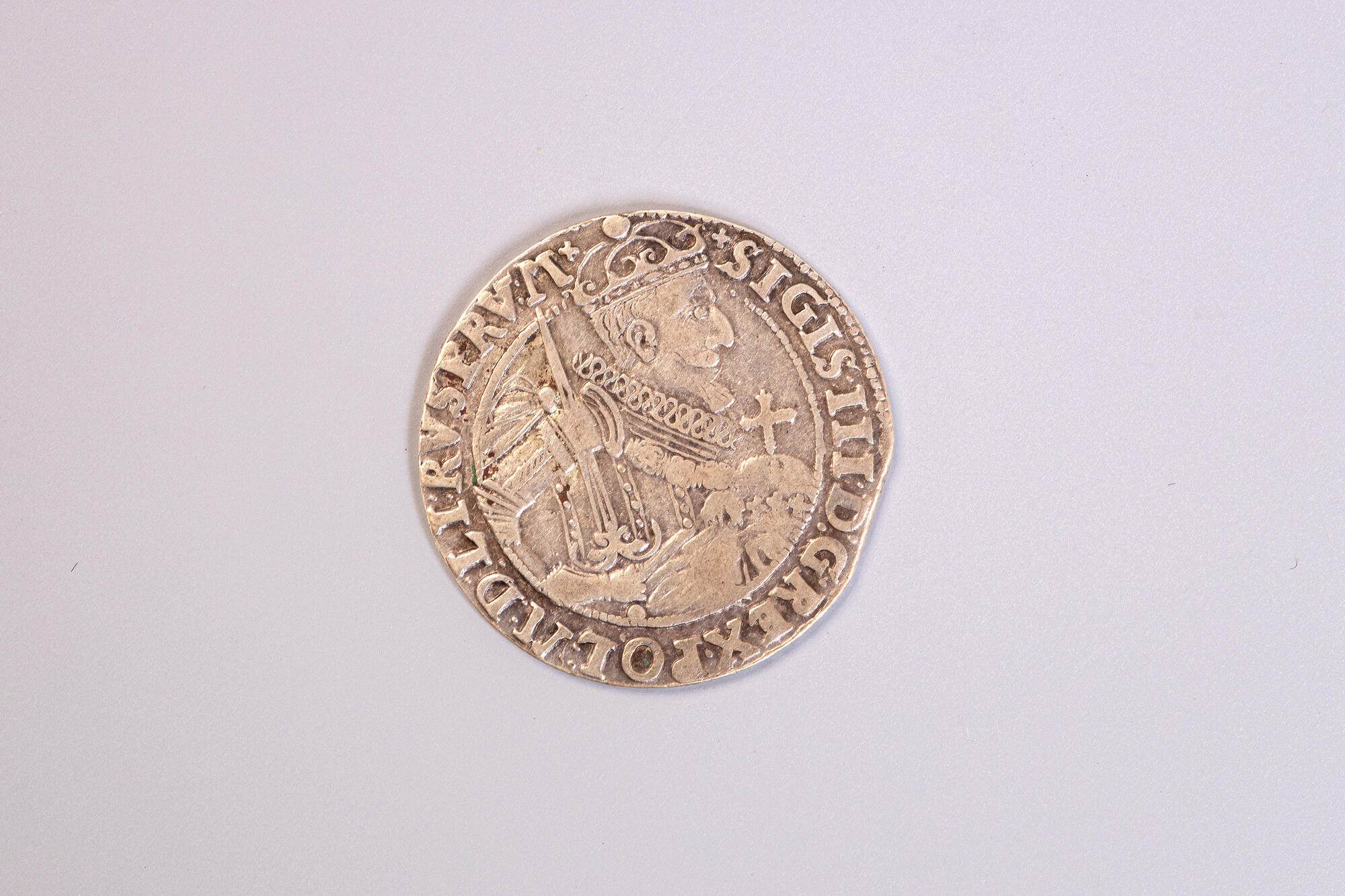
In the center, the front side bears a profile of King Sigismund III of Poland turned to the right in a crown, with a scepter and an orb. The linear rim contains the letters SIGIZ III DG REX.POL.MD.LI.RVS.PRVS.M (“Sigismund the Third, by God’s grace King of Poland, Grand Duke of Lithuania, Russian, Prussian, Mazovian”). This type of an ort is displayed in the museum.
In Russia, large silver coins from Europe were called “yefimki”: the first part of the word “Joachimsthaler”. The mining of precious metal in Siberia amounted to only a few poods per year, which could not cover the needs of the state. Silver was imported in the form of ingots and coins of the thaler type — yefimki. In Russia, they became a form of raw material for the production of local kopecks.
A trading book contained a chapter “On Yefimki”. It said that a foreign merchant had several opportunities to dispose of thalers. He could hand them over to the state for 36–36.5 kopecks. In the event that the merchant gave his full-weight Reichsthaler weighing 29 g to the mint for redistribution, he received 38–38.5 kopecks. The Mint also made profit, as it minted yefimki at 43.5–44.5 kopecks.
The use of foreign coins directly in trading operations was prohibited. If found, the coin was subject to confiscation, and the merchant was subject to a fine. Such legislative restrictions reduced the market rate of yefimka to 33–33.5 kopecks on the domestic market.
Ort (translated from German as “one fourth”) was a German silver coin of the 16th–18th centuries. It was equal to a quarter of a thaler. The obverse of the ortstaler featured the imperial eagle and the number 4, and the reverse — the inscription “Ortstaler”.
Since 1608, the ort began to be minted in Gdansk, after which it became widespread in the Polish–Lithuanian Commonwealth. Since 1618, such coins began to be made in Bydgoszcz, then in other mints in Poland.
In the center, the front side bears a profile of King Sigismund III of Poland turned to the right in a crown, with a scepter and an orb. The linear rim contains the letters SIGIZ III DG REX.POL.MD.LI.RVS.PRVS.M (“Sigismund the Third, by God’s grace King of Poland, Grand Duke of Lithuania, Russian, Prussian, Mazovian”). This type of an ort is displayed in the museum.