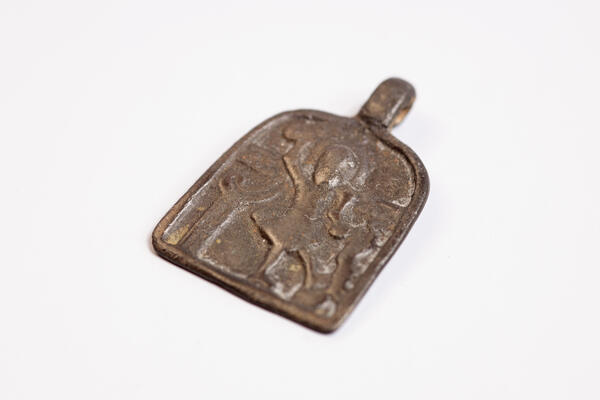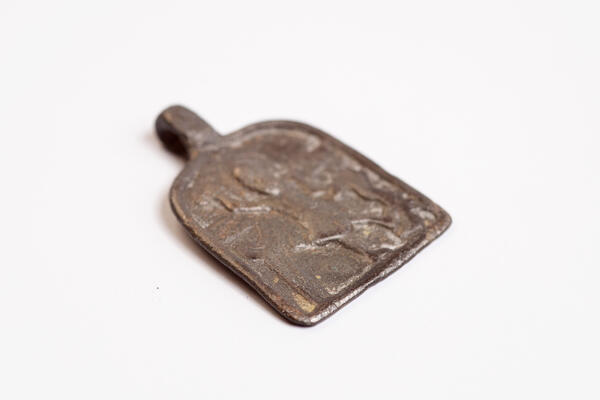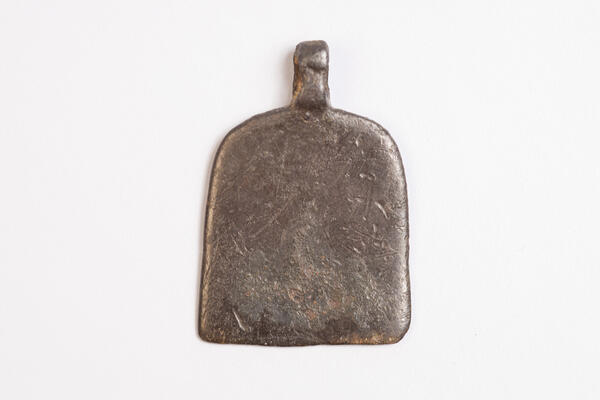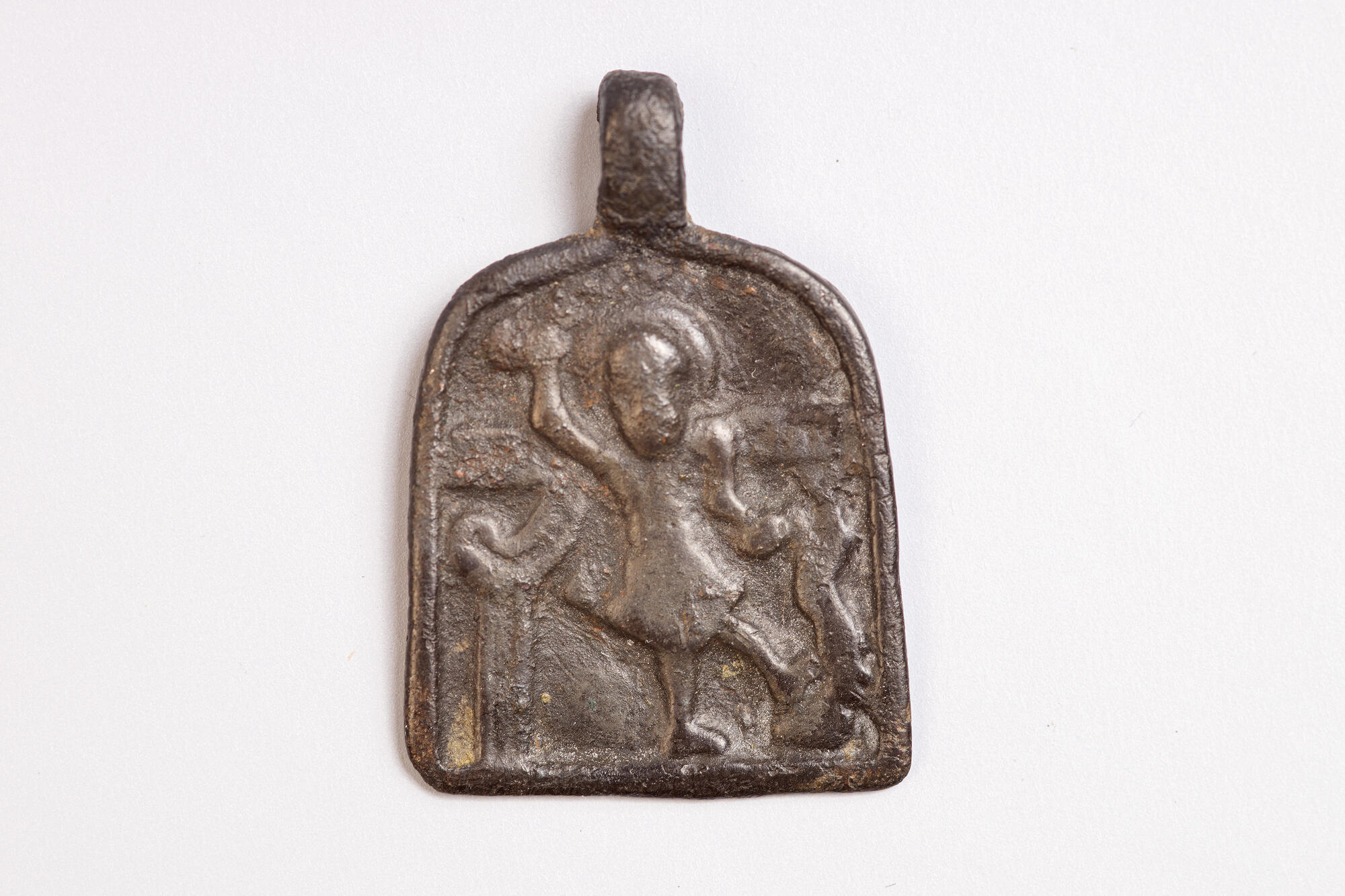


Pendant icons depicting St. Nikita beating a demon are an artifact of the Russian Middle Ages, which is quite often found by archaeologists. Such images were called Besogony.
These icons depict the same plot from the Byzantine apocrypha. The son of Emperor Maximilian, Nikita, adopted the Christian faith, which caused the discontent of his pagan father. The father threw his son into prison, where he experienced various torments. In prison, a demon appeared to Nikita, who took on an angelic appearance and began to persuade him to renounce his faith in order to stop the torture.
Nikita did not believe the false messenger and began to pray to the Lord. Archangel Michael appeared to Maximilian’s son and told him to test the angel. Then Nikita grabbed the demon and beat him with the chains in which he was shackled. The devil showed his true self, and was expelled.
This story was very popular. Saint Nikita gained fame as a protector against demons. There were prayers in which people turned to the saint for help. The earliest depiction of Nikita beating a demon dates back to the 12th century. However, the peak of his popularity among Russian artisans occurred from the 14th to the 17th century. Images of Nikita could be found on icons, pendant icons, carved in stone and other materials.
In the 17th century, the life of Nikita beating a demon turned out to be apocryphal, that is, the story was not sacred, and was among the forbidden Christian books. Since then, the number of crosses and icons with his image drastically decreased, and his veneration remained only in the Old Believer communities.
The pendant icon from the museum’s collection depicts Nikita with a halo around his head. One of his hands is raised up — the saint holds an elongated object, which can be a sword or a stick. Nikita grabbed the demon and holds him tightly with the other hand and trampled him with one foot. Nikita himself is depicted in short tunic-like clothes and a cloak. Behind the saint’s back, there is some stripe that probably denotes a dungeon.
These icons depict the same plot from the Byzantine apocrypha. The son of Emperor Maximilian, Nikita, adopted the Christian faith, which caused the discontent of his pagan father. The father threw his son into prison, where he experienced various torments. In prison, a demon appeared to Nikita, who took on an angelic appearance and began to persuade him to renounce his faith in order to stop the torture.
Nikita did not believe the false messenger and began to pray to the Lord. Archangel Michael appeared to Maximilian’s son and told him to test the angel. Then Nikita grabbed the demon and beat him with the chains in which he was shackled. The devil showed his true self, and was expelled.
This story was very popular. Saint Nikita gained fame as a protector against demons. There were prayers in which people turned to the saint for help. The earliest depiction of Nikita beating a demon dates back to the 12th century. However, the peak of his popularity among Russian artisans occurred from the 14th to the 17th century. Images of Nikita could be found on icons, pendant icons, carved in stone and other materials.
In the 17th century, the life of Nikita beating a demon turned out to be apocryphal, that is, the story was not sacred, and was among the forbidden Christian books. Since then, the number of crosses and icons with his image drastically decreased, and his veneration remained only in the Old Believer communities.
The pendant icon from the museum’s collection depicts Nikita with a halo around his head. One of his hands is raised up — the saint holds an elongated object, which can be a sword or a stick. Nikita grabbed the demon and holds him tightly with the other hand and trampled him with one foot. Nikita himself is depicted in short tunic-like clothes and a cloak. Behind the saint’s back, there is some stripe that probably denotes a dungeon.