

Whistles have long been among favorite children’s toys. A whistle is a hollow ceramic vessel that develops ear for music and fine motor skills. On the territory of the Smolensk region, which has always been famous for its clays, whistles are still widespread.
All social classes could afford a whistle. Initially, a potter’s main occupation was making ceramic dishes and whistles were considered a by-product of this job. Whistles were made from small lumps of clay, which remained from the manufacture of pots, jugs, bowls, and dishes.
After a series of reforms that were aimed to improve the life of collective farmers in the Soviet Union, one of which was the replacement of workdays with the payment of wages, the demand for ceramic vessels in the country strikingly decreased. Villagers were able to buy more wear-resistant metal utensils more often. So, the quantity and quality of ceramic whistles has increased significantly in many areas.
When making a whistle, the artisan punched several through holes for the air. Depending on which holes were closed with fingers during the game, the frequency of sound vibrations, that is, the pitch, changed. Due to this, a whistle could be used to play a simple melody.
Despite the seeming simplicity, making a whistle is a complex process. When fired, the hollow mold may crack. In addition, the sound pitch inevitably changes during firing, which must be taken into account. It is almost impossible to find at least two identical whistles.
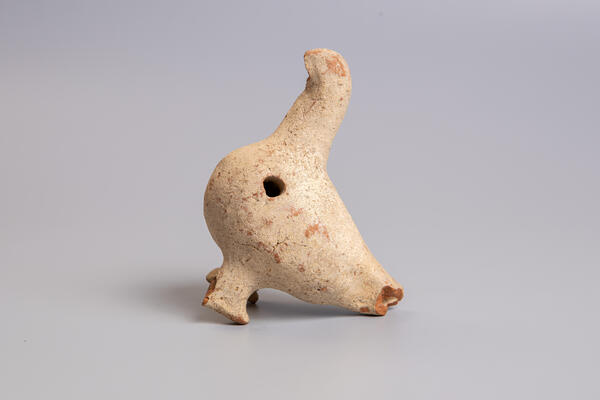
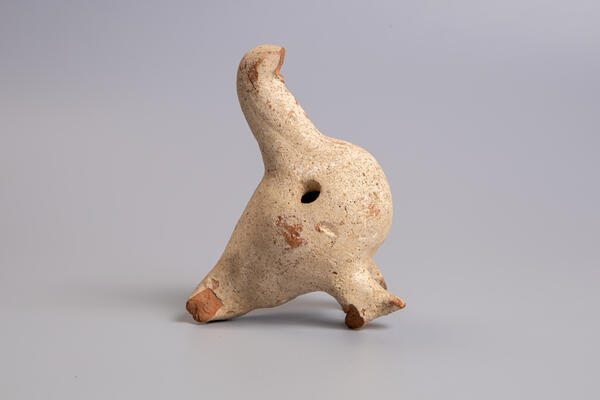
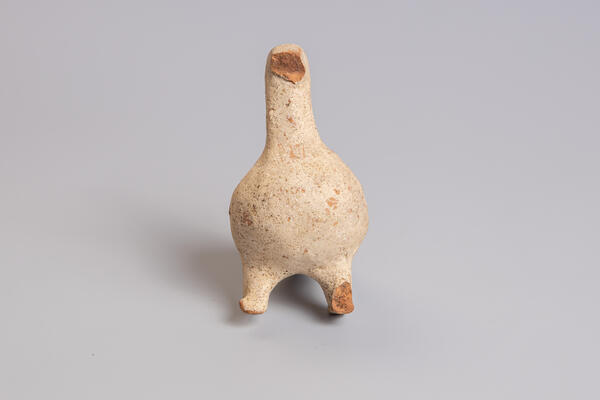
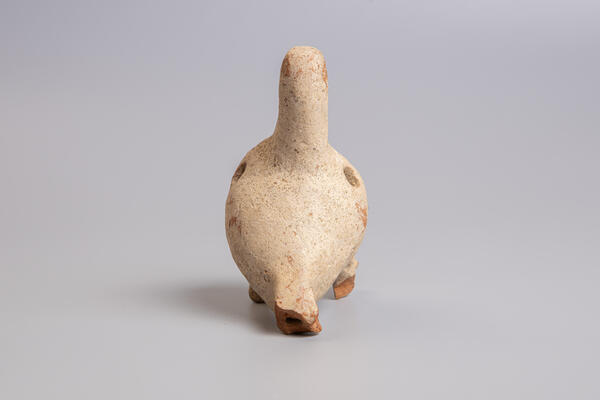
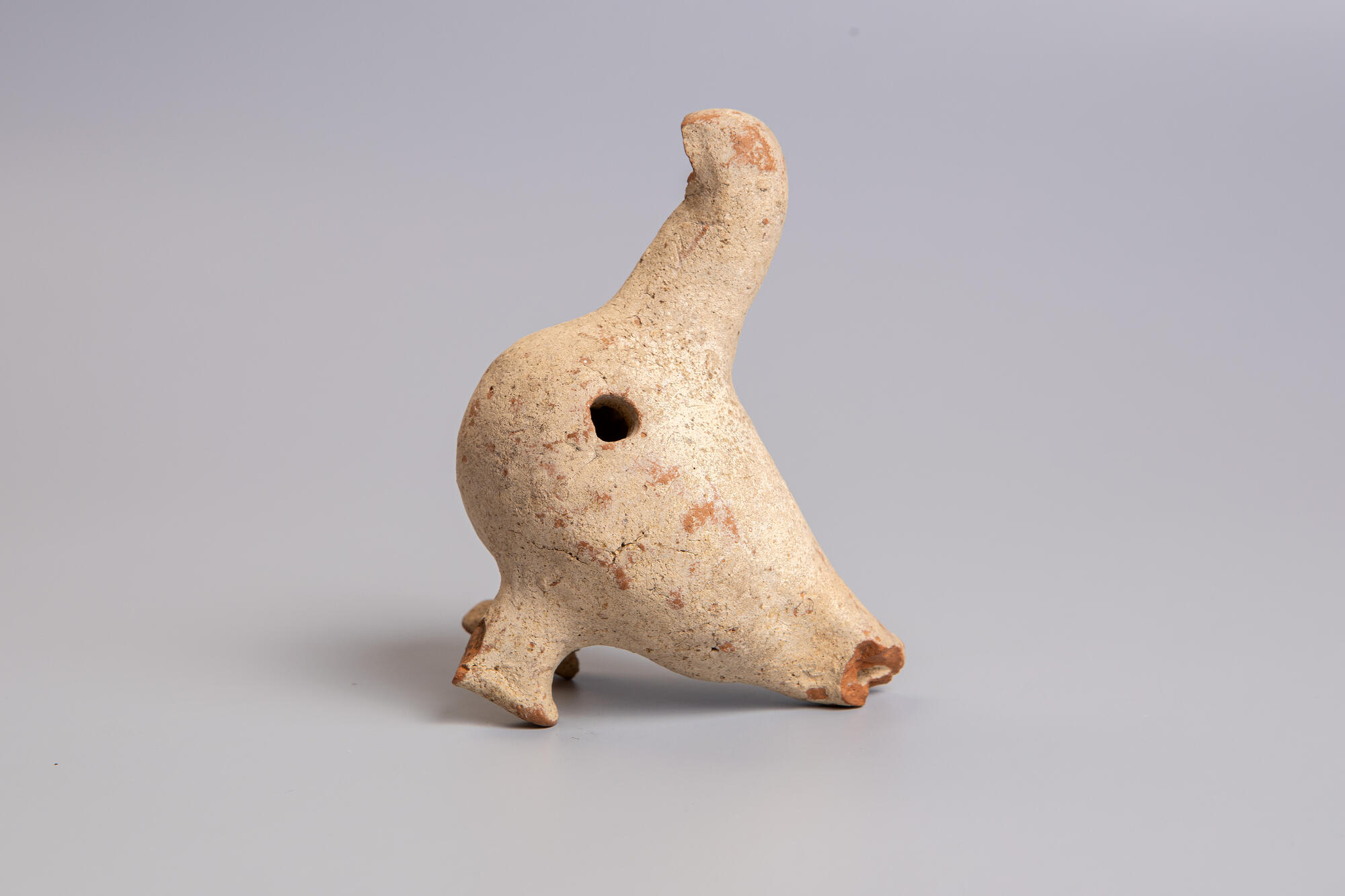
The decorative processing of the whistle —a colorful coating, a three-dimensional pattern and glaze — also affects the sound pitch. The whistle from the collection of the Museum “The Smolensk Fortress” has a popular zoomorphic shape. The two front paws were added to the main body, so that the whistle rested securely on three points of support. The artisan also sculpted a stylized head with a neck. Whistles of this type could be inspired by the image of a bird, an animal, or even a reptile.
All social classes could afford a whistle. Initially, a potter’s main occupation was making ceramic dishes and whistles were considered a by-product of this job. Whistles were made from small lumps of clay, which remained from the manufacture of pots, jugs, bowls, and dishes.
After a series of reforms that were aimed to improve the life of collective farmers in the Soviet Union, one of which was the replacement of workdays with the payment of wages, the demand for ceramic vessels in the country strikingly decreased. Villagers were able to buy more wear-resistant metal utensils more often. So, the quantity and quality of ceramic whistles has increased significantly in many areas.
When making a whistle, the artisan punched several through holes for the air. Depending on which holes were closed with fingers during the game, the frequency of sound vibrations, that is, the pitch, changed. Due to this, a whistle could be used to play a simple melody.
Despite the seeming simplicity, making a whistle is a complex process. When fired, the hollow mold may crack. In addition, the sound pitch inevitably changes during firing, which must be taken into account. It is almost impossible to find at least two identical whistles.
The decorative processing of the whistle —a colorful coating, a three-dimensional pattern and glaze — also affects the sound pitch. The whistle from the collection of the Museum “The Smolensk Fortress” has a popular zoomorphic shape. The two front paws were added to the main body, so that the whistle rested securely on three points of support. The artisan also sculpted a stylized head with a neck. Whistles of this type could be inspired by the image of a bird, an animal, or even a reptile.