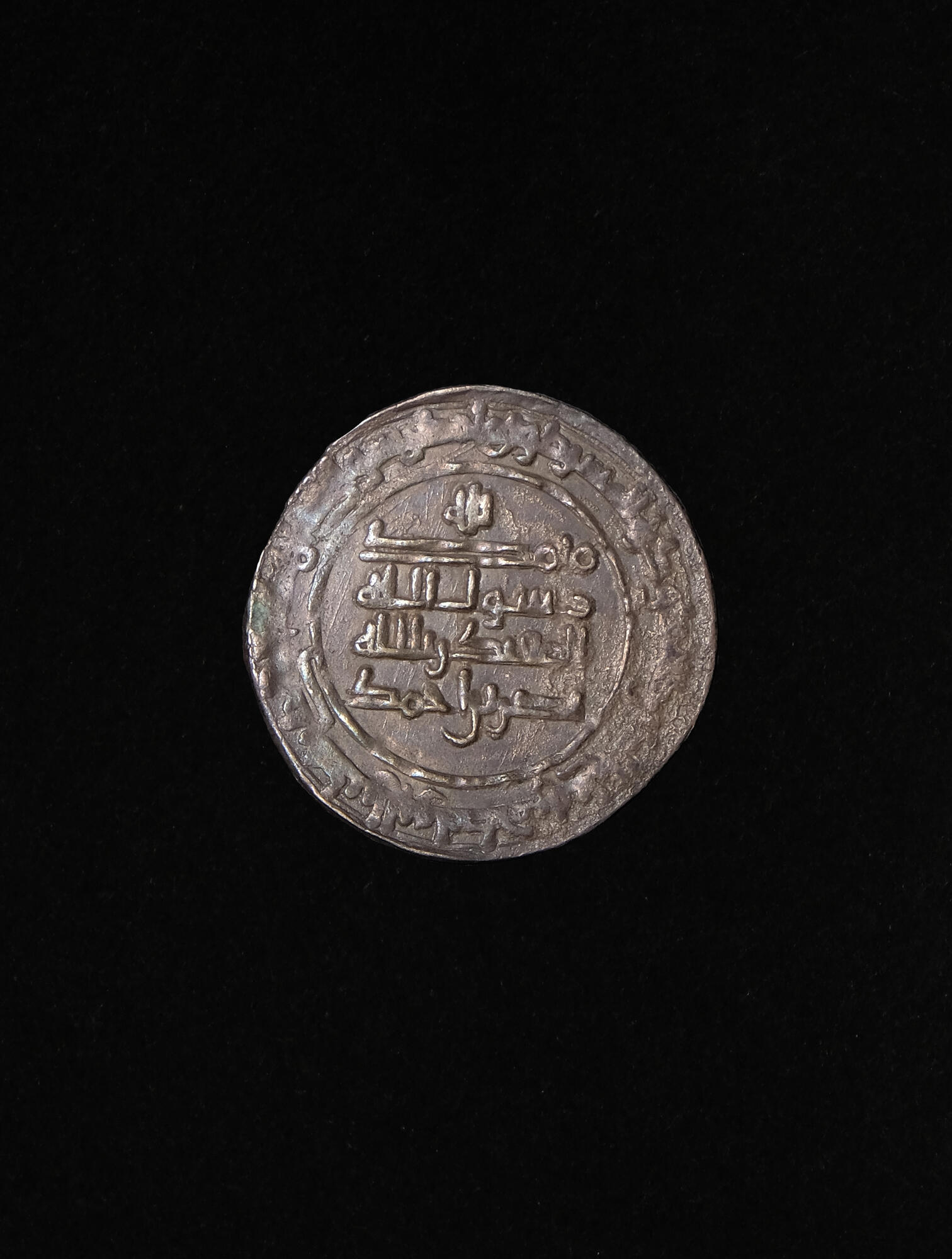


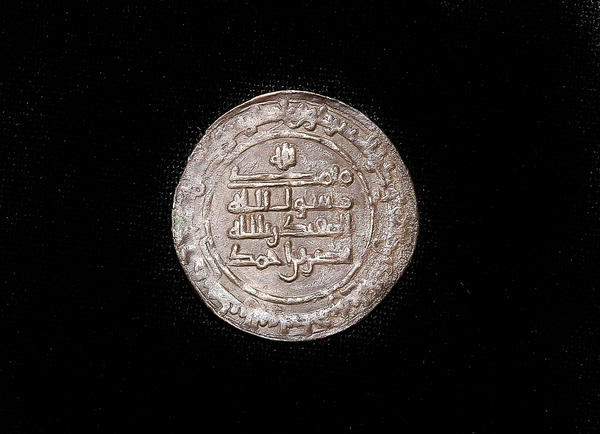
A treasure trove containing 12 silver dirhams was found near the village of DosAng of the KrasnoYArsky District in the Astrakhan Region. The find was handed over to the Astrakhan Museum Reserve in 1982.
The dirham was coined in Samarkand in 306 AH (Hegira calendar), according to the Muslim calendar (years 918 - 919) during the reign of Nasr ibn Ahmad from the Samanid dynasty.
The Samanid state existed in Central Asia in 875–999. The capital of the country was the city of Bukhara, today it is located in Uzbekistan. The reign of the Samanids marked a new period in the history of the ‘Iranian cultural continent’. It lasted from the 9th to the 11th centuries, and its peculiarity was that the indigenous Iranian dynasty came to power. The Persian language and culture were reborn. It was under the Samanids that the Iranian poet Ferdowsi began to create the national epic Shahnameh (the Book of Kings). Samarkand and Bukhara became recognized cultural centers.
The political situation in the country has become stable and secure. Changes occurred in agriculture, trade, architecture, urban construction, coinage, fabric making, and metalworking. Merchants began to trade not only with their closest neighbors, but also with distant countries and peoples, for example, with the Volga Khazars and even the Scandinavian Vikings. Fabrics and metal products were exchanged for furs and amber from the Baltic lands. Among Persian goods, ceramics from Nishapur and Samarkand were known. At this time, a new technique for handling clay products appeared. Now it became to preserve the painting after firing and glazing. Vases and plates were the main products, they were decorated with stylized Samanid motifs: horsemen, birds, lions; they also scribed Arabic words. Bronze casting and other metalworking flourished.
Together with merchants, the Samanid coin spread throughout Russia, Scandinavia, the Baltic States and even the British Isles. It was coined in huge quantities. The most important silver veins of Central Asia in Badakhshan and Fargan were controlled by the Emirs of the Samanids — Iranian rulers. Dirham - an Arab silver coin - was introduced into circulation at the end of the 7th century AD. The name is an Arabicized Greek word for drachma. This silver coin was the currency of the Golden Horde.
The dirham was coined in Samarkand in 306 AH (Hegira calendar), according to the Muslim calendar (years 918 - 919) during the reign of Nasr ibn Ahmad from the Samanid dynasty.
The Samanid state existed in Central Asia in 875–999. The capital of the country was the city of Bukhara, today it is located in Uzbekistan. The reign of the Samanids marked a new period in the history of the ‘Iranian cultural continent’. It lasted from the 9th to the 11th centuries, and its peculiarity was that the indigenous Iranian dynasty came to power. The Persian language and culture were reborn. It was under the Samanids that the Iranian poet Ferdowsi began to create the national epic Shahnameh (the Book of Kings). Samarkand and Bukhara became recognized cultural centers.
The political situation in the country has become stable and secure. Changes occurred in agriculture, trade, architecture, urban construction, coinage, fabric making, and metalworking. Merchants began to trade not only with their closest neighbors, but also with distant countries and peoples, for example, with the Volga Khazars and even the Scandinavian Vikings. Fabrics and metal products were exchanged for furs and amber from the Baltic lands. Among Persian goods, ceramics from Nishapur and Samarkand were known. At this time, a new technique for handling clay products appeared. Now it became to preserve the painting after firing and glazing. Vases and plates were the main products, they were decorated with stylized Samanid motifs: horsemen, birds, lions; they also scribed Arabic words. Bronze casting and other metalworking flourished.
Together with merchants, the Samanid coin spread throughout Russia, Scandinavia, the Baltic States and even the British Isles. It was coined in huge quantities. The most important silver veins of Central Asia in Badakhshan and Fargan were controlled by the Emirs of the Samanids — Iranian rulers. Dirham - an Arab silver coin - was introduced into circulation at the end of the 7th century AD. The name is an Arabicized Greek word for drachma. This silver coin was the currency of the Golden Horde.