The Russians called the Shors “Kuznetsk people” or “Kuznetsk Tatars”. Until the 19thcentury, iron smelting and processing was the main occupation of these people, especially of those living in the north.
The historian Valery Makarovich Kimeyev wrote that traditional metalworking was the most “successful craft… mastered by the ancestors of the Shors — the Aba and Biryusinians” in the 17th and 18th centuries. The archaeologists, including Yuri Viktorovich Shirin, attribute the traces “of bloomery iron and the remains of hundreds of iron smelting furnaces” to this period.
The Kuznetsk people used iron products (“armor and iron arrows, and cauldrons”) to trade them for the felt and livestock provided by the nomads. The Shors also sold ironware to Russian merchants and used it to pay “yasak” — “30–40 pieces of iron ore (about 1 pood)… for one sable.”
However, according to archaeological finds, this craft was in decline at the end of the 18thcentury. Kimeyev attributes this to several reasons: competition with South Siberian Russian craftsmen, increased demand for furs and the Yenisei Kyrgyz and Teleuts, who were especially interested in Shor weapons, leaving the “political arena.” At the turn of the 19thcentury, the Russian influence made traditional Shor blacksmithing almost completely disappear.
Local blacksmiths continued to forge parts of agricultural tools, such as plows, knives, forks, shovels, hammers, sickles, axes, and scythes.
Before sharpening, the scythe blade is first hammered. If the scythe is sharpened without this preliminary preparation, especially if sharpening machines are used, then it gets dull faster.
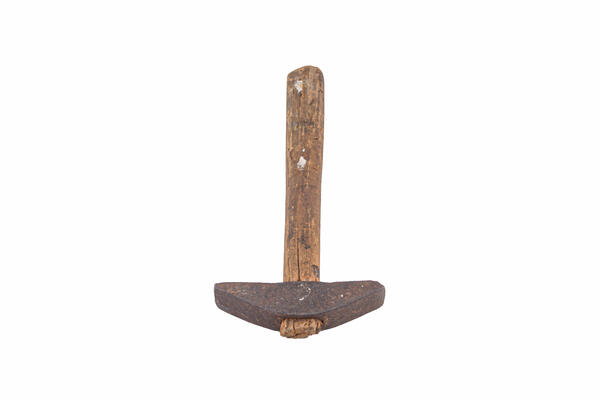
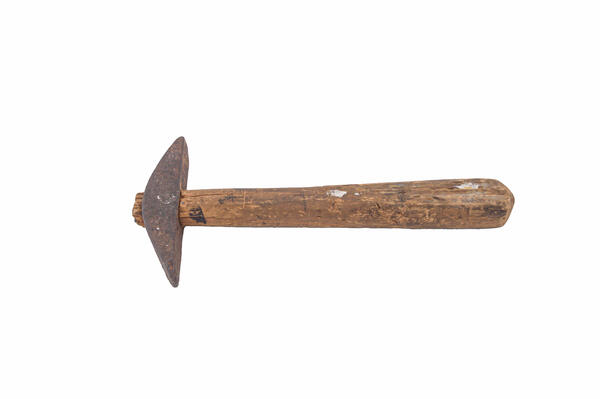
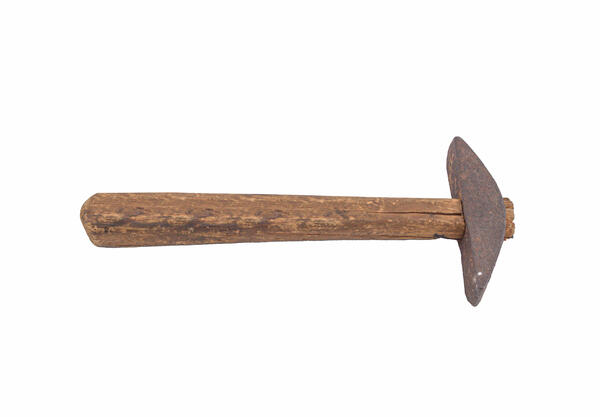
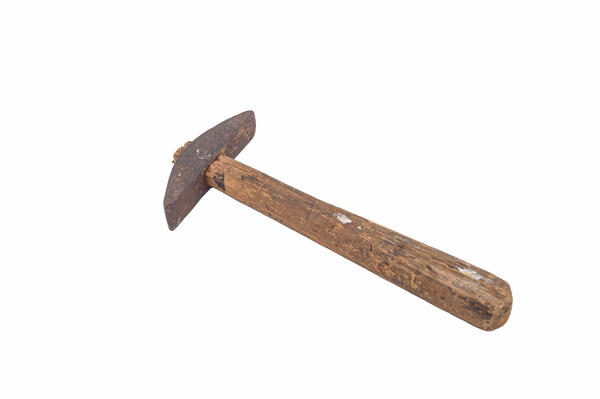
For high-quality work, the craftsmen used a forged double-sided hammer for scythes and an anvil or a pinning jig that was hammered into a stump block.
The entire blade of the scythe was hammered from
the heel to the toe at least twice. No section of the blade was struck two
times in a row. Later (it could be also done during the work process), the
blade was adjusted using an iron rod and sharpened with fine-grained whetstone.
After this treatment, the sharpened scythe could be used for mowing for 3–4 or
even 7–8 hours.