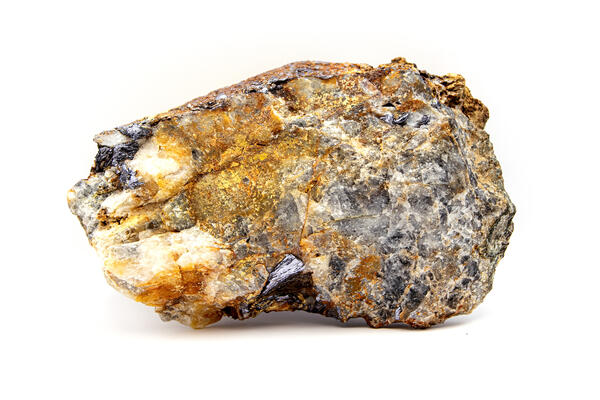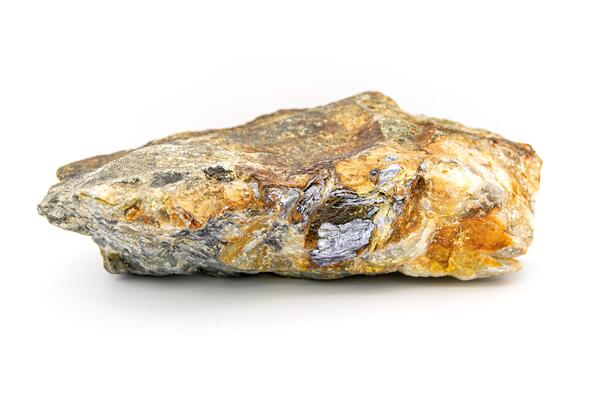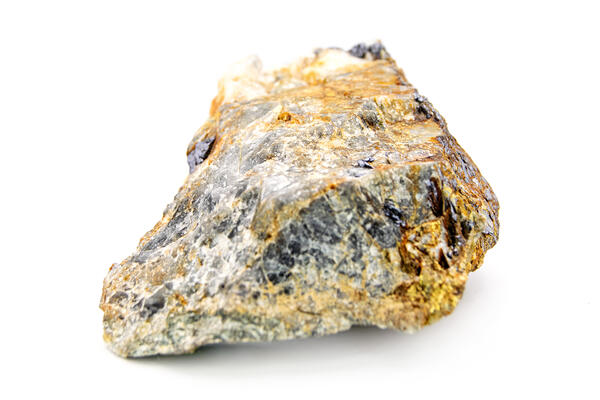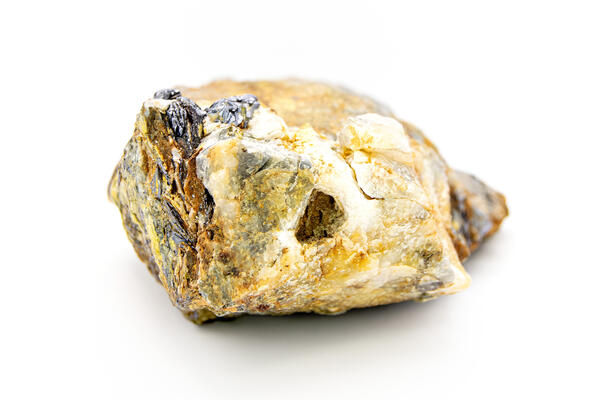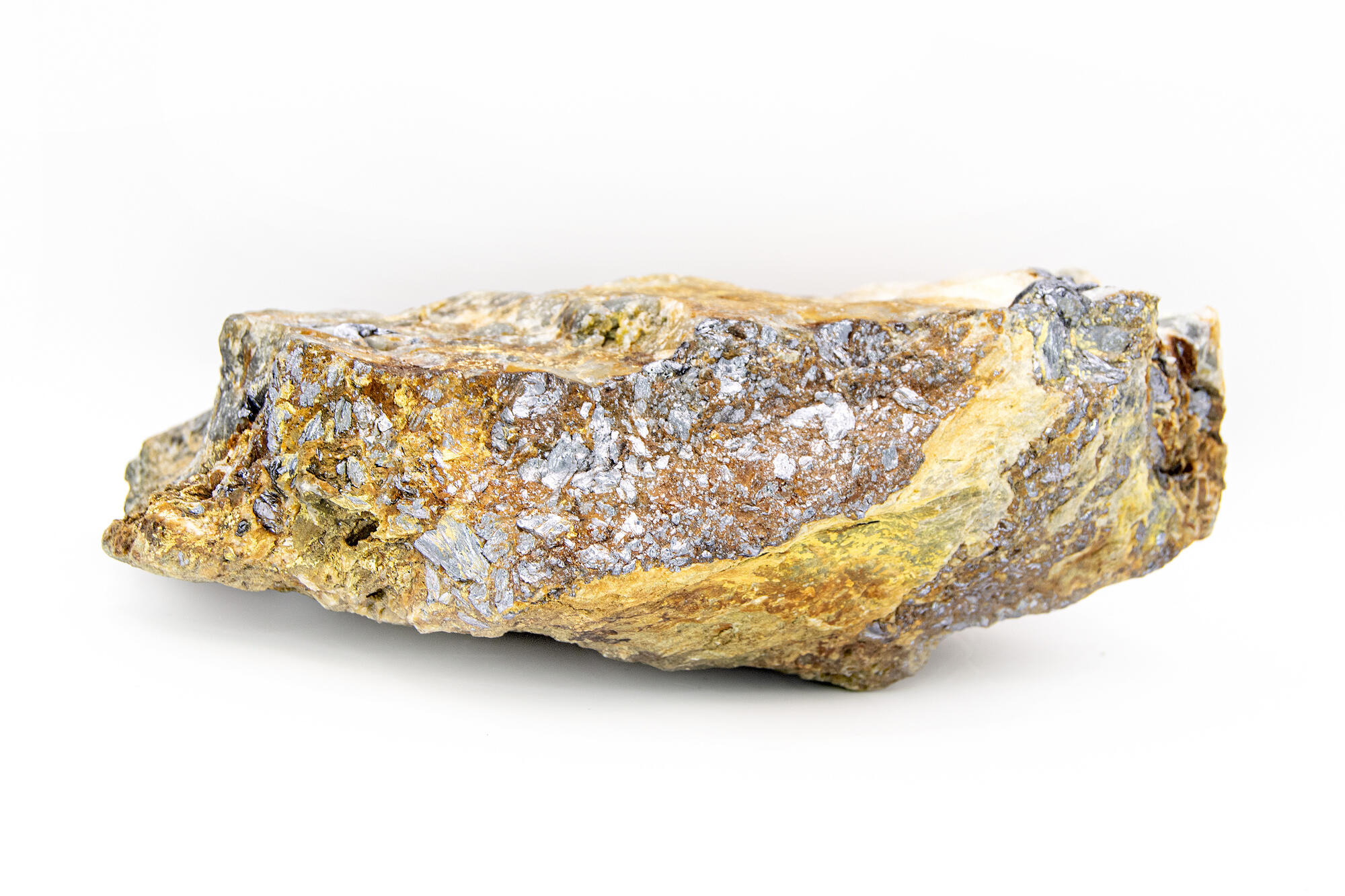


Molybdenum, discovered in 1778, is a rarely used chemical element. Interestingly, the name “molybdenum” had appeared long before the element was discovered. It was the name given to mock ore (molybdenum) and metallic lead (molybdos) minerals. Lead and mock ore were very similar to each other.
The industrial development of molybdenum in the Polar Urals was part of a strategic plan to establish a powerful ore base of the country in this region. The Salekhard–Igarka Railway was also a significant part of this plan and was planned to be extended to the other most important raw material regions — Norilsk and Kolyma. In 1944, under the leadership of Georgy Sofronov, the geologists Aleksey Blokhin and Ivan Sulimov, persecuted for political reasons, discovered a molybdenum deposit in Kharbey.
The Kharbey tungsten and molybdenum ore deposit is a unique geological object with molybdenum-rich ores and large molybdenite segregations. The main ore components are molybdenum, tungsten, copper, silver, platinoids, tin, and rhenium. Molybdenum and tungsten are used in alloys for making tank and ship armor, artillery guns, shells, and speedy high-precision machines. Molybdenum and its alloys are refractory materials. It is used in alloy building as a component that is resistant to heat and corrosion. Molybdenum wire is used in the manufacture of high-temperature furnaces and electric current inputs in incandescent lamps. These refractory metals and alloys are used in the skin of rocket heads and airplanes, elements of the rocket shell construction, honeycomb panels of spacecrafts, heat exchangers, shells of rockets and capsules returning from space, and heat shields. The ability of such materials to preserve their high endurance and hardness at elevated temperatures led to their use as a tool for hot working of steels and alloys, and they are also used in the manufacture of the most critical parts and products.
Molybdenum is a promising
material for equipment that operates in corrosive environments (with sulfuric,
hydrochloric and phosphoric acids). The mineral is widely used in the radio electronics
industry and X-ray engineering for the manufacture of various parts of
electronic lamps, X-ray tubes and other vacuum devices. In the coatings and
light industries, it is used for making paints and varnishes, as well as for
dyeing fabrics and furs.