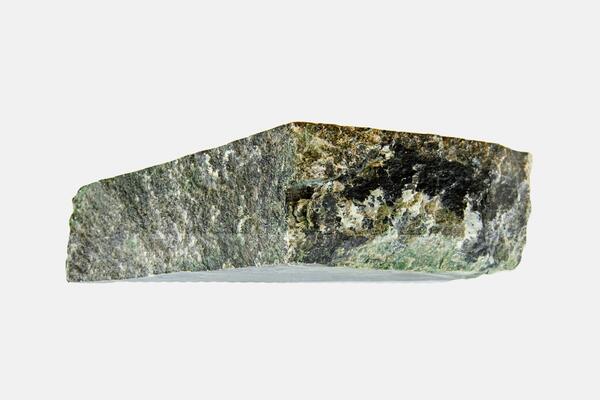
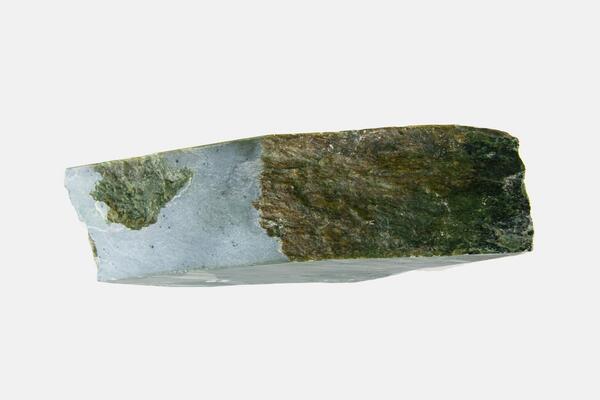
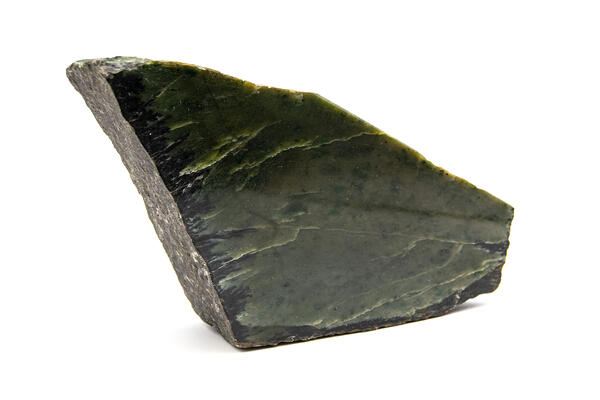
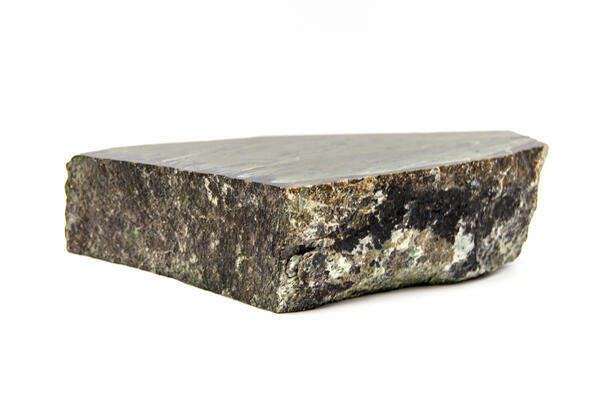
Nephrite is a unique stone, a mineral of the amphibole group with a characteristic fibrous structure. Translucent, vaguely spotted, nephrite has a wide palette of colors, from almost white, through all shades of green (yellowish, grassy, emerald, willow green), to brown and almost black. Also, white, grayish, blue, and red varieties of nephrite are very rare and very valuable. The coloring depends on the content of iron and admixtures of chrome and manganese. Samples with a monochromatic shade are more valuable than those with a more irregular shade, such as striped, spotty, or “cloudy”. Nephrite is a semi-precious stone, used to make jewelry and ornaments.
One of the valuable qualities of this mineral is its extremely high impact toughness: nephrite is difficult to crack. This is all due to the microstructure of nephrite. It is often compared to felt, where fine threads are firmly woven together. It has been in use since the Neolithic period, as a durable weapon, tool and cult object, and later as household goods and jewelry.
It owes its name to its appearance. The small pebbles of nephrite, polished with river water, resemble a human kidney (from the Greek νεφρό — kidney). Not surprisingly, the first use of this stone in ancient medicine was aimed specifically at treating kidney disease. From time immemorial, nephrite has been so highly valued for its properties that it was considered a sacred stone. Ancient Chinese philosophers compared the properties of nephrite to the best qualities of one’s soul. Its hardness stood for justice and moderation, its gentle luster for mercy, its purity for wisdom, its translucence for honesty, and its changeability for courage. In China, Nephrite was considered a symbol of power, immortality and perfection and was valued above silver and gold.
The stone is mined in China,
Australia, Canada, USA, Kazakhstan, Russia, Italy, Germany, Sweden, British
Columbia, Polynesia and the Pamirs. The well-known and popular nephrite deposit
in the Polar Urals is Nyrdvomenshorskoye in the Rai-Iz massif, or Nephrite
Valley. Nephrite in the form of boulders is found in the bed and floodplain of
the Nyrdvomenshor brook. The deposit was discovered in 1973.