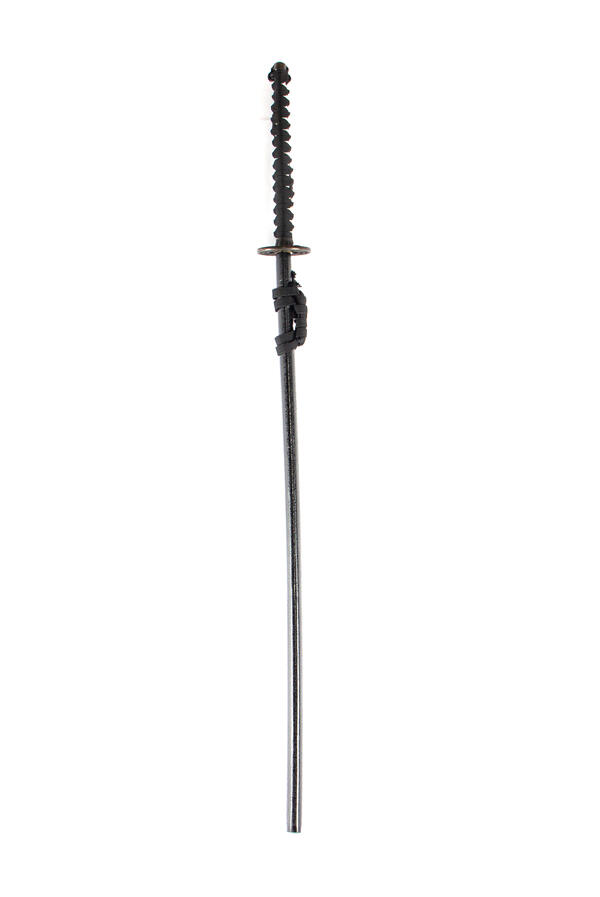
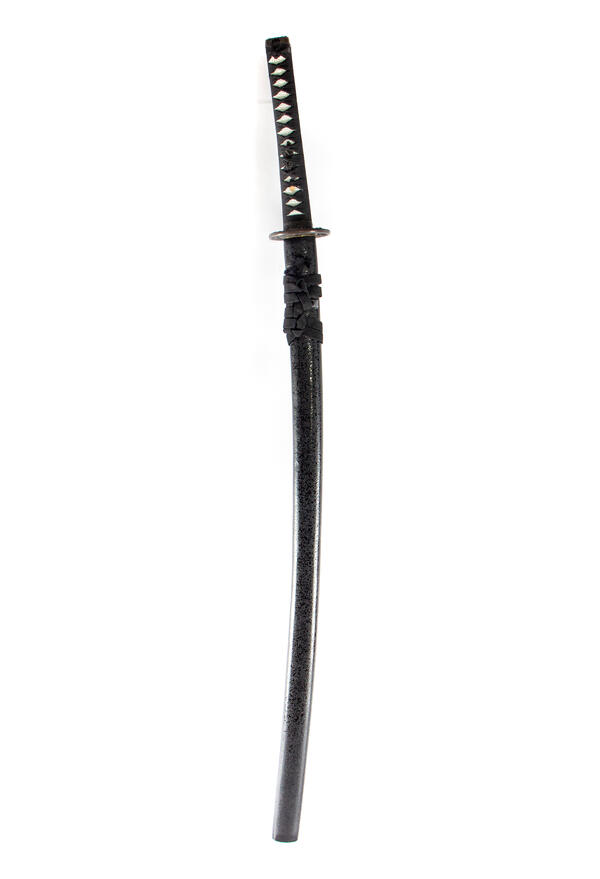
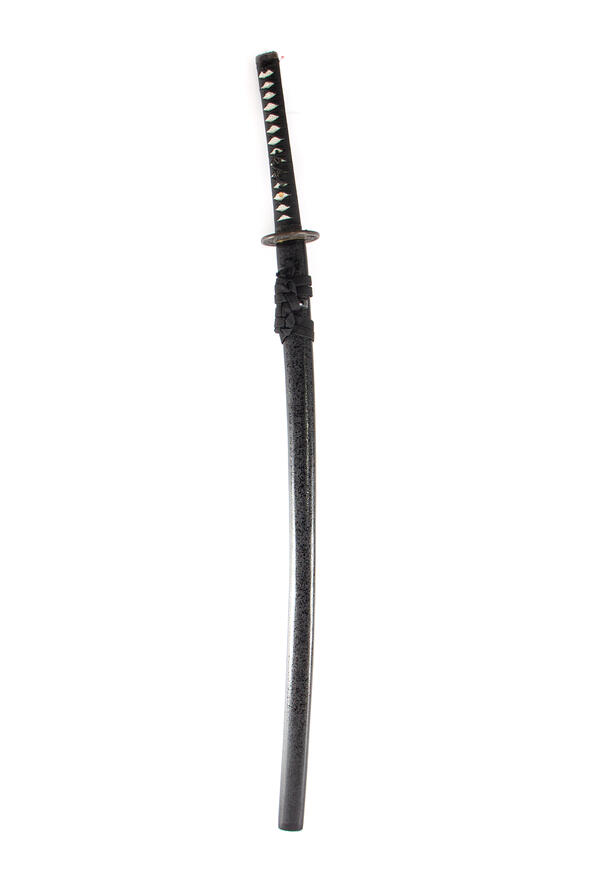
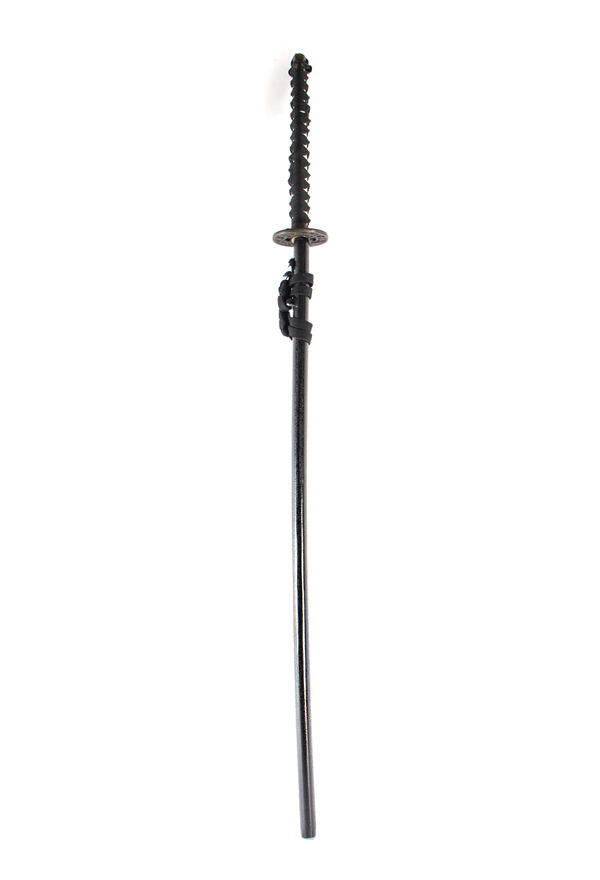
The katana is considered to be preceded by the tachi — a long curved sword that was carried on a special sling with the cutting edge pointing down and complemented with a dagger called “tanto”. Tachi were used throughout the Heian period (794–1185) until the beginning of the Muromachi period (about 1336–1573), when they began to be replaced by katanas, or daito (“longsword”). By the end of the 14th century, a type of katana called uchigatana was popular.
The katana is somewhat shorter than the tachi. It was carried with the cutting edge pointing up on the left side for ease of draw, and used as a stabbing and cutting weapon. The katana is paired with a “small sword” or wakizashi. Distinctive features of the katana are its special hardening outline and hilt.
The blade was endowed with a soul and a name, and at least two types of steel were used for its forging: a more soft one for the core and a harder one for the edge. The hallmark strength and flexibility of the blade was achieved by repeatedly folding the long steel rod and forging the halves together. Then the blade was heated and cooled several times in a mixture of oils, the composition of which was known only by the swordsmith. Following certain rules of heat treatment (differential heat treatment), the edges and planes gave the blade its characteristic curved shape.
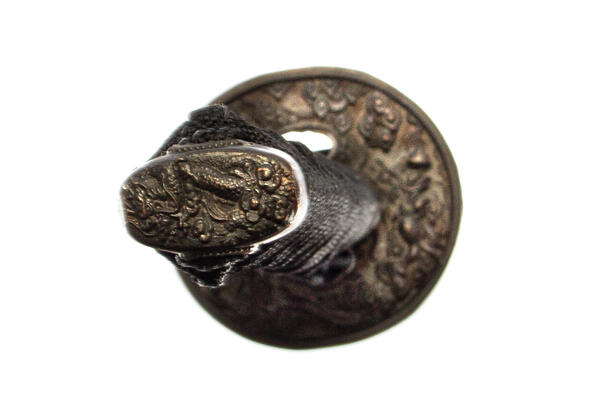
The polisher called a togishi manually shaped, sharpened and polished the surface of the blade. After that, the weapon was equipped with a temporary hilt and tested. The results were recorded on a sheet of rice paper and put into the permanent hilt. Individual craftsmen were engaged in the manufacture of the guard called a tsuba.
Unlike the blade, scabbards and hilts were not given a sacred meaning and were replaceable. However, there were rules here, too. The hilt was made of wood (other materials, such as bone, are found only in ceremonial versions) and covered with pre-soaked skin of a stingray or shark. The scabbard or saya was made of varnished magnolia wood.
In the middle of the 19th century, the role of the katana in combat was supplanted by firearms, and in 1945, in accordance with general demilitarization, it was abolished. Currently, katanas are produced using old technologies. The work takes several months, and the resulting product is highly valuable.