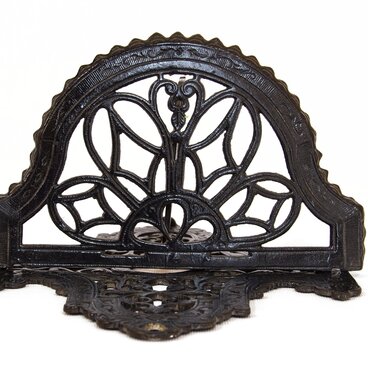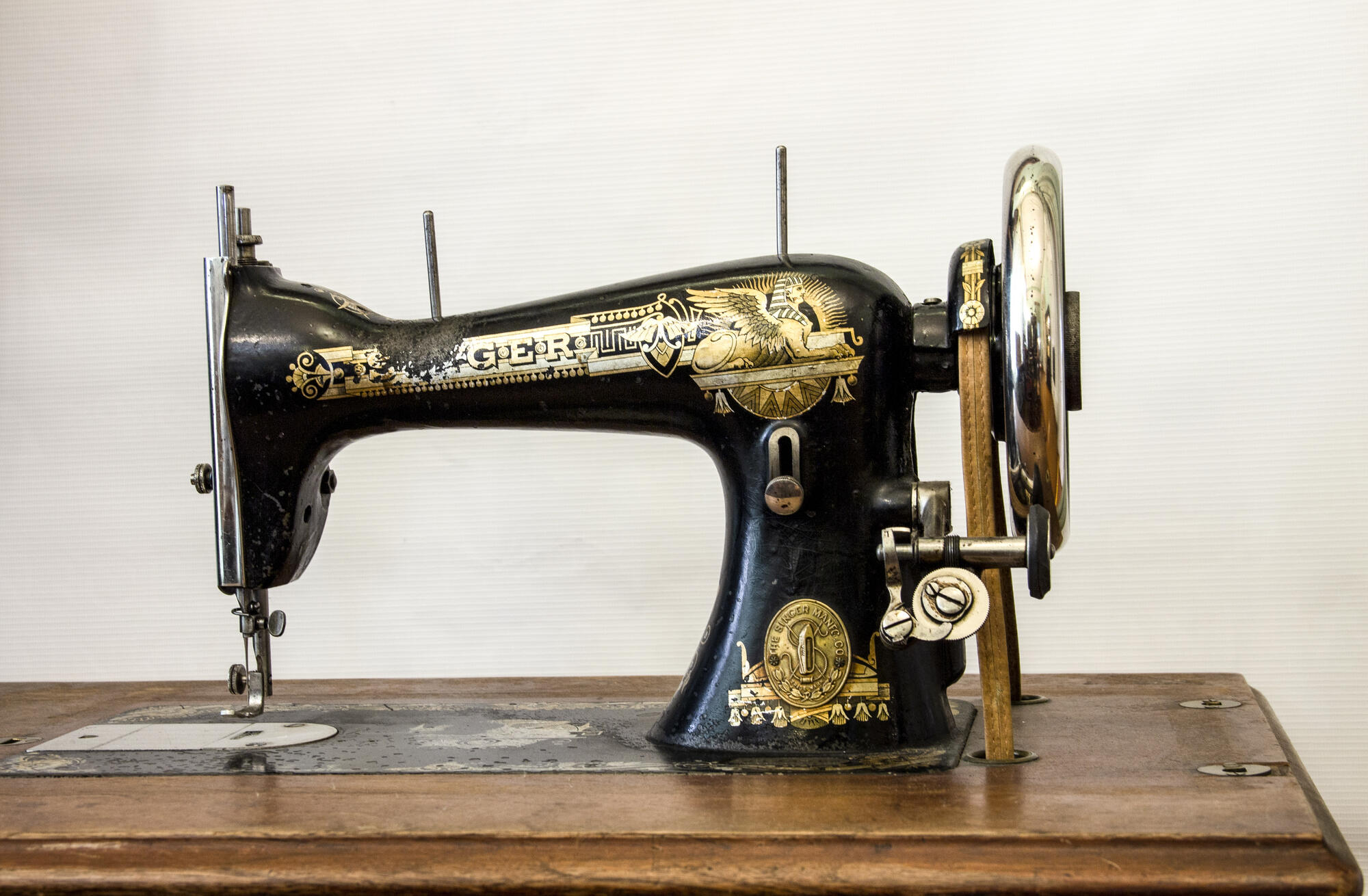
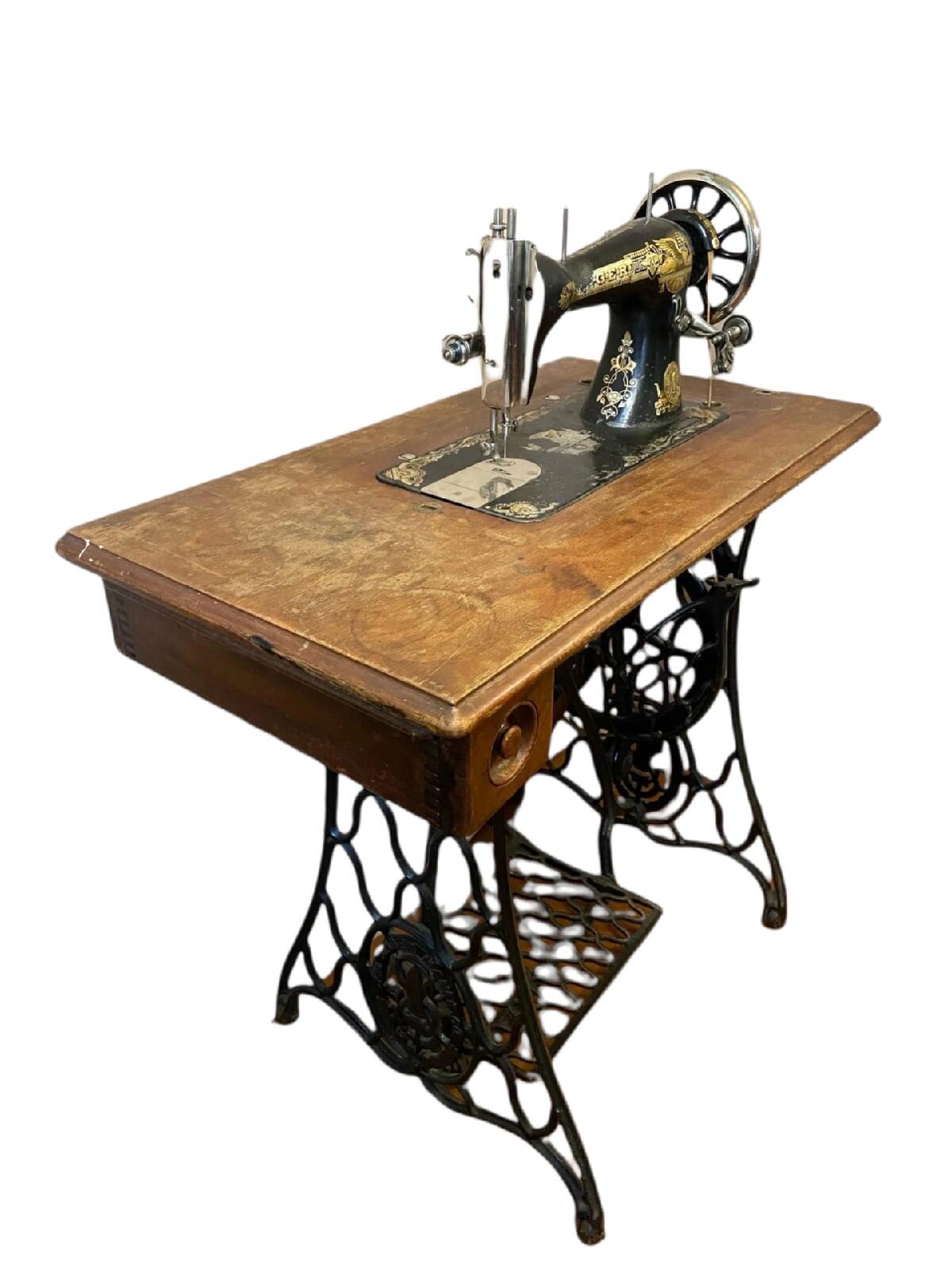
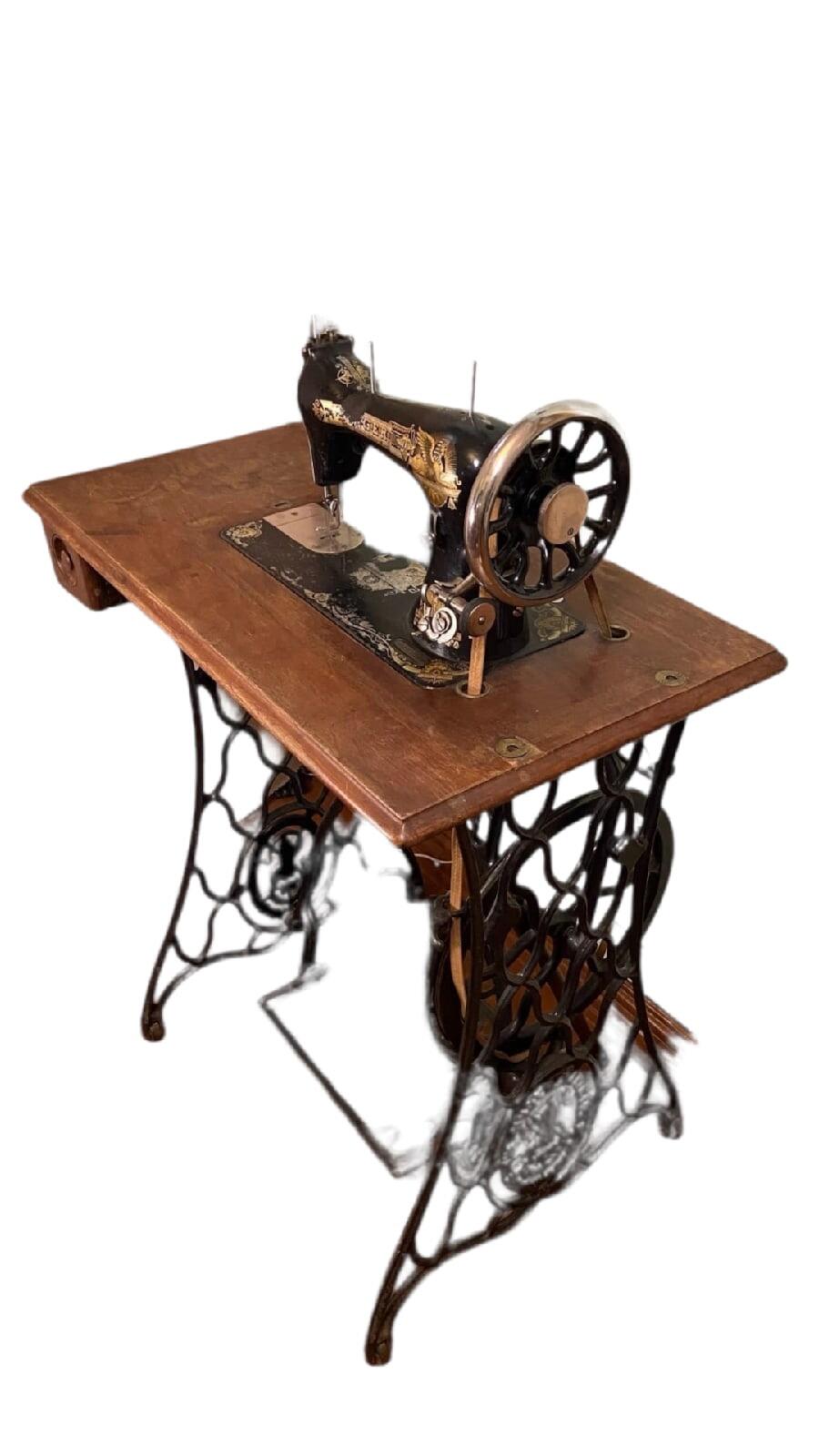


This “Singer” sewing machine is directly related to the Masharov family. It belonged to Maria Yakovlevna Blinova (nee Masharova), who was the niece of Nikolay Dmitrievich Masharov.
After the death of Maria Yakovlevna, her daughter Tamara Borisovna Blinova sold the typewriter to V.I. Puzyreva, who donated this valuable item to the museum. The sewing machine had serial number J133203, which made it possible to establish the approximate date of its production — the first half of 1905. The model of this machine is 15K25. These models were produced at a factory in the Kilbowie area of Clydebank, which is close to Glasgow, Scotland. The pattern that decorates the body of the machine is called the Sphinx. In addition to this ornament, there were many other types, such as the Ottoman, Persia, and Pheasants.
Singer is an American corporation that still exists today. In the late 19th — early 20th century, the company owned a large number of plants and factories outside the United States — in the British Empire, European countries, the Russian Empire and other countries. The plant of the Singer Manufactory Company, and then the Singer & Co Joint Stock Company in the Russian Empire, was built in the city of Podolsk and functioned from 1900 to 1918. The head office was located in St. Petersburg, there were branches in Baku, Tiflis, Tashkent, and other cities. After the establishment of Soviet power, the company’s property was nationalized, and
the Podolsk sewing machine plant became known as Gosshveymashina.
Singer has been at the forefront of industrial design and has set trends in this field for a long time. Singer was innovative in other areas of business too. This was how franchising appeared in the middle of the 19th century: the company began to conclude a written franchise agreement with distributors of goods (sewing machines), which transferred the right to sell and repair sewing machines in a certain US territory. In addition, the company introduced a system of after-sales service. Consumers could have their machine repaired by a local distributor, or they could order spare parts from the manufacturer using a mail order catalog.
After the death of Maria Yakovlevna, her daughter Tamara Borisovna Blinova sold the typewriter to V.I. Puzyreva, who donated this valuable item to the museum. The sewing machine had serial number J133203, which made it possible to establish the approximate date of its production — the first half of 1905. The model of this machine is 15K25. These models were produced at a factory in the Kilbowie area of Clydebank, which is close to Glasgow, Scotland. The pattern that decorates the body of the machine is called the Sphinx. In addition to this ornament, there were many other types, such as the Ottoman, Persia, and Pheasants.
Singer is an American corporation that still exists today. In the late 19th — early 20th century, the company owned a large number of plants and factories outside the United States — in the British Empire, European countries, the Russian Empire and other countries. The plant of the Singer Manufactory Company, and then the Singer & Co Joint Stock Company in the Russian Empire, was built in the city of Podolsk and functioned from 1900 to 1918. The head office was located in St. Petersburg, there were branches in Baku, Tiflis, Tashkent, and other cities. After the establishment of Soviet power, the company’s property was nationalized, and
the Podolsk sewing machine plant became known as Gosshveymashina.
Singer has been at the forefront of industrial design and has set trends in this field for a long time. Singer was innovative in other areas of business too. This was how franchising appeared in the middle of the 19th century: the company began to conclude a written franchise agreement with distributors of goods (sewing machines), which transferred the right to sell and repair sewing machines in a certain US territory. In addition, the company introduced a system of after-sales service. Consumers could have their machine repaired by a local distributor, or they could order spare parts from the manufacturer using a mail order catalog.