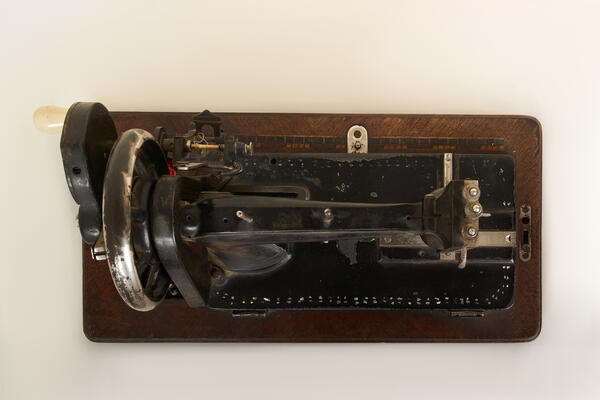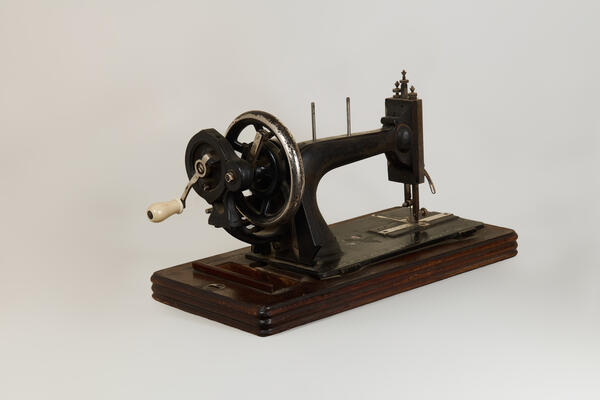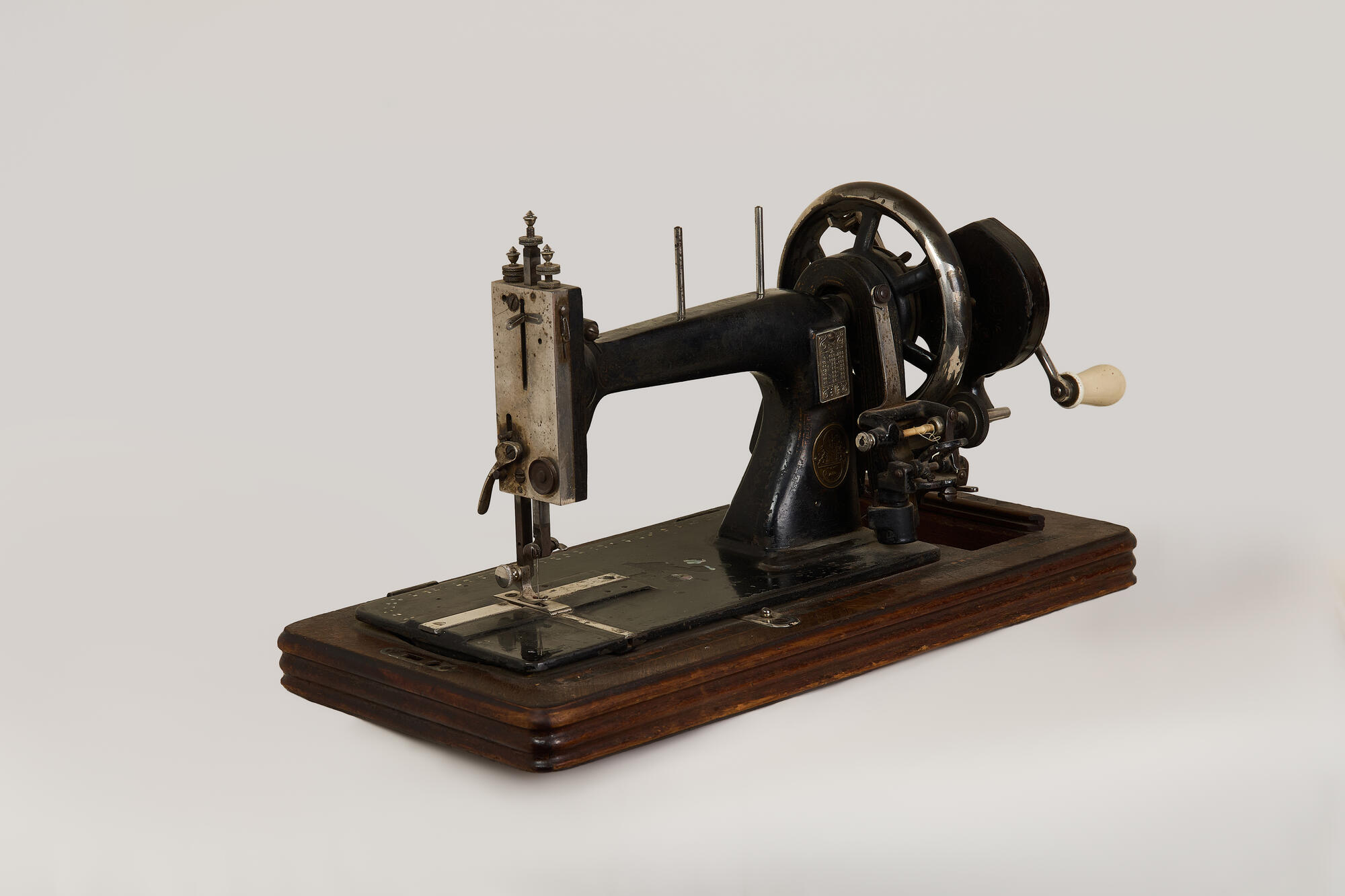


The Singer sewing machines, one of which is on display in the museum, were for many years an indispensable device for performing various sewing operations. Like most other great inventions, the sewing machine has a lot of models.
The first patent for a mechanical device for sewing, a kind of prototype of a sewing machine, was granted in England in 1755 to Charles Fredrick Wiesenthal, a German-born engineer. His invention included a needle with two pointed ends with an eye on one of them.
In 1790, Thomas Saint, an English innovator, pioneered the design of a sewing machine that was intended to stitch leather and sailcloth, a strong plain fabric.
It is likely that Saint had a working model, but no evidence of its existence has survived. Thomas Saint was an experienced cabinetmaker, so his device was well thought out and functional: there was a protruding lever, a feed mechanism (a toothed rail that pushes the fabric under the needle), a vertical needle driver, and a looper that provided thread weaving.
In 1874, the sewing machine manufacturer William Newton Wilson found Saint’s blueprints in the UK Patent Office, modernized the looper and built a working machine that is now in the collection of the Science Museum in London.
In 1829, the Frenchman Barthélemy Thimonnier created the first efficient sewing machine, which became widely used. The very next year, he founded a sewing factory where he organized the sewing of uniforms for the French army.
Fifteen years later, the American Elias Howe introduced a new, more advanced model of the machine. It could make straight stitches at a speed of up to 300 stitches per minute. In 1846, Howe received a patent, but no one was interested in his invention. While Elias Howe was trying to find investors, the engineer Isaac Merritt Singer became interested in his development and soon modernized it and then patented it. The thing is that Howe’s sewing machine had a significant flaw — a vertical looper, in which threads were often tangled. Singer arranged the looper horizontally, added a needle with an eye, a presser foot, a table for feeding the fabric, and a foot pedal for the drive.
In 1851, Singer received a patent and organized a company to produce sewing machines. Today, the Singer brand is one of the most sought-after brands in the sewing industry.