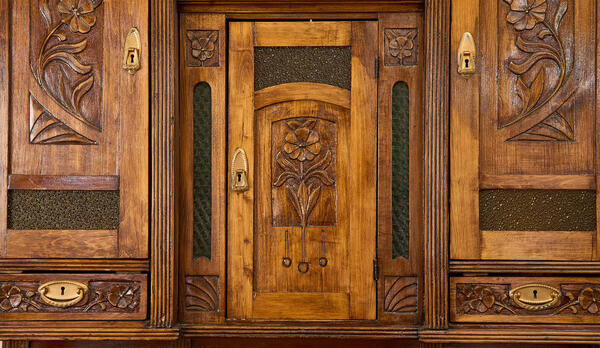
A buffet is a piece of furniture, a type of cabinet that is designed to store dishes and food.
As in the case with other home furnishings and household items, the design of the buffet was transformed many times. It is not known when and where a special dish cabinet was first made. According to historians, this happened in medieval Europe. However, it is known for a fact that the buffet as a dish cabinet with numerous shelves and doors took its ultimate form in France.
At all times, cupboards differed in size, shape and finish. It all depended on how wealthy the customer was and on the room for which the buffet was intended: the kitchen, dining room or living room. Regardless of the parameters, each buffet had locks and glass or blind front doors, as well as several partitions and shelves for convenient storage of tableware.
A buffet always had a bottom and an upper part. The most expensive and refined tableware, such as porcelain sets and crystal, were stored on the upper shelves. Open bottles of wine and sweets were also placed there. To demonstrate wealth, the doors of the upper level were often glazed. Food and large utensils were placed on the lower shelves. In the upper and lower parts, there were always drawers to keep utensils and table linen. The lower and upper parts of the sideboard were divided by a niche with a table top or serving table. This middle part was used for preparing dishes before serving them. Kitchen buffets had one or two sliding cutting boards for cutting food and preparing appetizers.
The buffet acquired such a design in the 17th century. It turned out to be so practical and functional that it spread in this form throughout Europe, as well as in Russia.
Despite the model similarity, buffets differed in
their proportions, alternation of blind and glazed parts, and decorative
design. For wealthy customers buffets were made of fine wood; the facade was
decorated with rich carvings, with high reliefs and sculptural images on the
doors. The buffet was the embodiment of wealth and prosperity of the family as
early as in the 19th century.