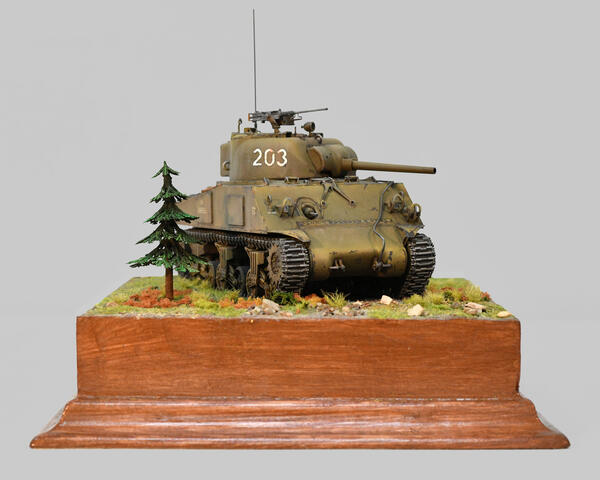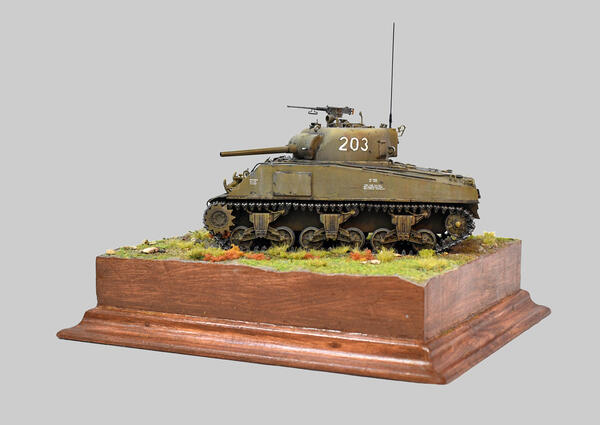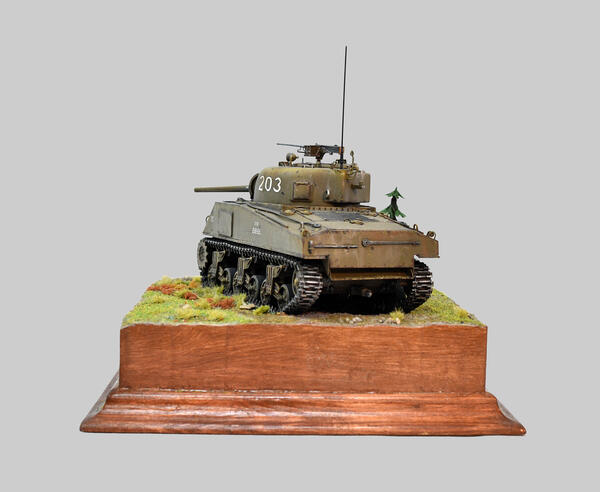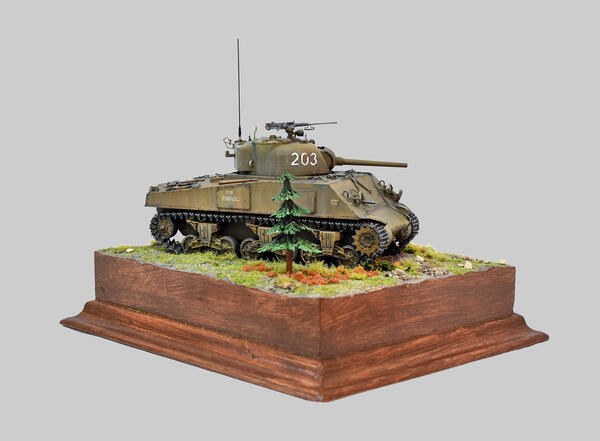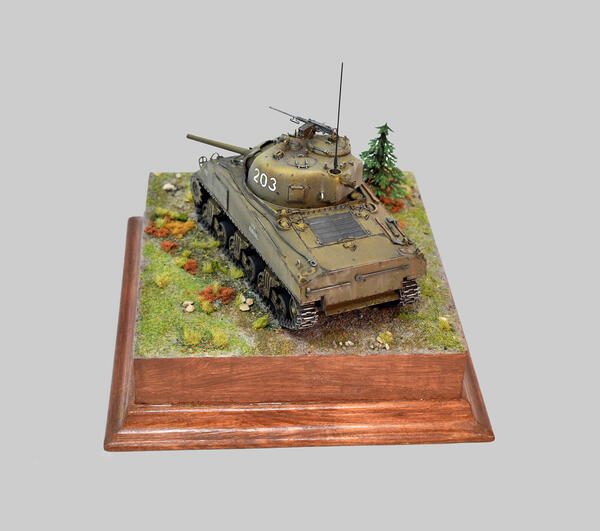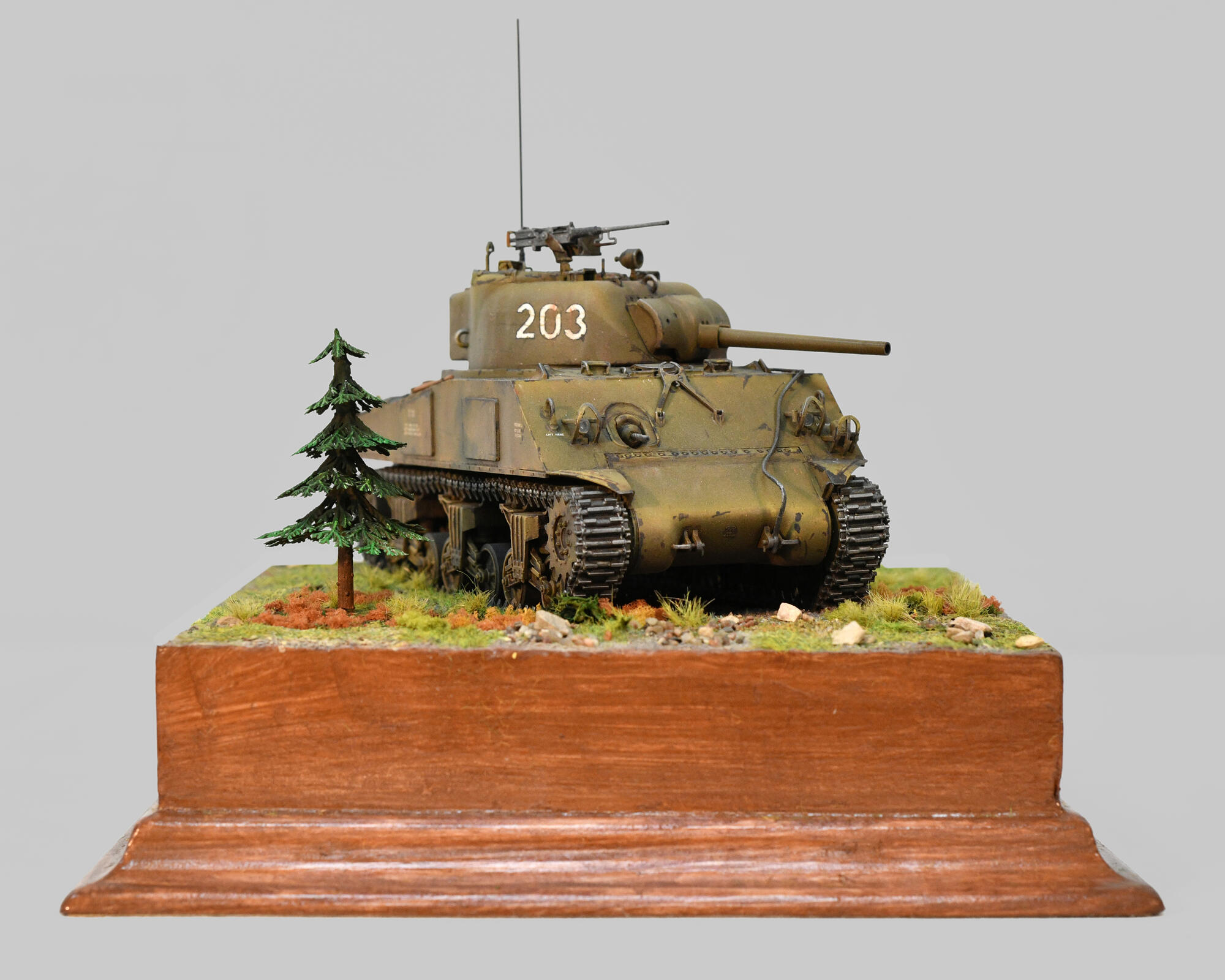


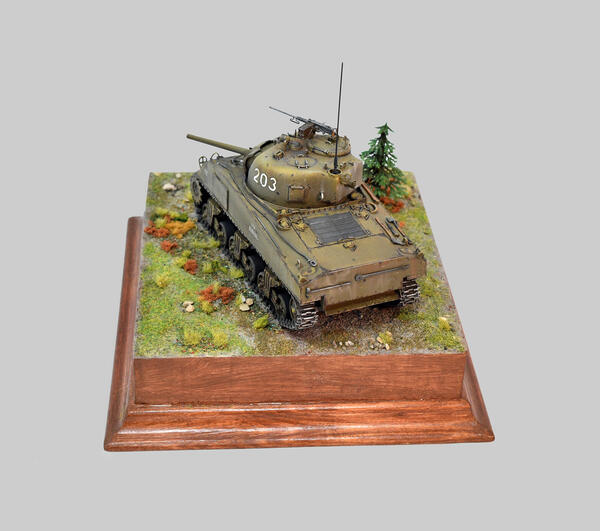
The M4 Sherman tank was the most widely used tank of the U.S. Army during World War II. Sherman tanks began arriving in the Soviet Union as part of the Lend-Lease program in late 1943. The diesel version of the M4A2 was the most popular foreign medium tank used by the Red Army. The Red Army received a total of about 2,000 M4 tanks during World War II.
Shermans, reliable and maneuverable, were quite technologically advanced. The main weapon of the tank was an upgraded 75mm M2 gun in a sponson with a nearly three-meter barrel. The gun had a direct telescopic gunner’s sight (before this, the gun had a telescopic sight built into the periscope). This was also the first gun in the world to feature a stabilized elevation gun aiming system. Vertical aiming of the gun was carried out by an electro-hydraulic drive, as well as manually. Ammunition was located in the sponson, as well as on the floor of the vehicle, and amounted to 90 rounds.
The tank had a crew of five. In the hull, there was a mechanic-driver and his assistant. The tank commander, the gunner and the loader were in the combat compartment and the turret. The M3 hull was lined with sponge rubber to protect the crew from small fragments of armor. The doors on the sides, the hatches on the top and in the machine gun turret ensured quick boarding of tank crews. The side doors were also useful for evacuating the wounded from the vehicle, though they reduced the strength of the hull. Each crew member could fire personal weapons through observation slits and embrasures protected by armored shields.
The tank stood out not only by its range of visibility and comfortable conditions for the crew to work in, but also by its high quality of communication. Each Sherman had two radio stations: VHF and HF. The VHF radio was used for communication within platoons and companies at a distance of one and a half to two kilometers. The second type of radio station was for communication with the senior commander.
Shermans, reliable and maneuverable, were quite technologically advanced. The main weapon of the tank was an upgraded 75mm M2 gun in a sponson with a nearly three-meter barrel. The gun had a direct telescopic gunner’s sight (before this, the gun had a telescopic sight built into the periscope). This was also the first gun in the world to feature a stabilized elevation gun aiming system. Vertical aiming of the gun was carried out by an electro-hydraulic drive, as well as manually. Ammunition was located in the sponson, as well as on the floor of the vehicle, and amounted to 90 rounds.
The tank had a crew of five. In the hull, there was a mechanic-driver and his assistant. The tank commander, the gunner and the loader were in the combat compartment and the turret. The M3 hull was lined with sponge rubber to protect the crew from small fragments of armor. The doors on the sides, the hatches on the top and in the machine gun turret ensured quick boarding of tank crews. The side doors were also useful for evacuating the wounded from the vehicle, though they reduced the strength of the hull. Each crew member could fire personal weapons through observation slits and embrasures protected by armored shields.
The tank stood out not only by its range of visibility and comfortable conditions for the crew to work in, but also by its high quality of communication. Each Sherman had two radio stations: VHF and HF. The VHF radio was used for communication within platoons and companies at a distance of one and a half to two kilometers. The second type of radio station was for communication with the senior commander.