A model is a scaled-down representation of an object. The practice of creating models originated in ancient Egypt, where miniature copies of temples were placed in tombs alongside pharaohs. Such temples served certain purposes in funeral rituals. Models were also widely used during the Renaissance for the construction of churches and cathedrals.
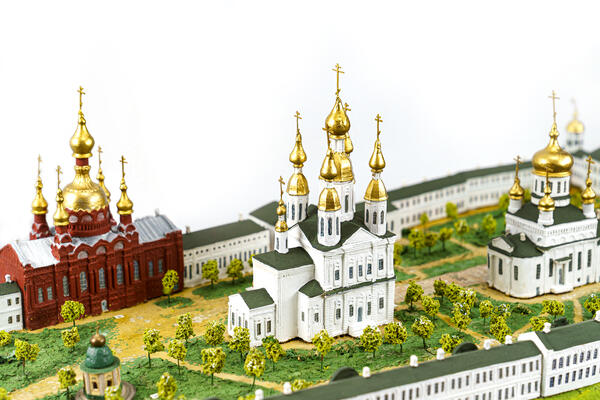
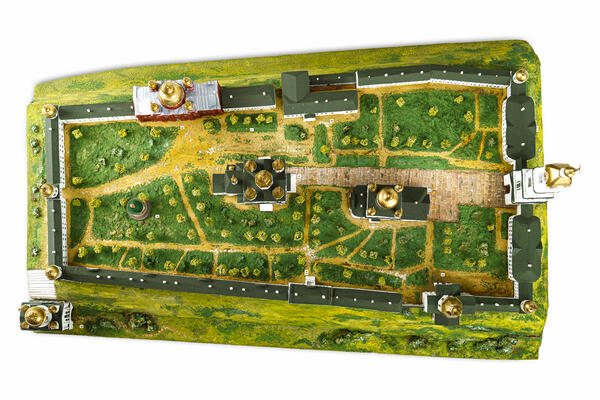
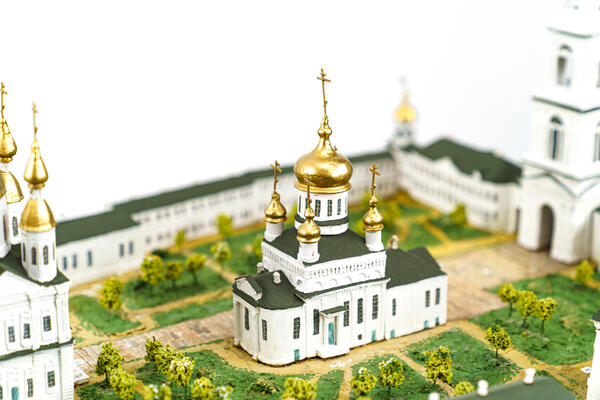
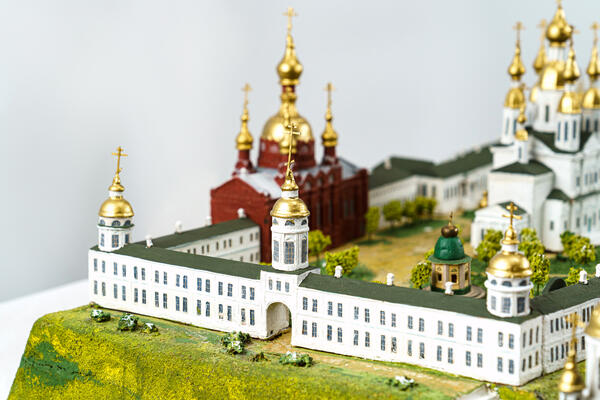
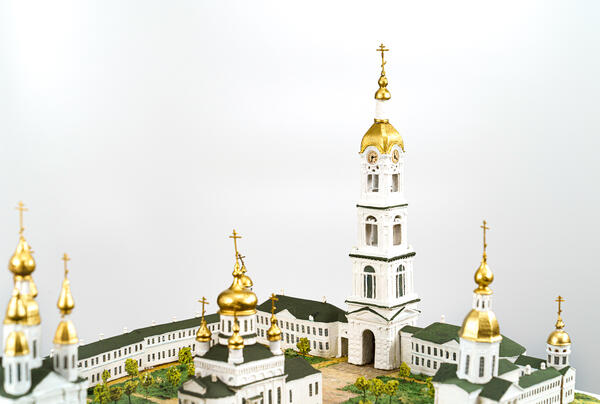
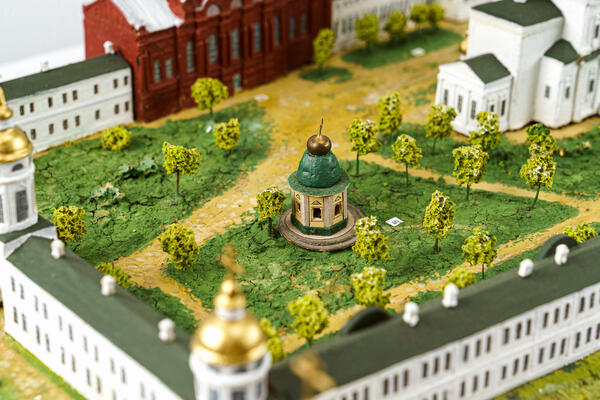
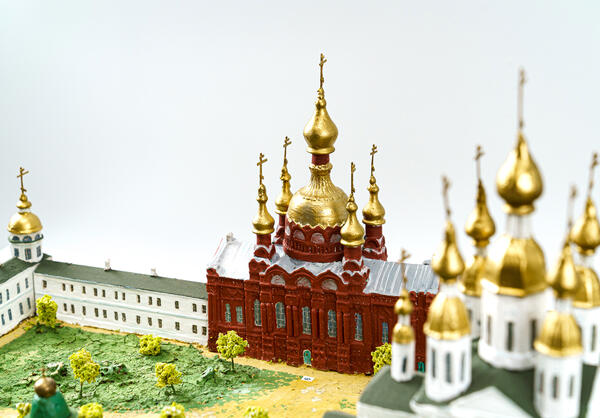
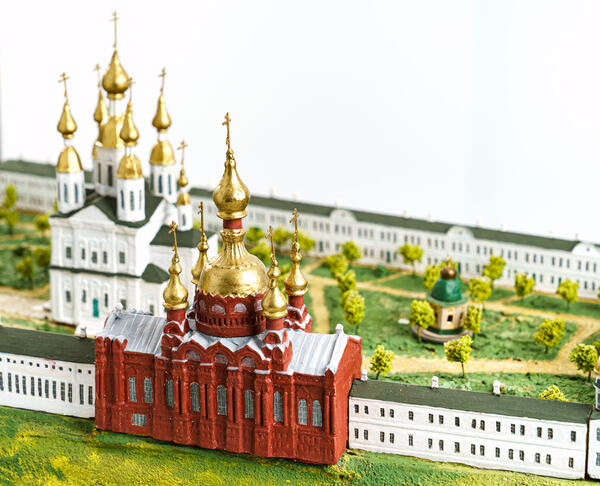
The displayed model is a replica of the Monastery of the Dormition of the Mother of God — also known as the Sarov Monastery — in the early 20th century. It was created by the local monks in preparation for the visit of Emperor Nicholas II and his family to celebrate the canonization of Seraphim of Sarov in 1903.
After the revolution of 1917, the infrastructure of the Sarov Monastery suffered greatly, and many shrines were desecrated. The monastery was eventually liquidated based on a government decision in March 1927. It is likely that the model was confiscated around this time, along with other monastery property.
The museum first received reports about the model in the 1960s from the Saransk archives. The archivists offered the Museum of Sarov to take the worn-out model of the Sarov Monastery for free. However, since Arzamas-75 (now Sarov) was a closed town during that time, it was prohibited to publicly disclose anything related to the history of the city. Therefore, the museum could not exhibit or publish materials related to the monastery’s history.
The museum contacted the relevant authorities and was allowed to take the model from Saransk, although it was not exhibited. The model was then returned to its home region. It was restored by the scenic designers Iraida Viktorovna Tarasova and Yefim Denisovich Gogolev. Later, it took a prominent place in the hall dedicated to the history of the Monastery of the Dormition of the Mother of God.
The history of the Sarov Monastery spans around three centuries. In the early 18th century, a monastery was founded in the north of the Tambov Governorate (now the city of Sarov is part of Nizhny Novgorod Oblast). It was located on a hill near the confluence of the Sarovka and Satis rivers. This was where Saint Seraphim of Sarov, an Orthodox ascetic, lived and served God.