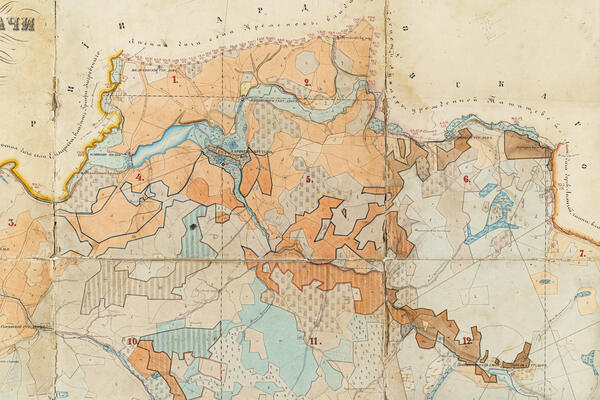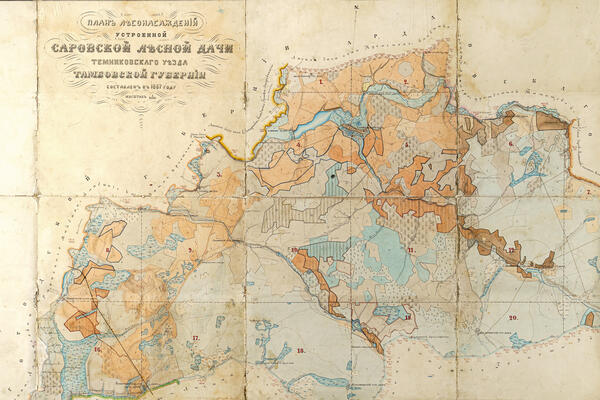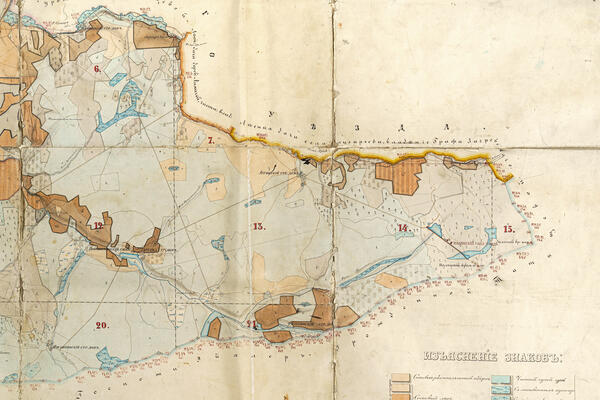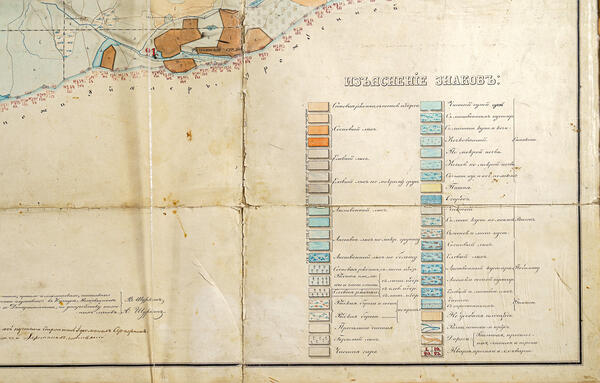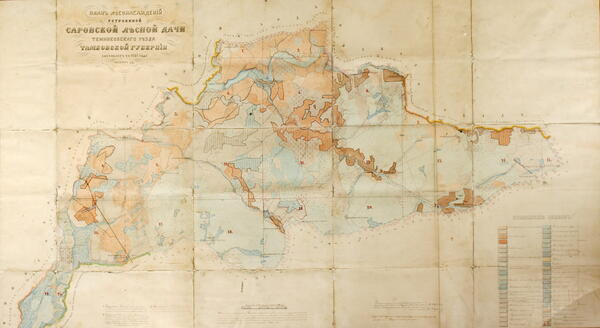
The history of the monastery’s land acquisition and its development is complex and ambiguous. The lands were gathered over several centuries, and by 1867, the Sarov Forest estate was extensive, covering a significant area of the surrounding lands.
The main land holdings of the Sarov Monastery were acquired under the management of its founder, Father John. The founder proved to be a talented organizer and a shrewd politician. Being aware of the government’s policies towards monasteries, he understood that the monastery would survive only if it was economically self-sufficient and independent of state support. The abbot took decisive steps to strengthen the material position of the monastery.
From its founding in 1706 until 1712, the monastery existed on the small plot of land donated by Prince Kugushev. The monastery’s land property continued to expand, primarily through the acquisition of estates and lands from serving Tatars and Mordvins. A distinctive feature of the Sarov Monastery land ownership was the absence of lands with serf peasants. The monastery mainly acquired forested plots.
The location of the purchased plots was determined approximately, with rivers, roads, ravines, swamps, and other landmarks serving as references. The documents do not provide exact measurements of these plots, making it difficult to account for the growth of the monastery land holdings in the early decades of the 18th century. These inaccuracies led to a large number of boundary disputes and legal battles that continued until the early 19th century.
The state policy of secular authorities seizing land and other property from the church did not change. However, in the early years of her reign, Empress Anna Ioannovna made several exceptions to the rule by issuing charters to five monasteries. Thus, on October 25, 1730, Empress Anna Ioannovna signed a charter confirming the lands acquired as assigned to the Sarov Monastery “forever, not to be used as an example for others.”
The second half of the 18th century marked a new stage in the economic activities of the Sarov Monastery. In 1764, a major reform of monasteries was carried out in the Russian Empire. The secularization of church and monastery lands did not affect the holdings of the Sarov Monastery. The hermitage continued to expand its lands. By 1818, the land property of the Sarov Monastery amounted to 26,443 desyatinas (just under 29,000 hectares). The Sarov estate remained in this form until the early 20th century.