

An archaeological site has many layers of soil that have built up over time in the process of human activity. This is an important archaeological tool that carries information about various historical events. In Russian it is called a “cultural” layer because it contains the remains of human activity and characterizes different aspects of its material culture.
Layers build up slowly, but steadily collecting signs of eras over many millennia. Their thickness depends less on time and more on the intensity of human activity. They are also affected by natural disasters: floods, fires, volcanic eruptions, as well as bloody battles, epidemics, construction, and production.
In ancient cities, the cultural layer reaches several dozens of meters. In Rome it is more than 13 meters, in the central regions of Moscow it can be up to 8 meters. The thickness of the cultural layer of the Tula Kremlin is on average from 2 to 2.5 meters.
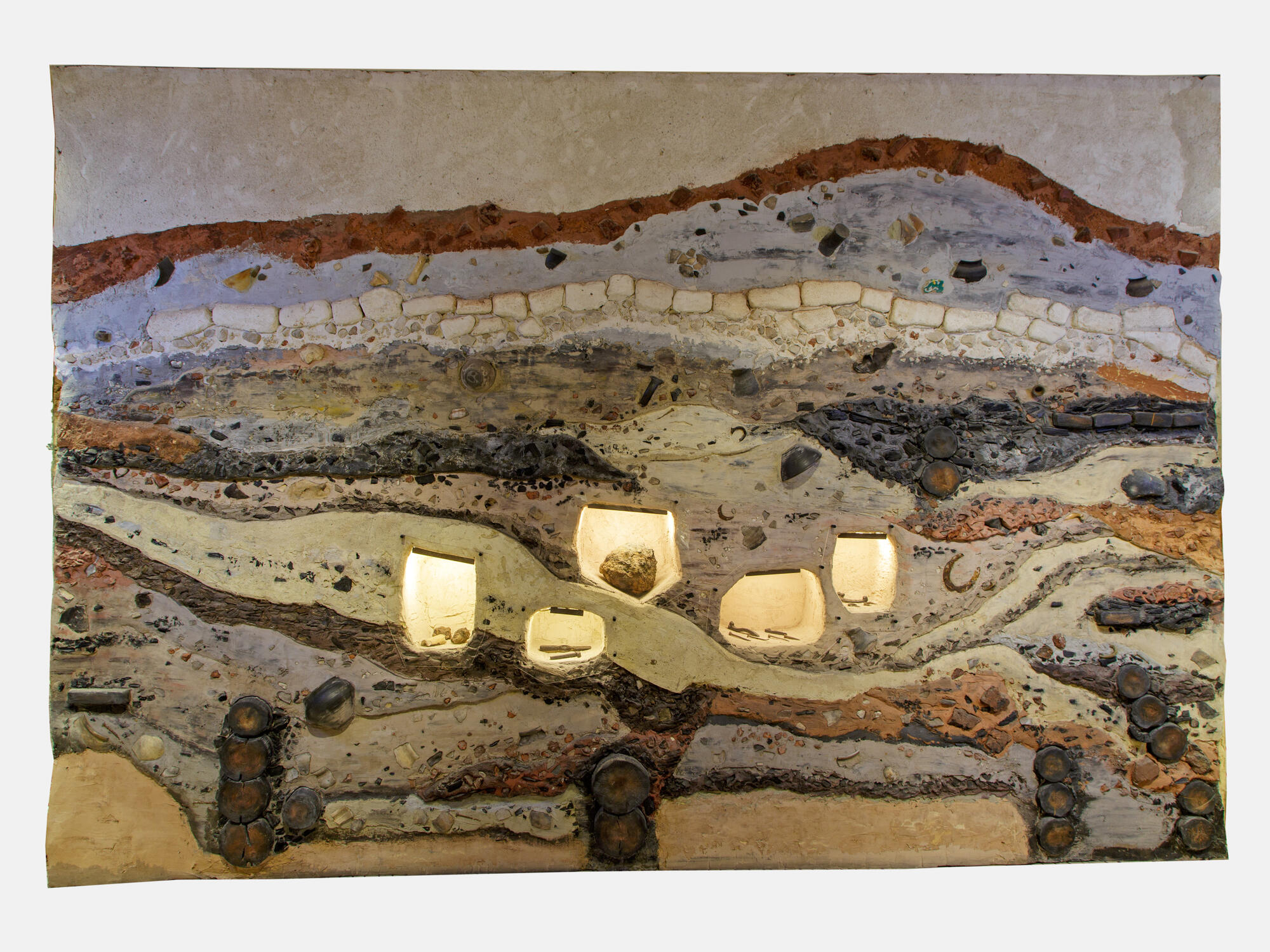
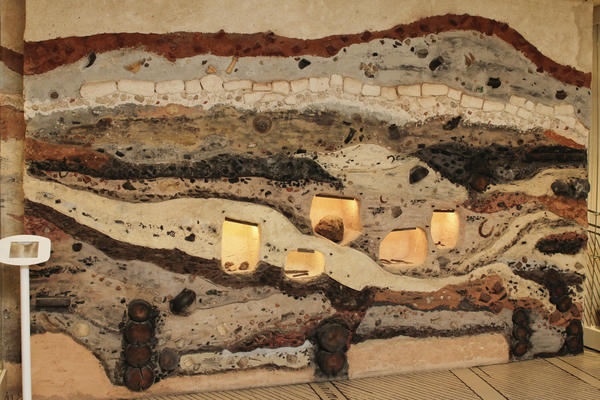
The soil of the Tula Kremlin resembles a “layer cake”, where each layer is a separate time period, starting from the 16th century. Cultural deposits have a very complex structure and consist of many barely noticeable layers, inclusions and spots, which archaeologists distinguish by density, consistency, and structure.
The study of the cultural layer is carried out during archaeological excavations. Having arrived at the site, archaeologists divide the area into squares of one to two meters, aligning the excavation works to the cardinal points. This helps to record the location of a particular item in a correct way. Archaeologists dig until they reach the rock — the surface that has traces of the first settlers.
The cultural layer of the Tula Kremlin is represented by brown or gray loam with a large amount of organic matter, remains of wooden structures, pieces of coal, lenses of ash, fragments of stoves, fired clay, and various objects of the late Middle Ages.
The layer is from 45 cm to 70 cm deep. In some places the cultural layer is rich in soil practically devoid of finds and homogeneous dark gray loam interspersed with separate pieces of coal. Below the soil layer there is a layer of loam up to 25 centimeters thick, which turns into rock bed clay.