Fishing is one of the oldest employments of humankind. More than a million years ago, ancient people caught fish with their bare hands. They also used branches and even plant toxins to stun fish. Later, primitive fishing equipment was invented including spears, harpoons and hooks made from clamshells.
Fishing sinkers appeared in the Stone Age along with the practice of weaving fishing nets, which is still considered sacred by some peoples. Sinkers came in different shapes, types, and weights. They were used to submerge nets and traps to a certain depth, as well as to adjust the float when using a fishing rod.
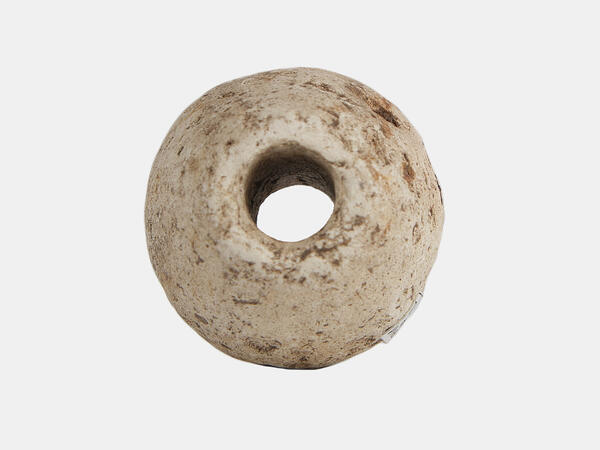
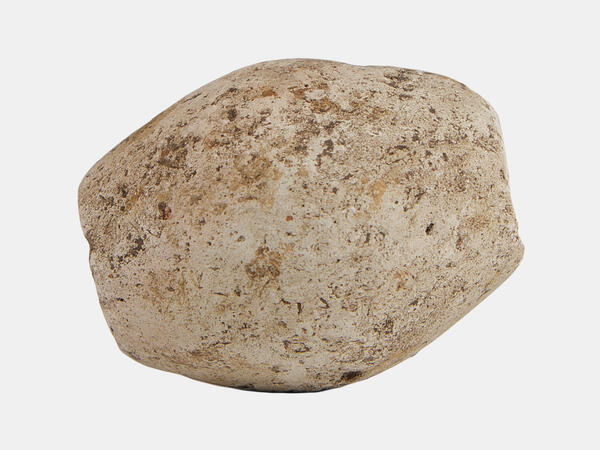
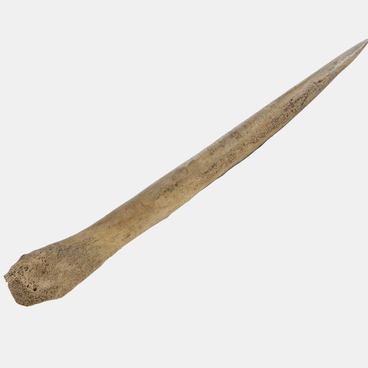
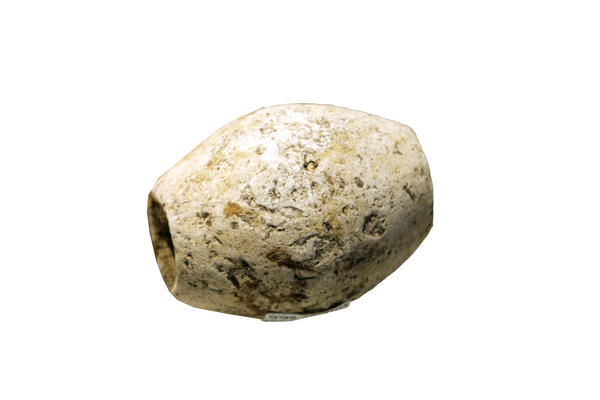
Archaeologists working in the territory of the Tula Kremlin have often recovered pottery sinkers in the cultural layer of the 16th — early 18th centuries among other ceramic finds. The sinkers were made on a potter’s wheel or modeled from clay. A stick, a bone, or fingers were used to make a hole along the longitudinal axis. When the sinkers were ready, they were fired at high temperatures, which made them durable and waterproof.
Medieval fishing weights were most often shaped like a barrel or an egg. Ball sinkers and other types of sinkers with unusual shapes were less common. The length of weights usually varied from 6 to 12 centimeters, and the maximum diameter reached 7 centimeters.
Most ceramic sinkers were used in dragnets and seines. Fishermen could use small sinkers for ledgering, and the largest ones for fixed gillnets.
In medieval Rus, there were different types of nets. They were divided into two large groups: dragnets and gillnets (fixed). Dragnets were towed along the bottom and pulled through the water. Then the ends were brought together, and the nets were lifted out of the water onto the shore or into a boat. Gillnets were fixed across the river perpendicular to the direction of water flow: fish got caught in the mesh on their own, or they were driven there by noise.
There was also another method of fishing. The fishermen used a large cone-shaped net with sinkers sewn along the edge of the neck. The net, which was secured with a rope, was thrown onto a shoal of fish, encircling it, and dragging it to the bottom. When the sinkers touched the bottom, the straps around the net were pulled, and the fish was trapped inside.