Flax was sown in mid-May, traditionally by men. The ripening plants were manually uprooted by grabbing the stems at the very ground and thus obtaining long fibers. After that, the bound sheaves were placed to dry. The seeds were submerged in water to later squeeze linseed oil, and the stems were carefully laid out all over the field and left for about a month (this process is called retting). Late-summer and early-autumn fogs, dew and rain provided necessary humidity.
The retted flax was dried again, processed through a flaxbreak and scutched out to get rid of the bits of stem and tangled fibers. To do this, a bundle of flax was held in the air with the left hand, and with the right, it was beaten with a thin edge of a special scutching knife.
Scutching took a long time, and everything around quickly became covered with gray linen dust. To liven up the hard and monotonous work, and at the same time protect their homes from dust, women gathered together in an uninhabited hut, bathhouse or an empty barn, covered their faces with kerchiefs and as they worked, they would talk, sing and tell jokes.
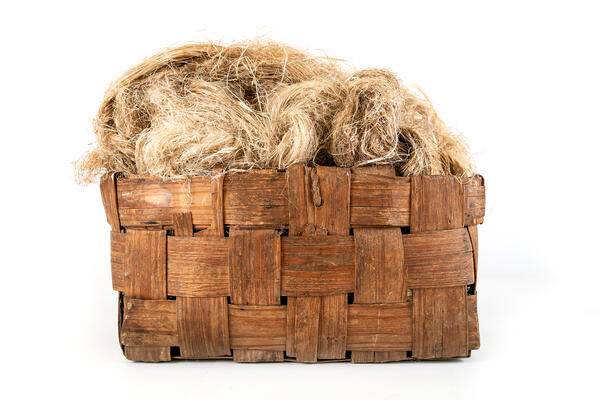
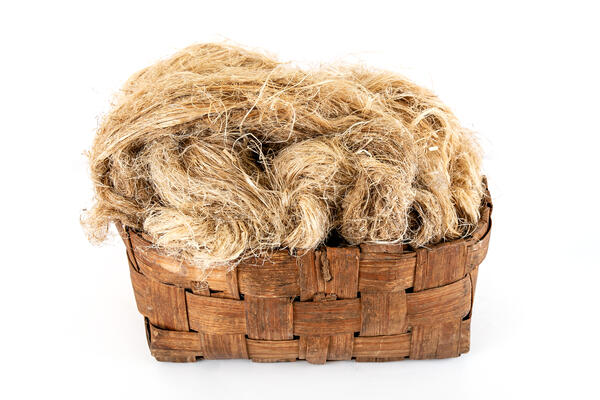
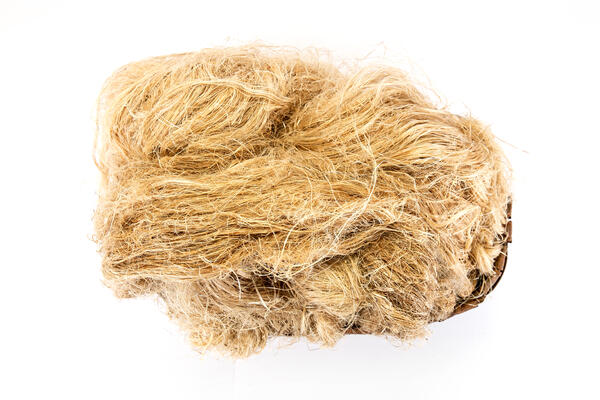
The scutched flax was kept in a dry area for a while, then heckled. Heckling was done in two stages, with each stage yielding material of different quality. After the initial treatment with a large iron comb, low-grade fiber came out (izgrebi); a fine brush made of pig hair pulled out higher quality fibers (pachesi); and flax of the highest quality remained in the bundle.
The resulting sliver was used for spinning. In other words, it was used to produce yarn. Flax was ruffled, slightly moistened and tied to a distaff. Then, with the left hand, a loose piece of fiber was fixed at the base of the distaff, and the right hand was used to rotate the spindle winding threads onto it.
From the spindles, the yarn was rewound onto a swift. While doing that, the women counted and tied the threads: 60 threads made up a “pasma” or skein, nine full spindles amounted to one “mot” or hank of yarn, which was enough to make a nice canvas.
These balls of yarn were thoroughly washed and frozen. As a result of these efforts, the nondescript, dark gray yarn turned light silver and fit for weaving.