

Nearly every noble house had a private library. Such libraries were composed of both contemporary literature and books that had been inherited from previous generations. Since every nobleman was expected to study foreign languages, it is hardly surprising that apart from Russian books, libraries also contained titles printed by European publishers.
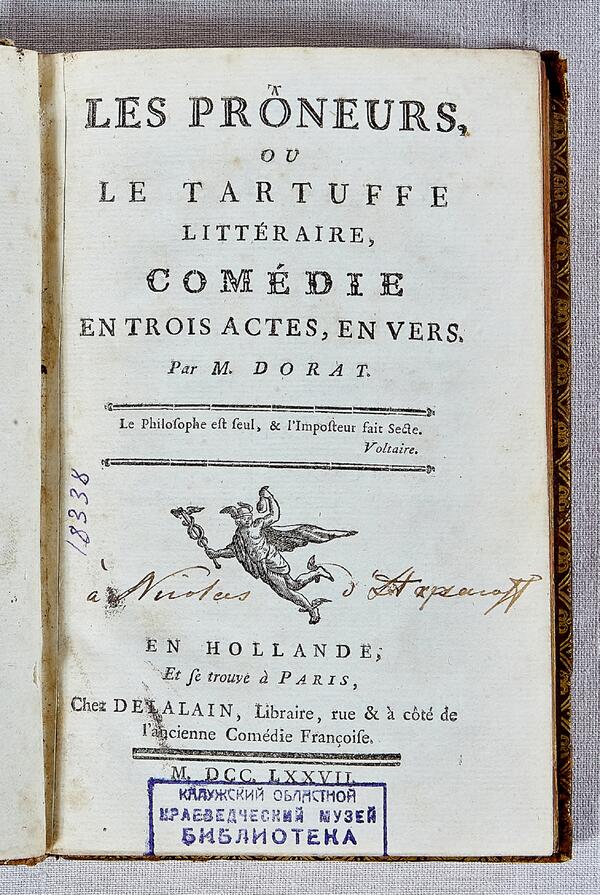
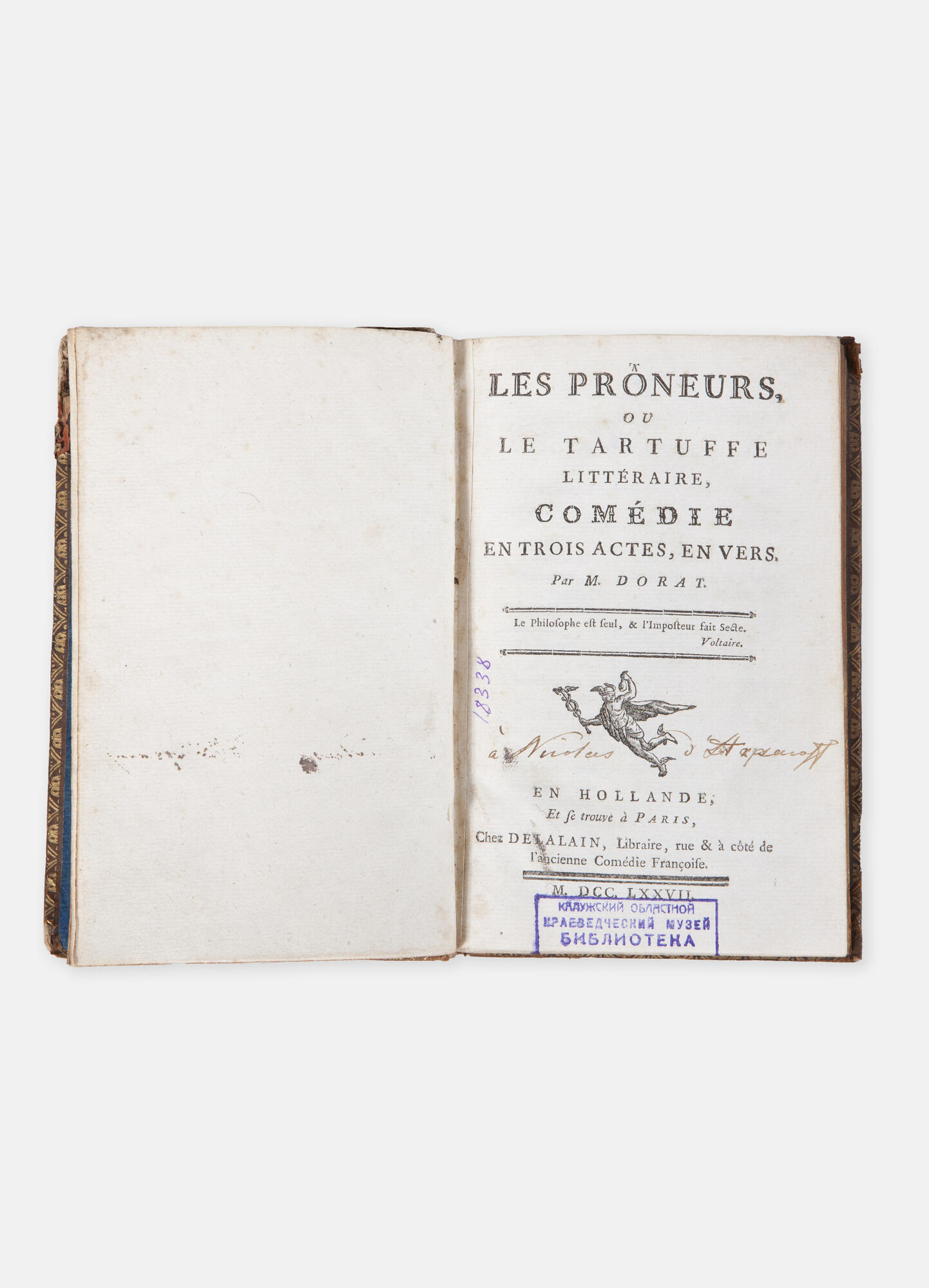
The museum’s collection houses numerous antiquarian books. Of particular interest are the works of the 18th-century French poet, writer, and playwright Claude Joseph Dorat, including his 1774 comedy in verse “Le Tartuffe littéraire”. The copy from the museum’s collection was published in French in the Dutch Republic three years later.
The writer enjoyed great popularity both in France and abroad. “Le Tartuffe littéraire” is a sharp satire on the representatives of the “philosophical party”, as the French Encyclopédistes under Denis Diderot were often called. Apart from satire, Dorat was also famous for his works in the gallant genre, which was popular in the 18th century.
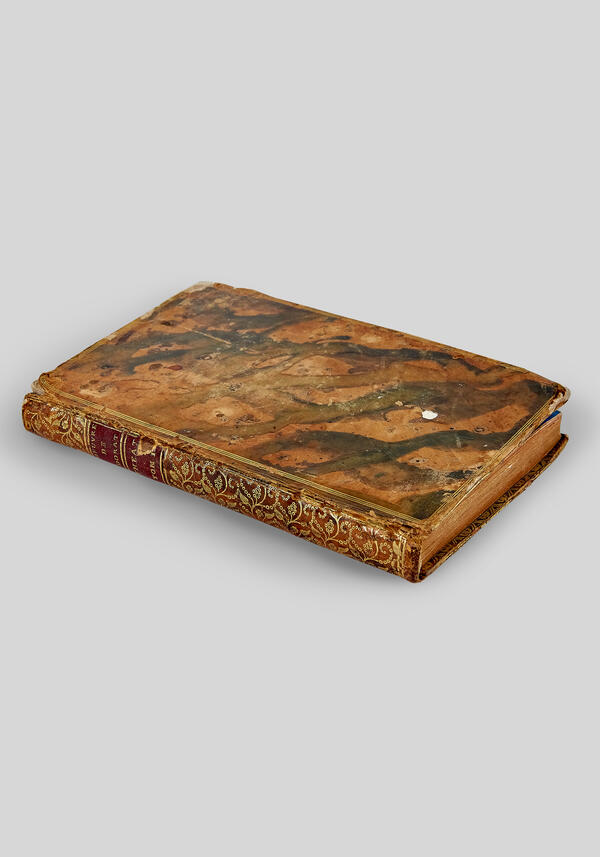
This lifetime edition is a notable example of 18th-century book printing. It is a small leather-bound volume with a gold-embossed cover and edge gilding. The pages are decorated with vignettes, headpieces, and engraved illustrations created by Dorat’s contemporary — the famous French draftsman and engraver Clément-Pierre Marillier. Dorat’s books were expensively produced. He hired the most prominent high-end artists to illustrate his works.
The 18th century was marked by a significant change in the attitude to reading. Whereas before books were regarded primarily as textbooks or manuals, during the Gallant Age, a variety of fiction appeared. Reading became a fashionable pastime. The book design also changed. Books became smaller, making them easier to hold in one hand while reading and to hide from prying eyes.
The museum’s collection houses numerous antiquarian books. Of particular interest are the works of the 18th-century French poet, writer, and playwright Claude Joseph Dorat, including his 1774 comedy in verse “Le Tartuffe littéraire”. The copy from the museum’s collection was published in French in the Dutch Republic three years later.
The writer enjoyed great popularity both in France and abroad. “Le Tartuffe littéraire” is a sharp satire on the representatives of the “philosophical party”, as the French Encyclopédistes under Denis Diderot were often called. Apart from satire, Dorat was also famous for his works in the gallant genre, which was popular in the 18th century.
This lifetime edition is a notable example of 18th-century book printing. It is a small leather-bound volume with a gold-embossed cover and edge gilding. The pages are decorated with vignettes, headpieces, and engraved illustrations created by Dorat’s contemporary — the famous French draftsman and engraver Clément-Pierre Marillier. Dorat’s books were expensively produced. He hired the most prominent high-end artists to illustrate his works.
The 18th century was marked by a significant change in the attitude to reading. Whereas before books were regarded primarily as textbooks or manuals, during the Gallant Age, a variety of fiction appeared. Reading became a fashionable pastime. The book design also changed. Books became smaller, making them easier to hold in one hand while reading and to hide from prying eyes.