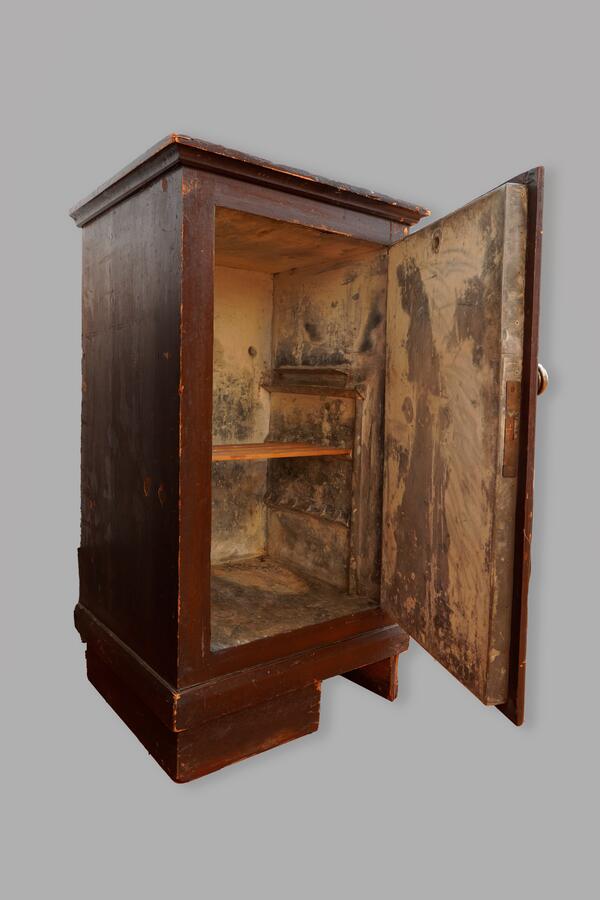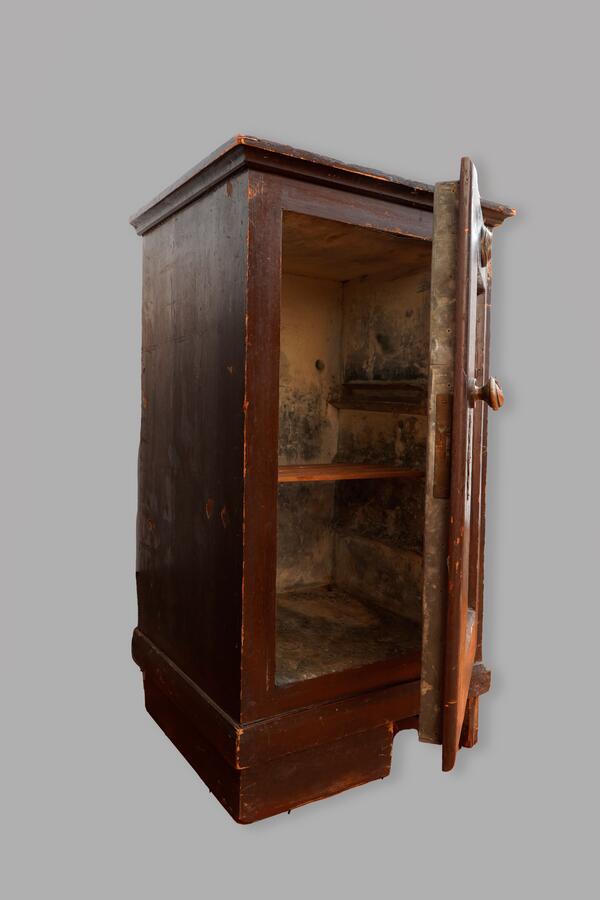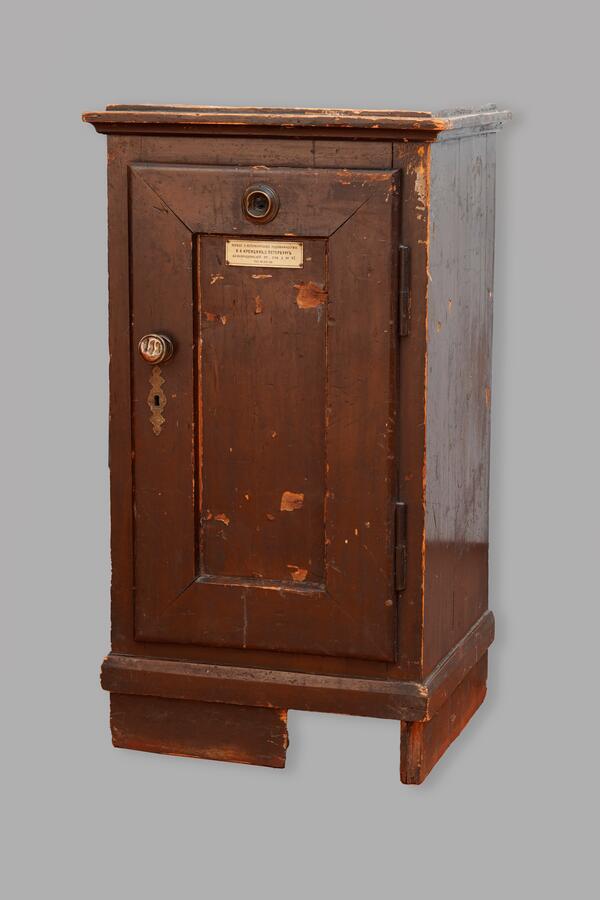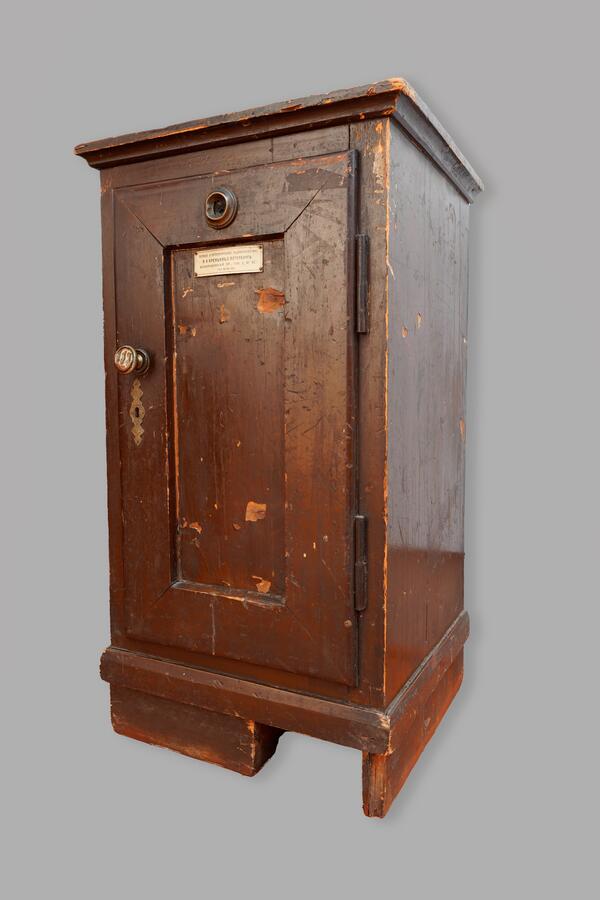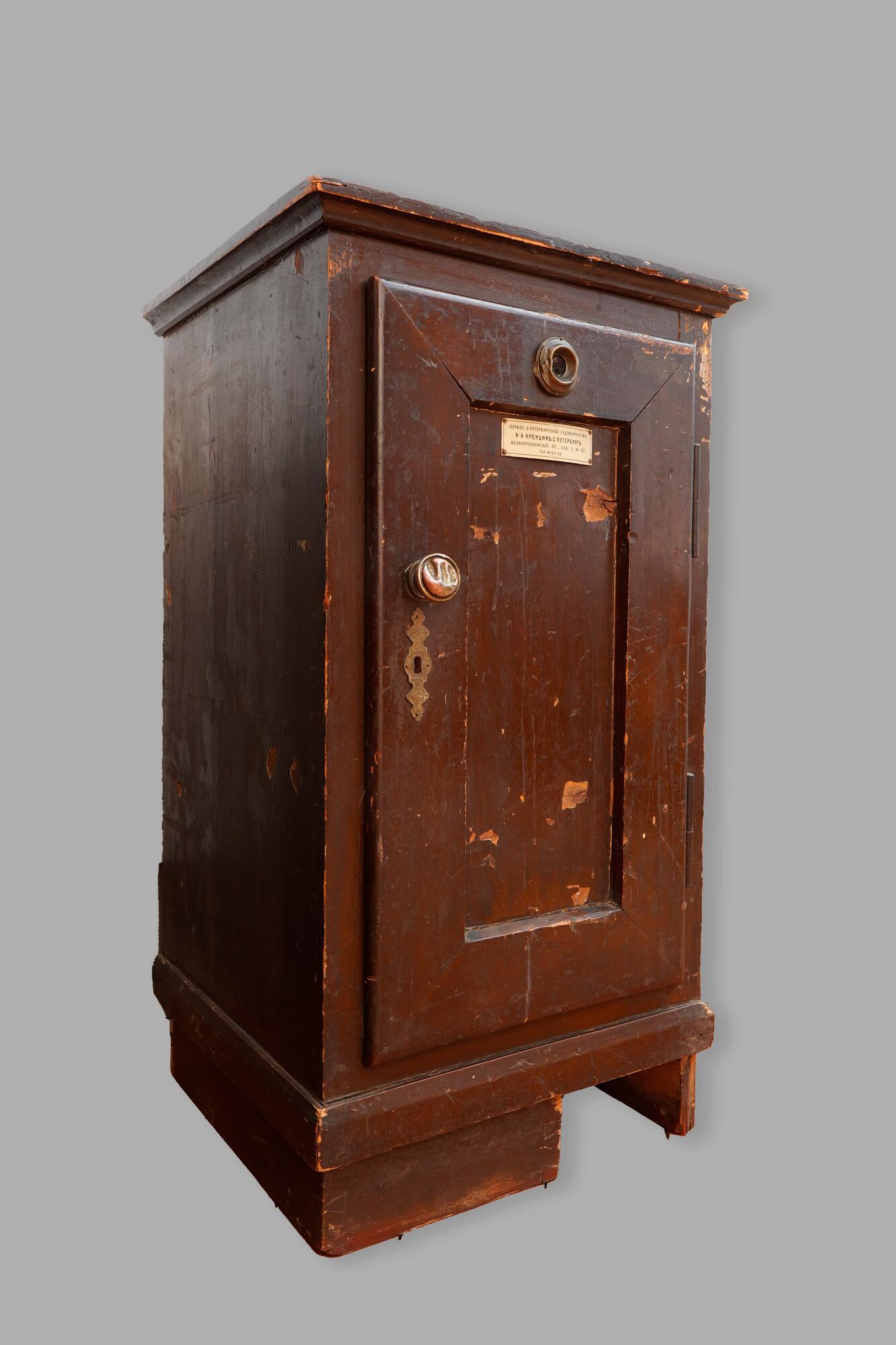


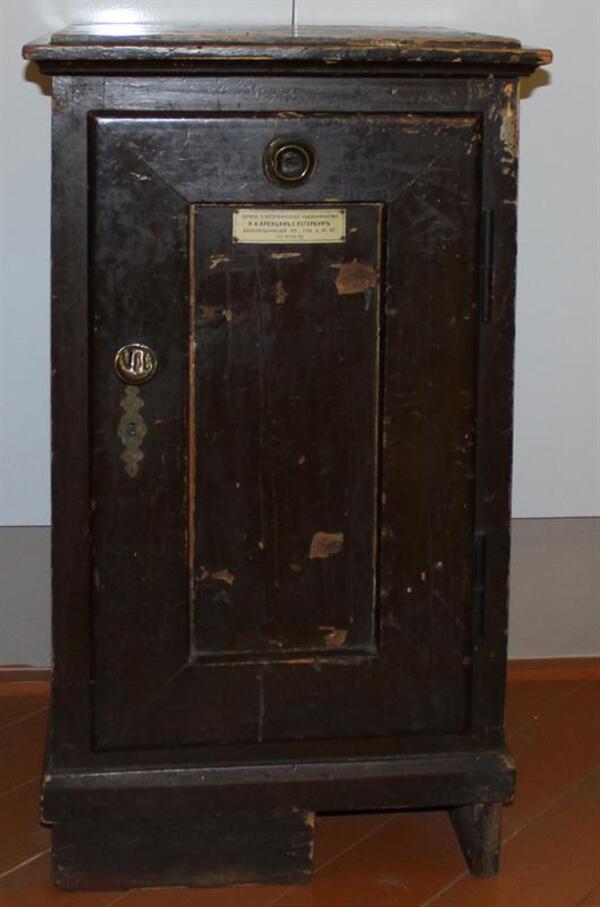
Icebox cabinets, old-fashioned refrigerators, were an important part of any household since ancient times. In estates, entire rooms were allocated for the storage of perishable products. In city apartments, more compact glaciers — icebox cabinets — were used. They consisted of a wooden cabinet and a metal chamber with shelves for products. Between the chamber and the walls of the case there was a free space, which was filled with cork, sawdust or other heat-insulating material. Above or below the food chamber there were compartments for ice. The ice had to be constantly replenished since it melted quickly. A tray was placed in the lower compartment of the glacier or on the floor nearby to collect water, and some models had a drainage hose.
If possible, ice was prepared in the winter months and stored in the basement under straw. If this was not possible, ice had to be purchased. It was expensive. “In Northern Palmyra, the price of ice is too steep, ” a journalist from “The Petersburg Leaf” newspaper complained at the end of the 19th century. However, getting ice was a difficult and dangerous business. Workers-“icebreakers” had special saws with weights and sawed out ice strips directly from the Neva river. Then pieces were broken off — they were called “kabany” (“boars”). It was impossible to manually get a “boar” out of the water: a harnessed horse was brought to the hole in the ice, long rear spears (support bars inserted into the runners) were lowered and brought under the ice block. If the horse did not have enough strength to pull out the load, the heavy ice block dragged both the horse and people under the water. The work did not end at this stage. For another three or four days, the ice was being made transparent: it was cleaned of snow and poured over with water several times. The stocks were kept in deep ice houses, and a team of strong, experienced workers was hired to load an ice house: they had to act quickly and accurately, because the “boar” could fall off the rope and inflict serious injuries. No wonder this kind of work paid well. Cabs with draft horses were hired to deliver valuable cargo to the customer: ordinary horses were unable to pull such a heavy load.
William Cullen of the University of Glasgow invented artificial cooling with the use of diethyl alcohol back in 1748. And only a hundred years later, in 1850, the French engineer Ferdinand Carré introduced the world to an apparatus for making water ice.
If possible, ice was prepared in the winter months and stored in the basement under straw. If this was not possible, ice had to be purchased. It was expensive. “In Northern Palmyra, the price of ice is too steep, ” a journalist from “The Petersburg Leaf” newspaper complained at the end of the 19th century. However, getting ice was a difficult and dangerous business. Workers-“icebreakers” had special saws with weights and sawed out ice strips directly from the Neva river. Then pieces were broken off — they were called “kabany” (“boars”). It was impossible to manually get a “boar” out of the water: a harnessed horse was brought to the hole in the ice, long rear spears (support bars inserted into the runners) were lowered and brought under the ice block. If the horse did not have enough strength to pull out the load, the heavy ice block dragged both the horse and people under the water. The work did not end at this stage. For another three or four days, the ice was being made transparent: it was cleaned of snow and poured over with water several times. The stocks were kept in deep ice houses, and a team of strong, experienced workers was hired to load an ice house: they had to act quickly and accurately, because the “boar” could fall off the rope and inflict serious injuries. No wonder this kind of work paid well. Cabs with draft horses were hired to deliver valuable cargo to the customer: ordinary horses were unable to pull such a heavy load.
William Cullen of the University of Glasgow invented artificial cooling with the use of diethyl alcohol back in 1748. And only a hundred years later, in 1850, the French engineer Ferdinand Carré introduced the world to an apparatus for making water ice.