Font
Color
Graphics
Изображение точки

To see AR mode in action:

1. Install ARTEFACT app for iOS or Android;

2. Find the exhibition «The Ethnography of the Adyghe People»

3. Push the «Augmented reality» button and point your phone's camera at the exhibit;

Скрыть точки интересаПоказать точки интереса
Показать в высоком качестве

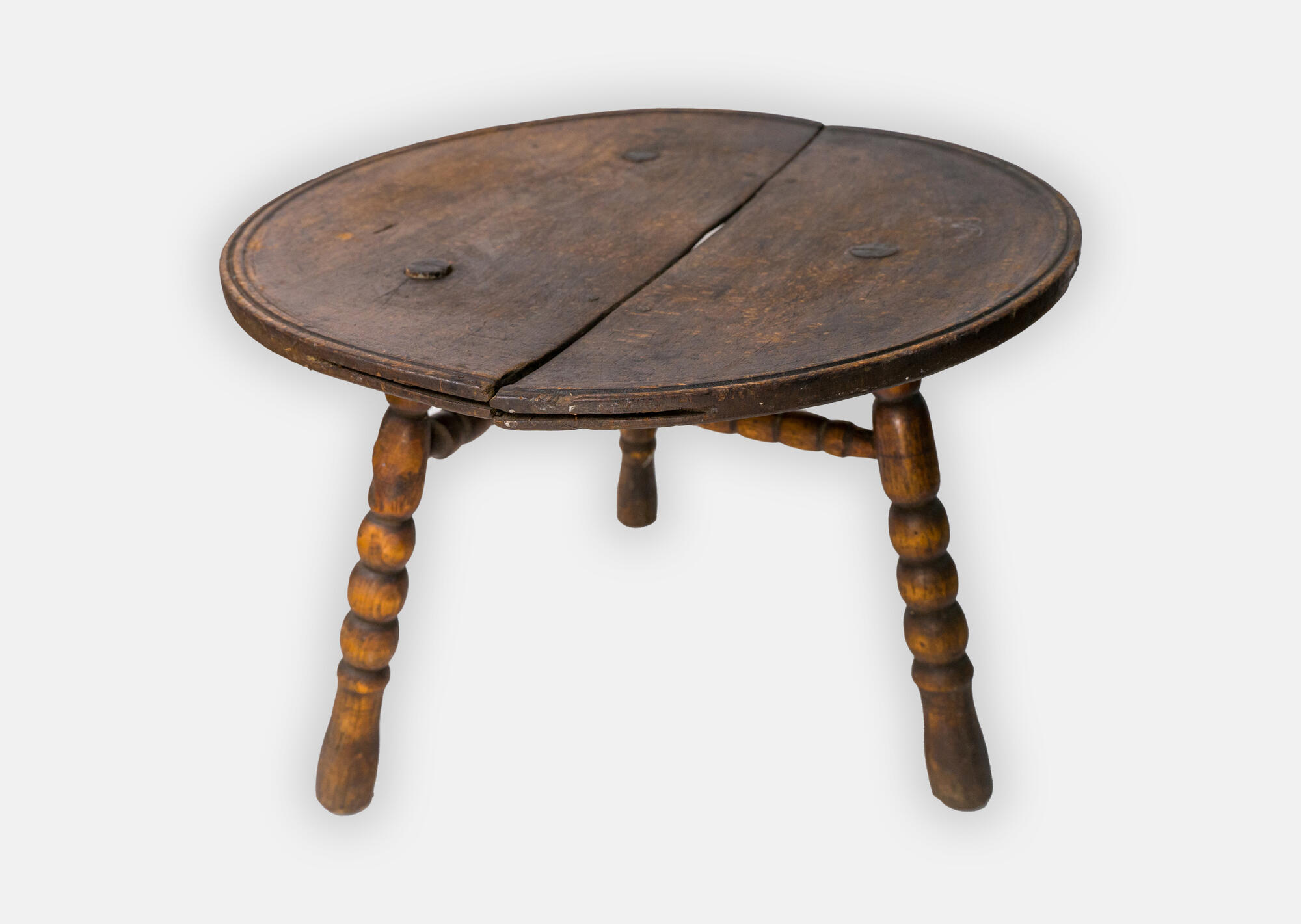
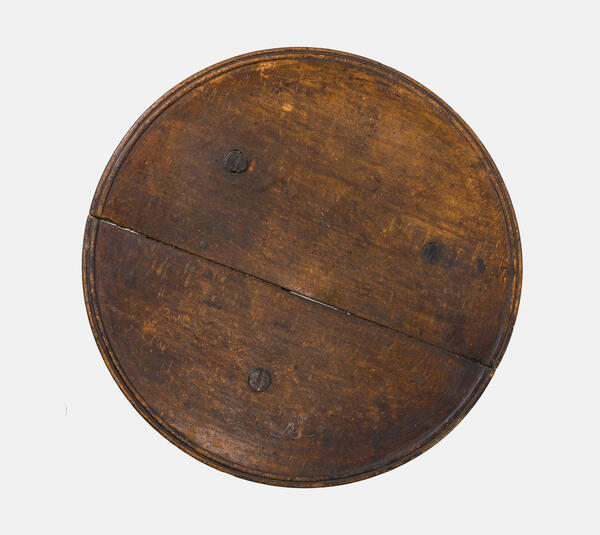
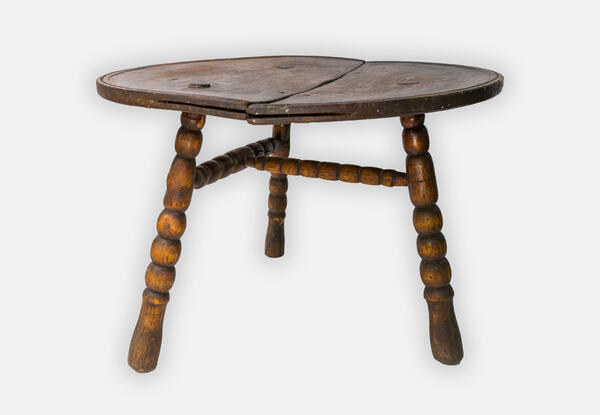
Three-legged table

Creation period
the late 19th — early 20th century
Place of сreation
the Russian Empire
Dimensions
height — 45 cm, diameter of the table top — 60 cm
Technique
wood; turning
0
Open in app
#2

All the necessary wooden items, including furniture, were made by the Adyghe with their own hands for centuries. Wood processing belongs to the most ancient crafts of the Adyghe. This is evidenced by archaeological findings.

Adyghe craftsmen with great skill made “ane”, which was simultaneously a table and a tray. These tables were the most widespread in Adygea, each family had one. They were most often made on a lathe from elm and less often from beech and ash. These tables were often very elegant. Woodcarvers sought to place an image of a horned animal’s head on the bottom of the table, most often a ram, as a symbol of abundance in the customer’s house. Three-legged benches with legs turned on a lathe were made for these tables.

Vyacheslav Ujuhu, a master woodworker, told how he creates the ane table:
#3

The process of making ane begins with selecting materials which takes about one and a half months. I tried making ane tables using only machines, but I realized that these objects had no soul. When making things by hand, I leave a part of myself. Don’t you see? It is not me doing the touching, but rather it is touching my hand.

#5

Ane tables appear in the ancient Adyghe epic about the Nart bogatyrs (heroes) and other Adyghe legends as a sacred symbol of home, family, hospitality and an object with magical powers. Also, a short round Adyghe table symbolized proximity to both the Sun and the Earth at the same time.

It symbolizes unity and equality of all those sitting at it. Meals at this table united people. In the past, foreign travelers thought these tables were trays on legs. And indeed, the top of the table was carried in, already set with different dishes which were served in an established order. Traditionally, ane tables didn’t require tablecloths. The table was washed with hot water at the end of the meal.

The table is still seen as an integral interior item in many Adyghe households. Vyacheslav Ujuhu, a craftsman who makes traditional Adyghe objects and reviver of the historical traditions of wood carving, said:
#6

It is gratifying to know that today almost every Adyghe family has ane tables. They are part of our national cultural code.

#7
Three-legged table
#4
View in the State Catalogue
read morehide
00:00
00:00
1x

Three-legged table

Creation period
the late 19th — early 20th century
Place of сreation
the Russian Empire
Dimensions
height — 45 cm, diameter of the table top — 60 cm
Technique
wood; turning
0
Point your smartphone camera to open in the app
Share
VkontakteOdnoklassnikiTelegram
Share on my website
Copy linkCopied
Copy
Open in app
To see AR mode in action:
  1. Install ARTEFACT app for 
  2. iOS or Android;
  3. Find and download the «Paintings in Details» exhibition
  4. Push the «Augmented reality» button and point your phone's camera at the painting;
  5. Watch what happens on your phone screen whilst you flip through the pictures.
 
We use Cookies
Cookies on the Artefact Website. We use cookies to ensure that we give you the best experience on our website. If you continue without changing your settings, we'll assume that you are happy to receive all cookies on the Artefact website. However, if you would like to, you can change your cookie settings at any time.
Learn more about useHide
Content is available only in Russian

X

Нашли опечатку?...

%title%%type%