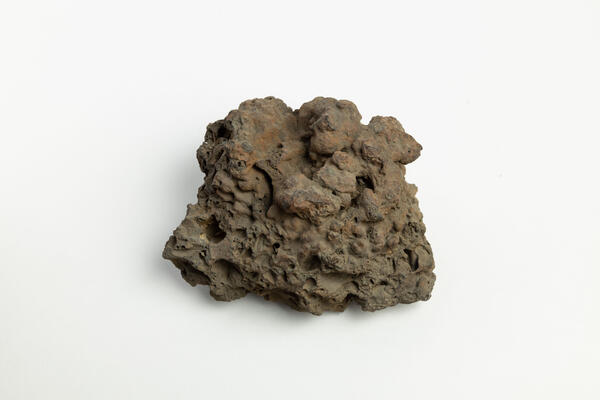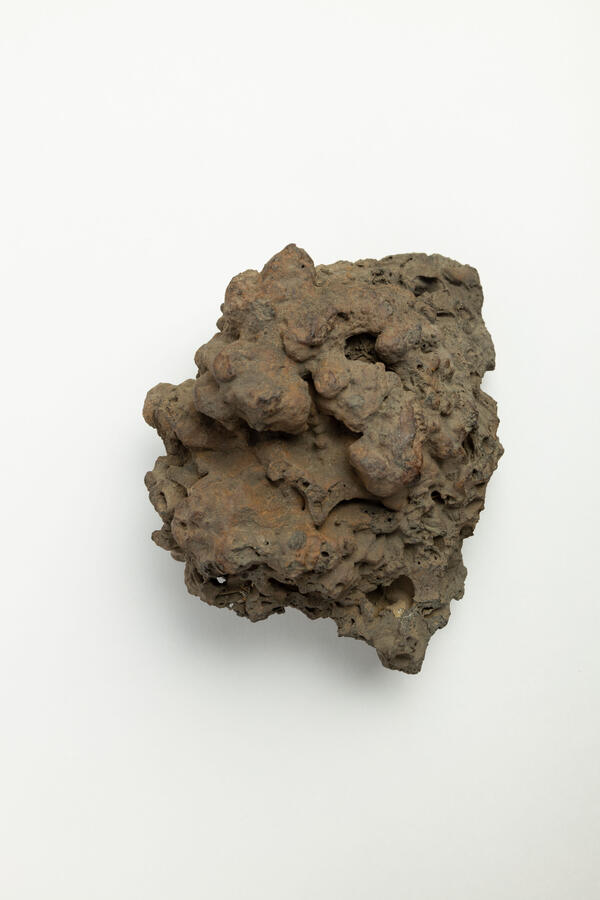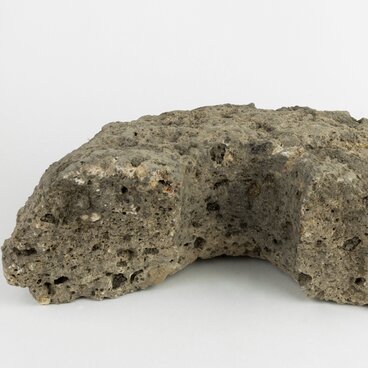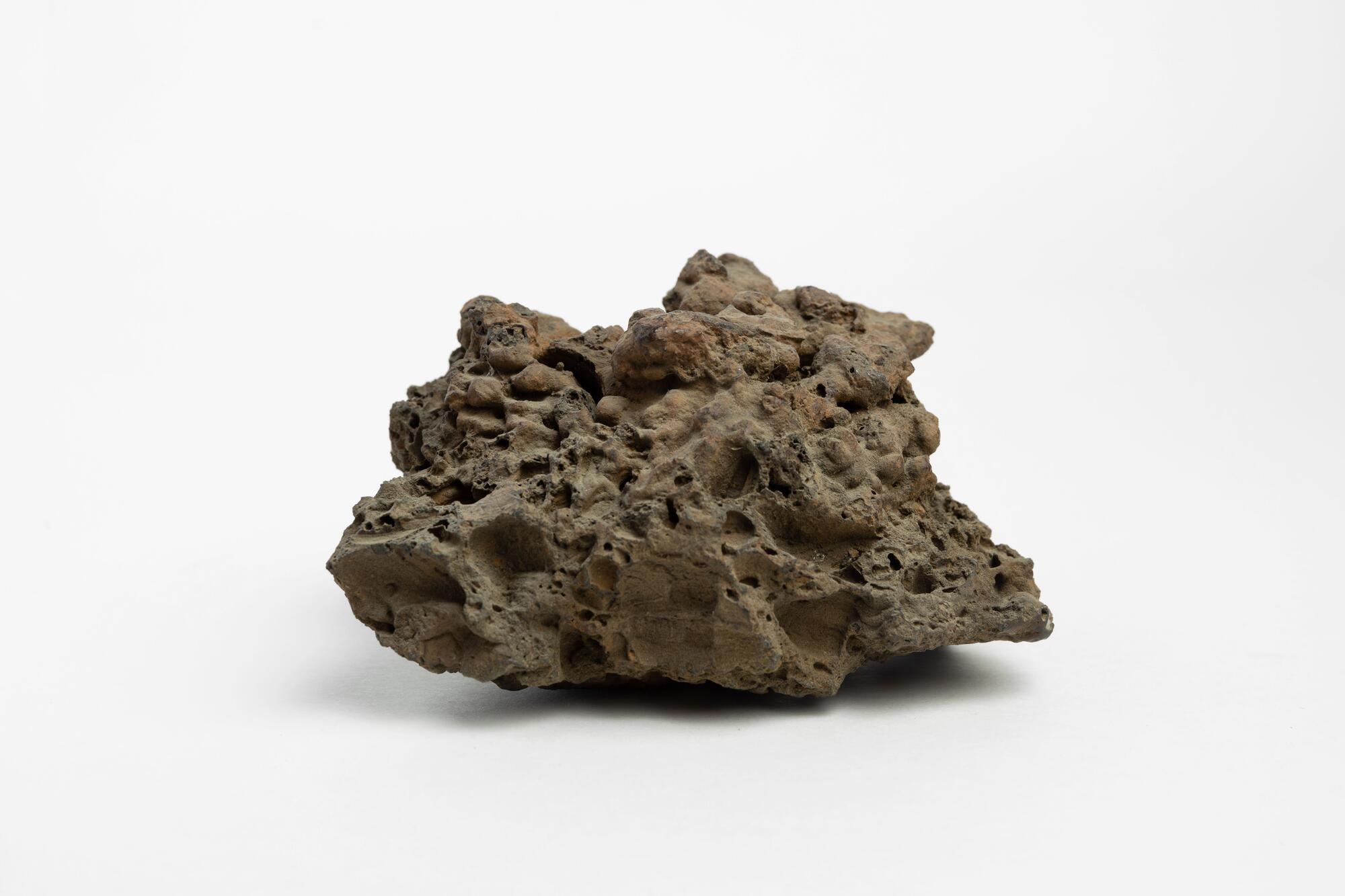


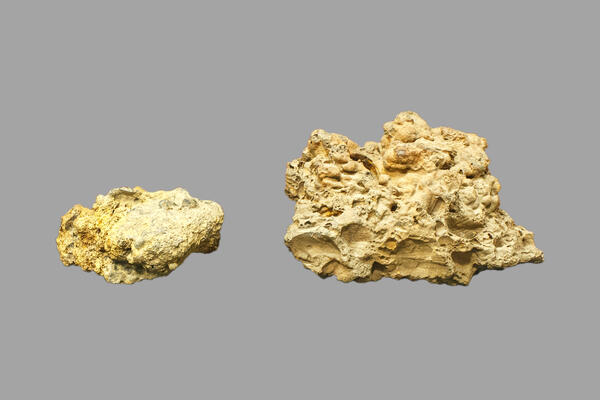
Slag is a by-product of metallurgical processes. Metallurgical slag is a valuable, and sometimes the only source for studying the technologies of iron-working in the 7th–13th centuries. Unlike finished metal items that people could bring in from other regions, slag always remained at the place of production and was a reliable witness of local engagement in metal processing.
More than 200 cultural monuments of Finno-Ugric tribes, the ancestors of the northern Udmurts, have been preserved in the Cheptsa River basin. The greatest number of valuable historical objects, structures and materials are found in medieval settlements. The fragments of slag from the exhibition of the Glazov Museum of Local Lore were found during excavations at the medieval settlement of Vesyakar. They indicate that the inhabitants of Vesyakar had a well-developed metallurgy.
Slags are most often found near metallurgical furnaces and production workshops. They are used to determine the role of ferrous metallurgy in the economy and the sources of iron ore. The production and processing of metals in the early Middle Ages was a very difficult occupation at all stages, from the extraction of brown bog iron and limonite to iron processing. Limonite was of low quality, but lay close to the surface, so it was actively extracted for local needs and processed.
Ore prospectors were tasked with searching for ore. They determined its location by using folk knowledge and with the help of a special tool — a sharpened stake. Ore miners stuck it into the ground, evaluated the sound with which it entered the rock, and then the rock itself that was stuck to the stake. They could even taste the ground — a sour taste was a good indicator: the turf at this area was removed and an ore layer with a thickness of 8 to 35 cm was found.
The ore was dried for a month. Then it was crushed, fired, sieved and washed to free it from gangue. Only after that, it was placed in a blast furnace with added layers of charcoal. The smelting of iron involved the bloomery process: air was pumped using bellows. The resulting mass of iron, the bloom, was carefully hammered, and the remaining slag was “squeezed” out of it.
More than 200 cultural monuments of Finno-Ugric tribes, the ancestors of the northern Udmurts, have been preserved in the Cheptsa River basin. The greatest number of valuable historical objects, structures and materials are found in medieval settlements. The fragments of slag from the exhibition of the Glazov Museum of Local Lore were found during excavations at the medieval settlement of Vesyakar. They indicate that the inhabitants of Vesyakar had a well-developed metallurgy.
Slags are most often found near metallurgical furnaces and production workshops. They are used to determine the role of ferrous metallurgy in the economy and the sources of iron ore. The production and processing of metals in the early Middle Ages was a very difficult occupation at all stages, from the extraction of brown bog iron and limonite to iron processing. Limonite was of low quality, but lay close to the surface, so it was actively extracted for local needs and processed.
Ore prospectors were tasked with searching for ore. They determined its location by using folk knowledge and with the help of a special tool — a sharpened stake. Ore miners stuck it into the ground, evaluated the sound with which it entered the rock, and then the rock itself that was stuck to the stake. They could even taste the ground — a sour taste was a good indicator: the turf at this area was removed and an ore layer with a thickness of 8 to 35 cm was found.
The ore was dried for a month. Then it was crushed, fired, sieved and washed to free it from gangue. Only after that, it was placed in a blast furnace with added layers of charcoal. The smelting of iron involved the bloomery process: air was pumped using bellows. The resulting mass of iron, the bloom, was carefully hammered, and the remaining slag was “squeezed” out of it.