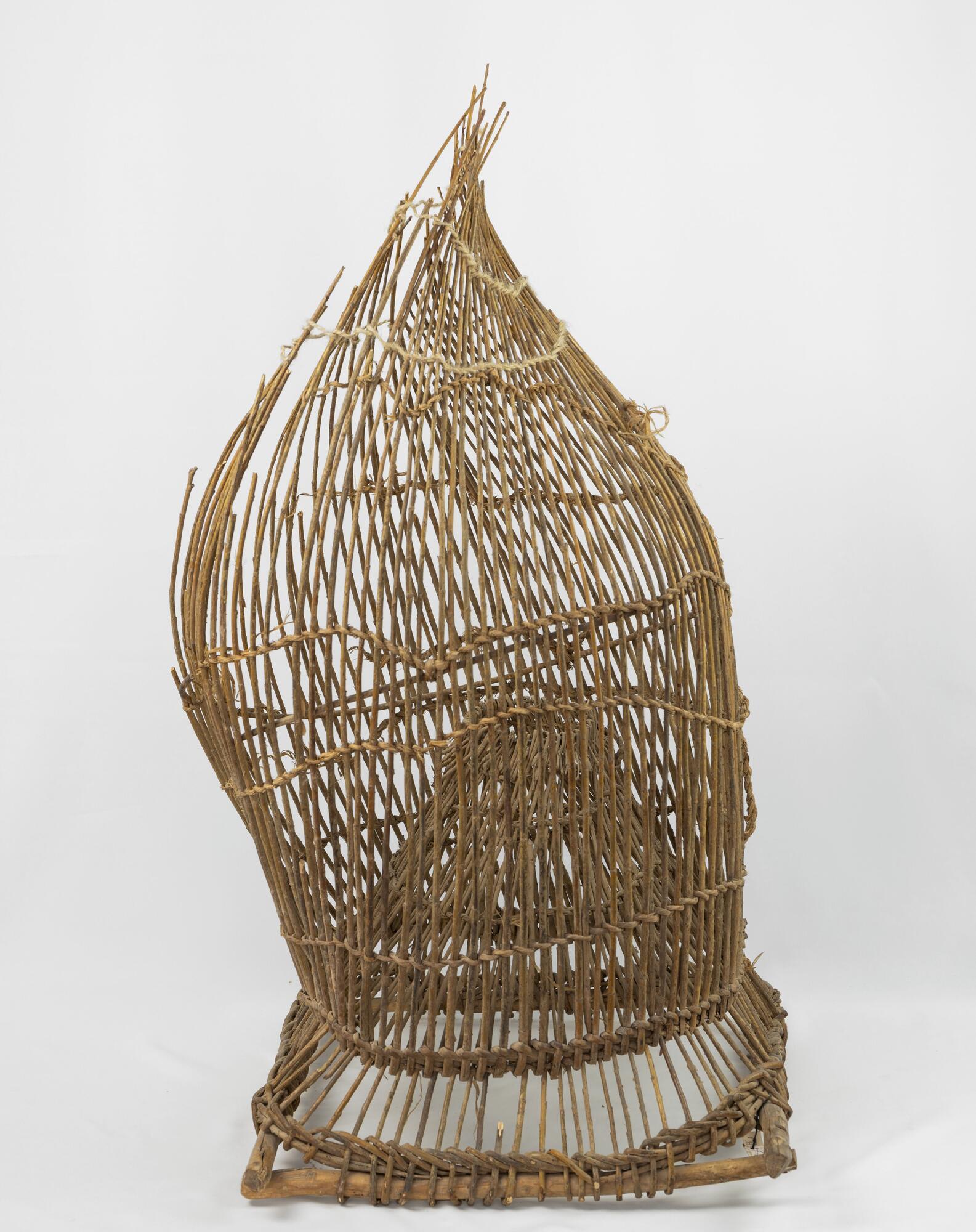
The snout fish trap, or “morda” in Russian, is one of the most ancient devices for fishing, along with a spear and nets. It is popularly known as “morda”, “murdo” or “mordushka”. It is also called versha, venter, norot, nersha, vereyenka and korchaga. In Udmurtia, it is customary to call it “morda” with emphasis on the last syllable. This fish trap is mentioned in the fairy tale “The Sapient Minnow” by Mikhail Yevgrafovich Saltykov-Shchedrin:


Snout trap for fishing
Creation period
the early 20th century
Place of сreation
the village of Ivanovtsy, Udmurtia
Dimensions
85x45x41 cm
Technique
ива, кустарная работа
Collection
Exhibition
4
Open in app#2
#3
And man — what an artful creature he was! What tricks he devised to murder the minnows, and for no good reason whatsoever! Used seines and plain nets and vershi, and noroty, and last but not least — the fishing line.
Mikhail Yevgrafovich Saltykov-Shchedrin:
#4
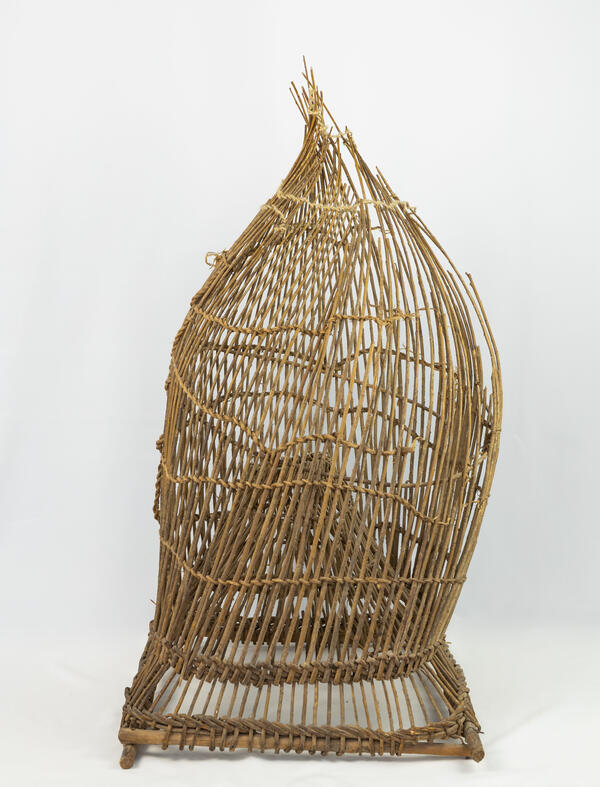
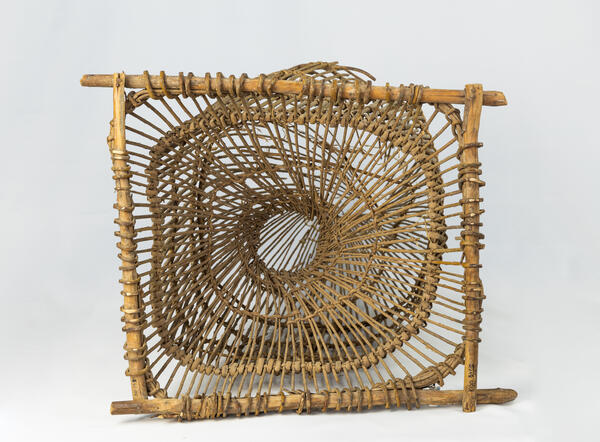
The snout trap looks like a large wicker basket with a narrow cone-shaped opening. It is fixed in the water near the shore, tied to special stakes or bushes and pressed down from above with a load. The upper hole is plugged with hay, and spruce branches and bait are put inside — those are pieces of bread, cake or small fish. The fish goes inside through the opening and can no longer get out. Similar traps were used in the Stone Age and have remained almost unchanged to our days. The snout trap from the collection of the Glazov Museum of Local Lore was made in the early 20th century and was found in an abandoned house in the village of Ivanovtsy in the Udmurt Republic.
The bodies of water in Udmurtia have been rich in fish since ancient times. People fish carp, crucian carp, common bream, Eurasian carp, sander, northern pike, perch, and wels catfish. During excavations in the Cheptsa River basin, iron and bronze fishing hooks, spears, sinkers for nets and fish vertebrae were found, so fishing has always been an important part of the local economy. The art of making fish traps was developed by the residents of the Idnakar settlement in the 9th–13th centuries — it was an administrative, handicraft, trade and cultural center of the ancestors of the northern Udmurts.
The fishing gear of the Udmurts was similar to the devices of the neighboring peoples — the Tatars, Bashkirs and Mari. For the most part, the Udmurt fishing gear was homemade and every family made their own tools. To fish, they used hooks (viznan), seines (kalton), trotlines (chilep), scoop nets (sak) and plain nets. The nets were knotted from twisted hemp threads, and the snout fish traps were woven from flexible willow twigs. In different regions, the snout traps differed in size, the design of the opening, shape and name. They were also used for catching crayfish and their modified versions are still used today.
The bodies of water in Udmurtia have been rich in fish since ancient times. People fish carp, crucian carp, common bream, Eurasian carp, sander, northern pike, perch, and wels catfish. During excavations in the Cheptsa River basin, iron and bronze fishing hooks, spears, sinkers for nets and fish vertebrae were found, so fishing has always been an important part of the local economy. The art of making fish traps was developed by the residents of the Idnakar settlement in the 9th–13th centuries — it was an administrative, handicraft, trade and cultural center of the ancestors of the northern Udmurts.
The fishing gear of the Udmurts was similar to the devices of the neighboring peoples — the Tatars, Bashkirs and Mari. For the most part, the Udmurt fishing gear was homemade and every family made their own tools. To fish, they used hooks (viznan), seines (kalton), trotlines (chilep), scoop nets (sak) and plain nets. The nets were knotted from twisted hemp threads, and the snout fish traps were woven from flexible willow twigs. In different regions, the snout traps differed in size, the design of the opening, shape and name. They were also used for catching crayfish and their modified versions are still used today.
#6

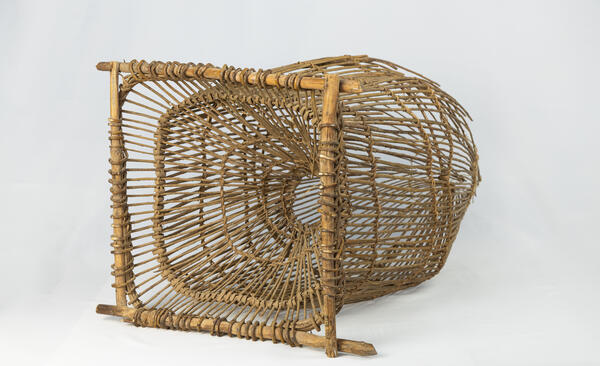
Snout trap for fishing
#5
Ministry of Culture of the Russian Federation
read morehide
00:00
00:00
1x
Snout trap for fishing
Creation period
the early 20th century
Place of сreation
the village of Ivanovtsy, Udmurtia
Dimensions
85x45x41 cm
Technique
ива, кустарная работа
Collection
Exhibition
4
 Point your smartphone camera to open in the app
Open in app
Share