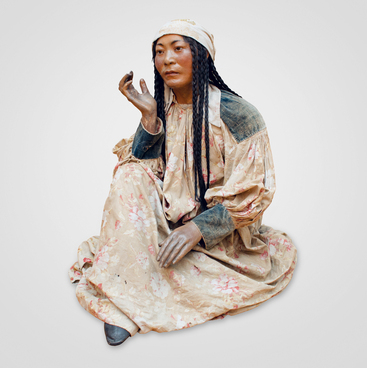
Tuvan life was closely connected with religion. Shamanism, an early form of religion based on the shaman’s communication with spirits, shamanistic ritual, was common among the indigenous population.
In shamanism it was believed that the world is divided into three spheres: earthly, underground, and heavenly, they were also called Middle, Lower, and Upper Worlds. Spirits inhabited each of these spheres. According to beliefs, health, life, and well-being depended on their will.
With the help of a shaman, people could communicate with spirits. Women priests were called ‘utkun’, and men were called ‘boo’ or ‘tsaarin’. Shamans may have come from different backgrounds, but those to whom the gift was passed by inheritance were regarded as true shamans.
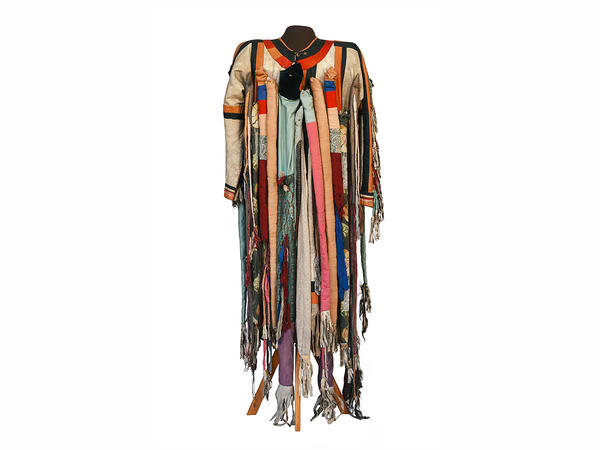
The shaman performed prayers to the spirits in a special ritual cloak. It was most often sewn from the skins of domestic goats and sheep, fur inside. Usually, the cloaks of Tuvan shamans were decorated with images of snakes. They were made from long pieces of multicolored fabric. Rings were sewn on both sides to the shoulders of the shaman’s cloak, and fabric snakes were attached to them — nine pieces each on the left and right, so that the tails would hang freely along the cloak. The hem was embroidered with fringe.
Such shamanic cloaks were described in the works of the traveler and researcher Alexandra Potanina:
In shamanism it was believed that the world is divided into three spheres: earthly, underground, and heavenly, they were also called Middle, Lower, and Upper Worlds. Spirits inhabited each of these spheres. According to beliefs, health, life, and well-being depended on their will.
With the help of a shaman, people could communicate with spirits. Women priests were called ‘utkun’, and men were called ‘boo’ or ‘tsaarin’. Shamans may have come from different backgrounds, but those to whom the gift was passed by inheritance were regarded as true shamans.
The shaman performed prayers to the spirits in a special ritual cloak. It was most often sewn from the skins of domestic goats and sheep, fur inside. Usually, the cloaks of Tuvan shamans were decorated with images of snakes. They were made from long pieces of multicolored fabric. Rings were sewn on both sides to the shoulders of the shaman’s cloak, and fabric snakes were attached to them — nine pieces each on the left and right, so that the tails would hang freely along the cloak. The hem was embroidered with fringe.
Such shamanic cloaks were described in the works of the traveler and researcher Alexandra Potanina: