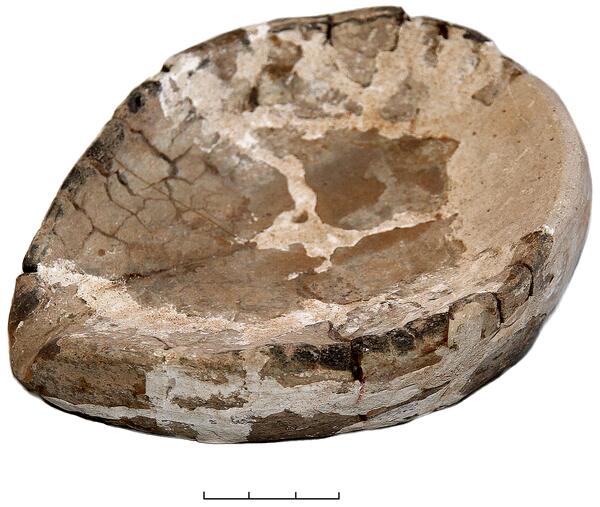
The museum’s collection features a teardrop-shaped incense burner with low sloping sides. Similar objects were widespread in the cultures of the Early Iron Age in the territories of Central Asia and the Caspian Sea — among the Sauromatians, Sakas and Massageteans. They appeared in the Irtysh region as the result of trade and cultural contacts of representatives of these peoples with local nomads — Sargats.
The Sargat culture belongs to the Scythian world — a family of peoples with similar cultural characteristics who occupied territories from the northern Black Sea region to the steppes of northern Mongolia. The Sargat nobility belonged to the Caucasians, the ordinary population belonged to the Mongoloids of the Ugric group. The main occupation of the Sargats was nomadic animal husbandry — breeding of large and small cattle, horses.
Among the Sauromatians, Sakas and Massageteans, and later among the Sargats, similar objects were widely used in the funeral rite. Apparently, after the death of a person, objects related to the ceremony were placed in his or her grave, since they were probably the property of the deceased.
At the same time, it cannot be ruled out that small stone “portable altars, ” stone sacrificial altars, and altar dishes, which served for certain rituals, possibly related to fire, together with “a pebble or a grinding stick, a knife and a bone spoon, ” could be objects of a toilet set. According to the researcher Vadim Yuryevich Zuev, stone tables, dishes and flat stones served as graters for the preparation of cosmetics, “which, both during the lifetime of the buried people and after their death, could certainly have a ritual purpose.” It is also possible that the objects in question were used as lamps.