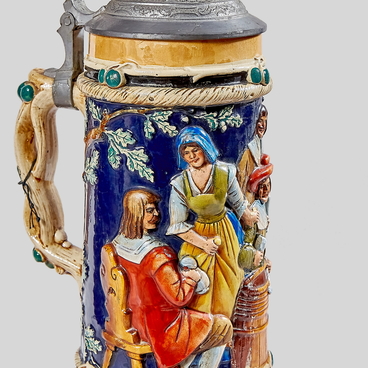
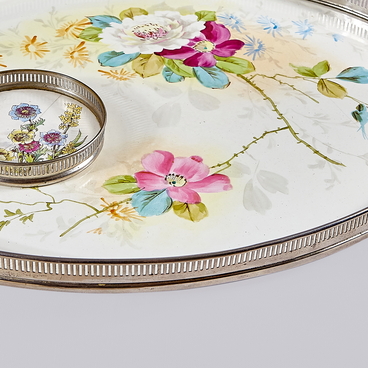
Wine and beer vessels have always sold well in Europe. They were made of various materials, including metal, wood, ivory, and ceramics. With the establishment of porcelain manufactories in Europe in the 18th century, jugs and mugs began to be made of this material which was very expensive at the time.
Apart from the products of European factories, porcelain was traditionally imported from China. The first large batches of porcelain products were brought to Europe from the Celestial Empire by Portuguese merchants in the early 16th century.
The beginning of the 17th century was marked by the foundation of East India Trading Companies and therefore a significant increase in the number of products imported from China. For a long time, China’s main port accessible to foreign traders was the city of Guangzhou, also known in Europe as Canton. The beer mug from the museum’s collection was also produced in this city in the late 18th century. It entered the museum’s collection in 1924 from the Kaluga Natural History Museum, which had been founded before the Russian Revolution of 1917.
This mug is a typical example of Chinese export porcelain, which was ordered by European trading companies. Willing to please the tastes of customers, Chinese craftsmen mastered the production of new articles, including beer mugs with metal lids.
During the same period, local artists started depicting the Europeans, scenes from their lives, as well as mythological and Christian legends. Many products manufactured in China during that time combined traditional Chinese features with European ones. This exhibit is a perfect example of this trend.
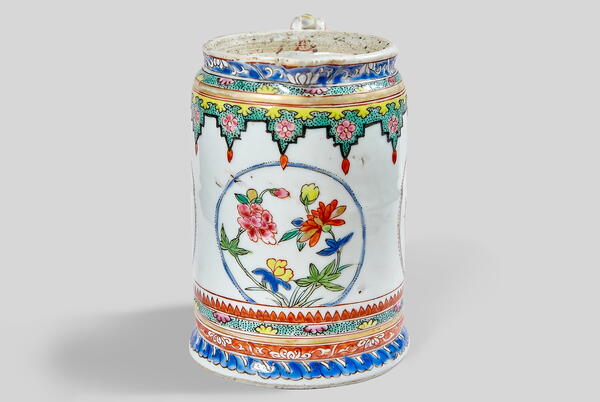
The mug has a cylindrical shape with a small triangular spout. The metal lid with the opening mechanism has not been preserved. The red curved handle is shaped like a dragon.
The bright multi-colored painting demonstrates a combination of two traditions — the European and the Chinese. The central place is occupied by four oval medallions against a white background. Two of them contain images of the Dutch wearing blue headdresses and holding swords, while the other two depict arrangements of red, pink, and yellow flowers typical of Chinese porcelain painting.
Apart from the products of European factories, porcelain was traditionally imported from China. The first large batches of porcelain products were brought to Europe from the Celestial Empire by Portuguese merchants in the early 16th century.
The beginning of the 17th century was marked by the foundation of East India Trading Companies and therefore a significant increase in the number of products imported from China. For a long time, China’s main port accessible to foreign traders was the city of Guangzhou, also known in Europe as Canton. The beer mug from the museum’s collection was also produced in this city in the late 18th century. It entered the museum’s collection in 1924 from the Kaluga Natural History Museum, which had been founded before the Russian Revolution of 1917.
This mug is a typical example of Chinese export porcelain, which was ordered by European trading companies. Willing to please the tastes of customers, Chinese craftsmen mastered the production of new articles, including beer mugs with metal lids.
During the same period, local artists started depicting the Europeans, scenes from their lives, as well as mythological and Christian legends. Many products manufactured in China during that time combined traditional Chinese features with European ones. This exhibit is a perfect example of this trend.
The mug has a cylindrical shape with a small triangular spout. The metal lid with the opening mechanism has not been preserved. The red curved handle is shaped like a dragon.
The bright multi-colored painting demonstrates a combination of two traditions — the European and the Chinese. The central place is occupied by four oval medallions against a white background. Two of them contain images of the Dutch wearing blue headdresses and holding swords, while the other two depict arrangements of red, pink, and yellow flowers typical of Chinese porcelain painting.