

Crosses are one of the main religious symbols and are distinguished by their purpose. A baptismal cross is worn around the neck and is given to newly baptized Christians to wear for the rest of their lives. Baptismal crosses are the most common type found during archaeological excavations.
For the symbolism of various church dogmas, as well as for aesthetic purposes and even gender identification, baptismal crosses were made with a different number of points — from four to eight. There was also a range of shapes for the points. They could feature a semicircle or be wedge-shaped (resembling lily petals), petaline, drop-shaped, etc. The shape of crosses used to depend both on the time and place of manufacture — basically on fashion.
In the Orthodox tradition, a baptismal cross has eight points. This variation is the most widespread in Russia. The middle crossbar in the eight-pointed cross is longer than the others. The higher crossbar is straight and shortened, and the lower one is shortened and slanting.
The rich variety of baptismal crosses makes it easy to determine both the time of their manufacture and the timeframe of the cultural deposit they were found in. From old crosses they find, experts can deduce both the Christian movement they belonged to and the timeframe of the settlement and economic development of the site.
To get cured of a disease, people left their baptismal crosses at a road intersection. To consecrate the rite of compaternity, the baptismal cross was hung on a tree branch and the future godparents were supposed to stand on either side of the cross, kissing the cross and each other at the same time. After that, the cross was either kept or buried in the ground in sacred places.
There was a belief that all failures and illnesses could be “said” over the cross and attached to it, and then the cross was left in a place where it would surely fall into the hands of a stranger, who, by taking the cross, took the problems along with it.
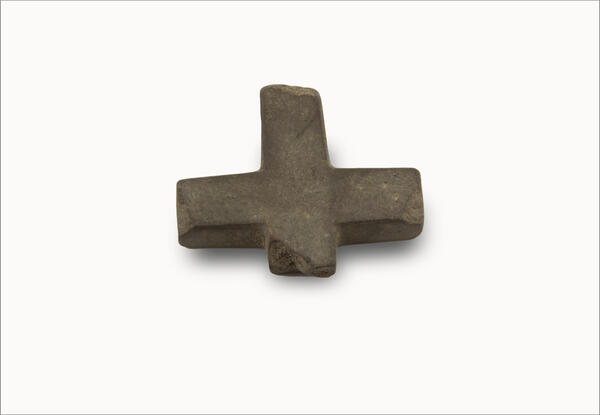
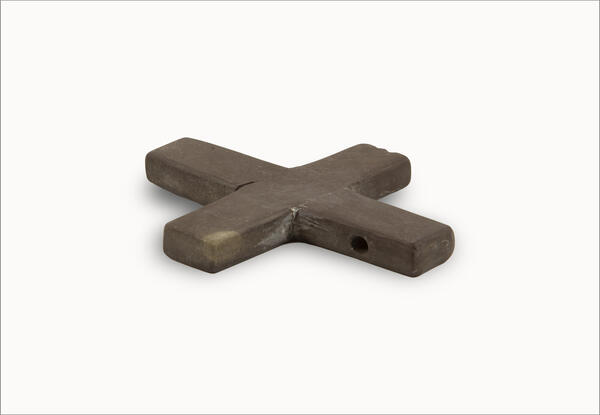
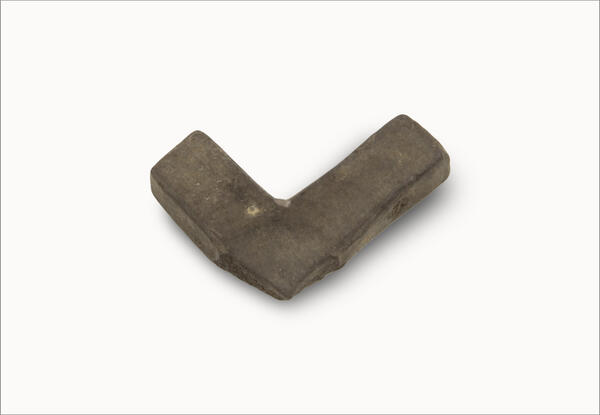
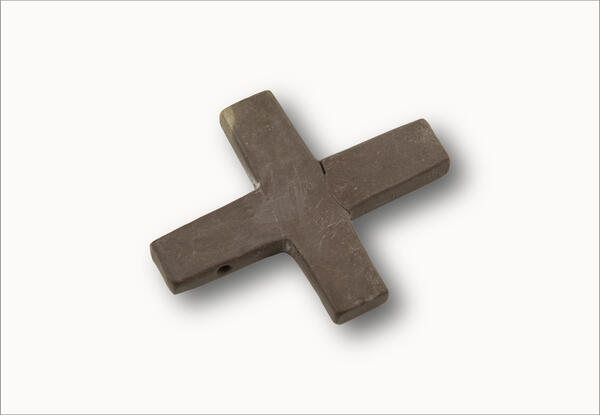
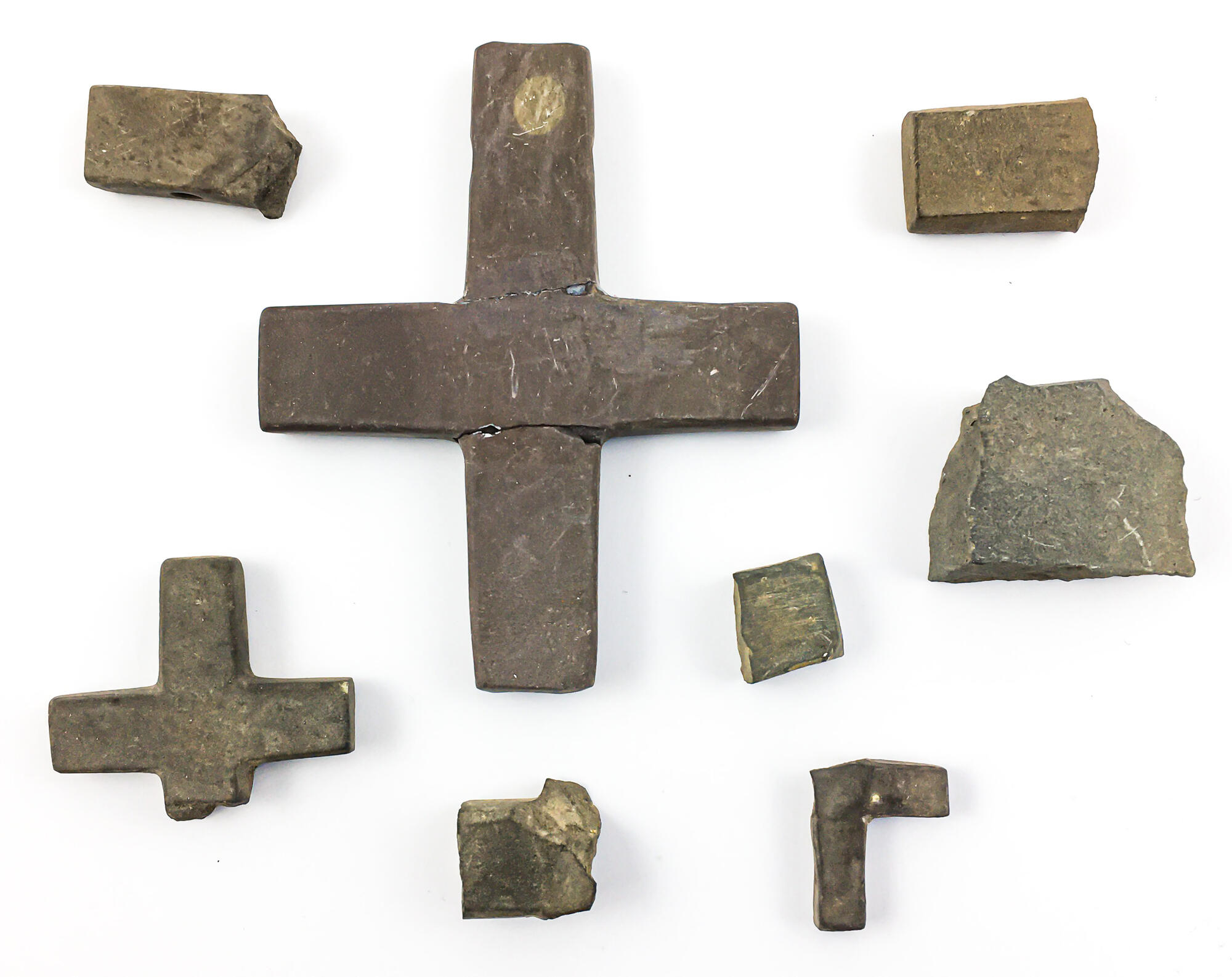
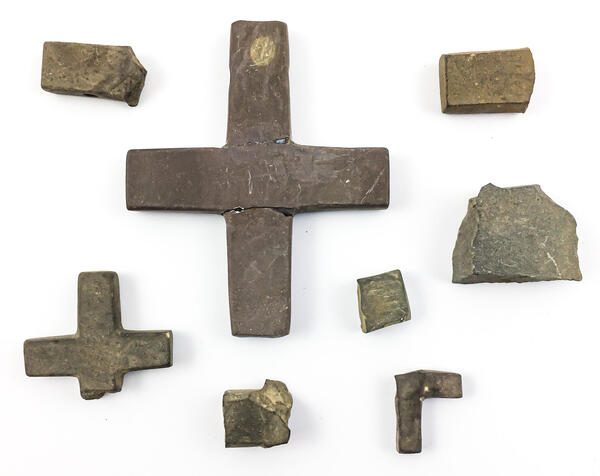
Among the exhibits from the museum’s collection, stone and slate crosses are of particular interest and are represented by one whole item and six fragments. They are dated between the 12th and 13th centuries.
For the symbolism of various church dogmas, as well as for aesthetic purposes and even gender identification, baptismal crosses were made with a different number of points — from four to eight. There was also a range of shapes for the points. They could feature a semicircle or be wedge-shaped (resembling lily petals), petaline, drop-shaped, etc. The shape of crosses used to depend both on the time and place of manufacture — basically on fashion.
In the Orthodox tradition, a baptismal cross has eight points. This variation is the most widespread in Russia. The middle crossbar in the eight-pointed cross is longer than the others. The higher crossbar is straight and shortened, and the lower one is shortened and slanting.
The rich variety of baptismal crosses makes it easy to determine both the time of their manufacture and the timeframe of the cultural deposit they were found in. From old crosses they find, experts can deduce both the Christian movement they belonged to and the timeframe of the settlement and economic development of the site.
To get cured of a disease, people left their baptismal crosses at a road intersection. To consecrate the rite of compaternity, the baptismal cross was hung on a tree branch and the future godparents were supposed to stand on either side of the cross, kissing the cross and each other at the same time. After that, the cross was either kept or buried in the ground in sacred places.
There was a belief that all failures and illnesses could be “said” over the cross and attached to it, and then the cross was left in a place where it would surely fall into the hands of a stranger, who, by taking the cross, took the problems along with it.
Among the exhibits from the museum’s collection, stone and slate crosses are of particular interest and are represented by one whole item and six fragments. They are dated between the 12th and 13th centuries.