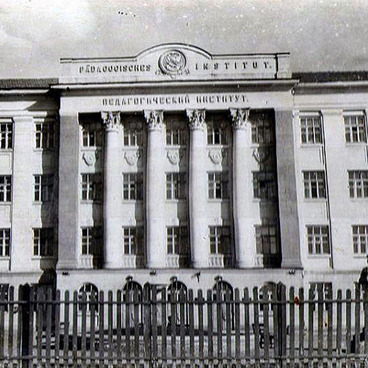
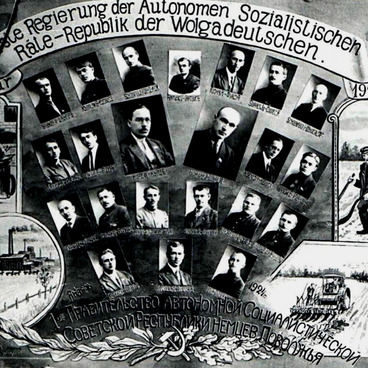
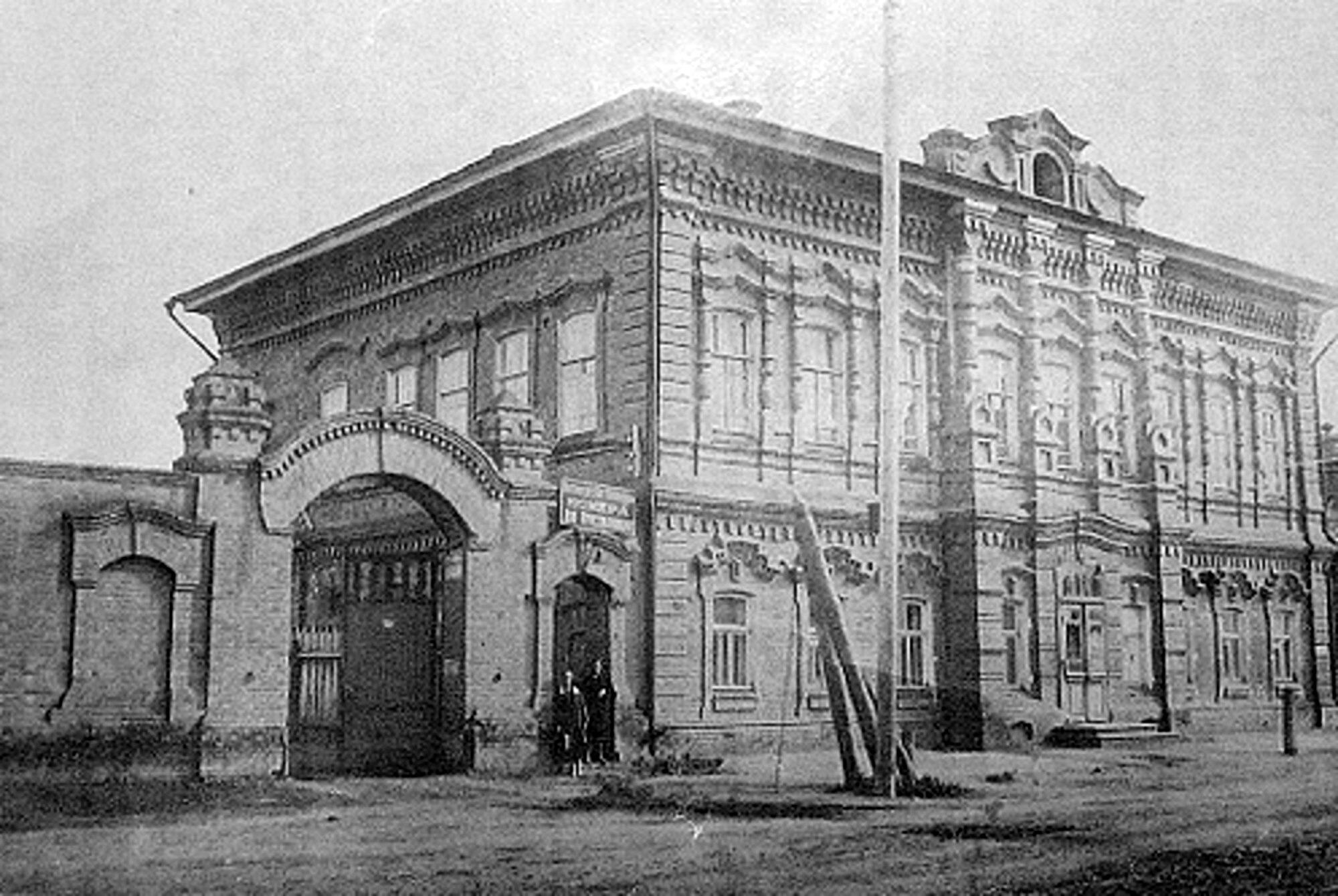
The Autonomous Soviet Socialistic Republic of Volga Germans (formal abbreviation: ASSR NP) was proclaimed in January 1924. After that, they began to discuss the opening of the Republican museum in Pokrovsk. Prominent scientists, such as Georg Genrikhovich Dinges, Professor of the Saratov State University, and Paul Davidovich Rau, an archaeologist, were at the heart of it, their names already well known in the world of science. The museum work proceeded in several directions: collecting of exhibits and scientific data on ethnography, archeology and wild life of the ASSR NP; scientific processing of the data and their publication; information exchange with other museums, scientific societies, academies of the country and the world. After the resolution on the first Republican museum, Professor Georg Dinges and the archaeologist Paul Rau began collecting exhibits and preparing them for exposition. The work of such scientists as G. Dinges, E. Hummel, A. Dulzon and P. Rau made the museum a research institution. In August 1941, the Republic of Volga Germans abolished, the museum closed. Most of its exhibits sent for storage to various organizations, many of them were irretrievably lost. Engels Local History Museum (the restored Central Museum of the Volga Germans Republic) keeps Georg Dinges’ scientific works and articles on his contribution to science written by modern specialists. Paul Rau’s archaeological exhibits are stored in the museum as well.


1 / 3
Local History Museum
Creation period
первая половина XX века
Place of сreation
Энгельс
Dimensions
21x30 cm
Technique
фотография
Collection
Exhibition
11
Open in app#1
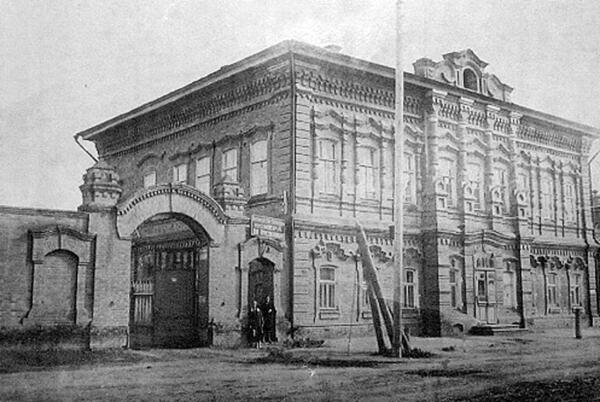
The first Republican Museum
#2
#3
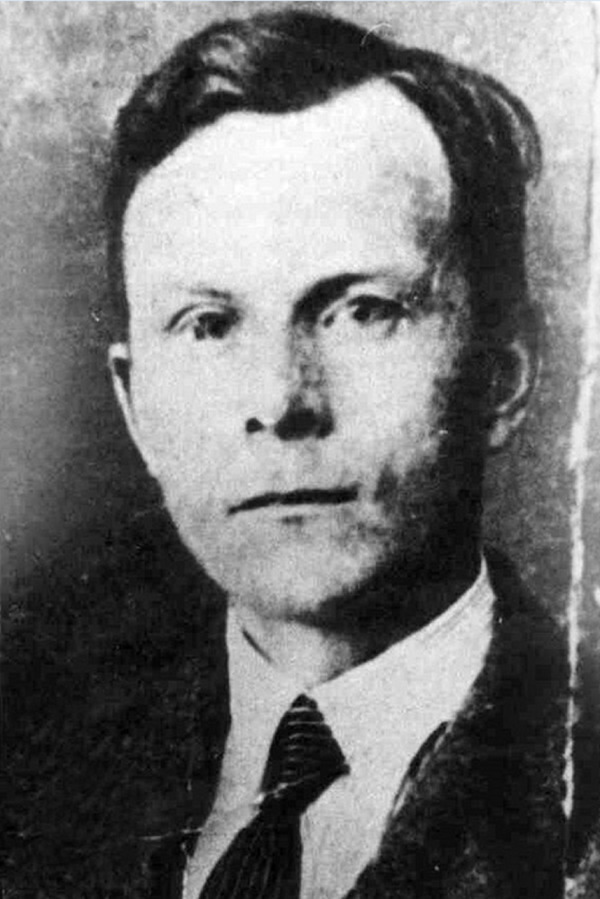
Georg Dinges (1891-1932), Director of the Central Museum of the Volga Germans Republic.
Georg Dinges, Professor of the Saratov State University, set up the Central Museum of the ASSR NP in 1925. He collected manuscripts, photographs, household items of Volga Germans. Georg Dinges is the author of numerous works in Russian and German languages: ‘Dictionary of Volga German dialects’, ‘Linguistic atlas of the Volga German region’, ‘Bibliography of Volga German dialects’, etc. Appointed in November 1929, Georg Dinges was the Deputy Director of the Nempedinstitut (German Pedagogical Institute). Arrested on January 6, 1930 on charges of ‘anti-Soviet nationalist activity and anti-Soviet agitation’ and deported to the Tomsk region, he worked in the emergency room of the district hospital in the town of Kolpashevo, where he died after got typhoid. Georg Dinges was posthumously rehabilitated in 1964.
#5
Paul Rau is an archaeologist, folklorist, artist, who made a significant contribution to the ethno cultural attribution of archaeological sites. He participated in the organization of the Society for the Scientific Study of the Republic of Volga Germans. At the same time, Rau taught at the Socio-Economic faculty of the German Pedagogical Institute in Pokrovsk. He was a Corresponding Member of the German Archaeological Institute. Since 1922, he was engaged in literary and artistic activities. Rau researched folk tales, was a regular author of poems and short humorous stories (‘schwanks’) in German magazines. In the late 20s, he suffered persecution for his works. After a series of denunciations and publications in the local newspaper, accused of sabotage, racism, nationalism and apolitical behavior, Rau committed suicide. He was buried in the city of Pokrovsk (now Engels), his burial site unknown.
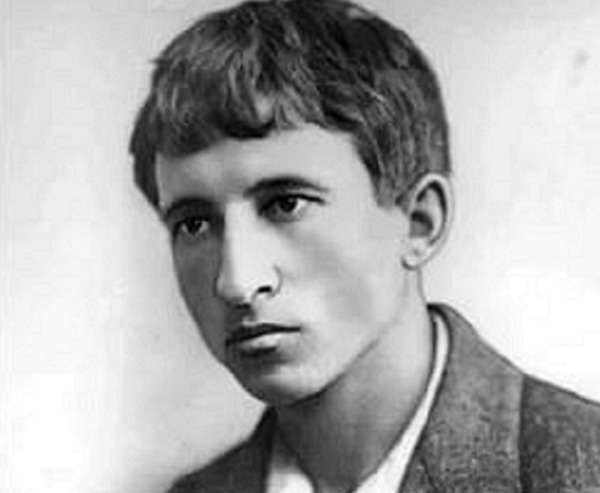
Paul Rau (1897 — 1930), Deputy Director of the Central Museum of the Volga Germans Republic.
read morehide
00:00
00:00
1x
Local History Museum
Creation period
первая половина XX века
Place of сreation
Энгельс
Dimensions
21x30 cm
Technique
фотография
Collection
Exhibition
11
 Point your smartphone camera to open in the app
Open in app
Share