

A kovsh is one of the most distinctive vessels, which can be called a symbol of the Russian national meal. The tsars would present a kovsh to their subjects as an award for special deeds. Despite the Europeanization of Russia under Peter the Great, these items remained in the everyday life of the Russian people for a long time.
In the 19th century, the interest in the kovsh increased. The influence of the pseudo-Russian style led to the massive production of 18th-century items at Russian metallurgical plants that began to appear in the Urals. This upsurge was largely brought about by the Berg privilege of 1719, which encouraged mining industry in Russia.
In the middle of the 18th century, the Demidovs, the first industrialists who launched large-scale activities in the Urals, owned more than 30 enterprises, that smelted 40% of all Russian pig iron. The enterprises were mainly involved in arms production, mining, extraction and processing of precious and semi-precious stones, gold and silver. However, in addition to this, they produced copper and brass tableware. Despite the mass production, the plants managed to retain high quality of their products.
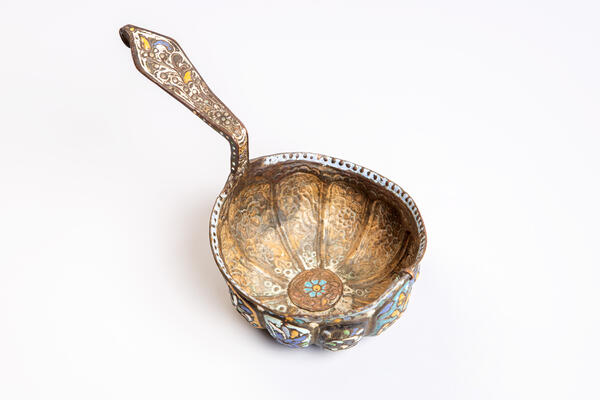
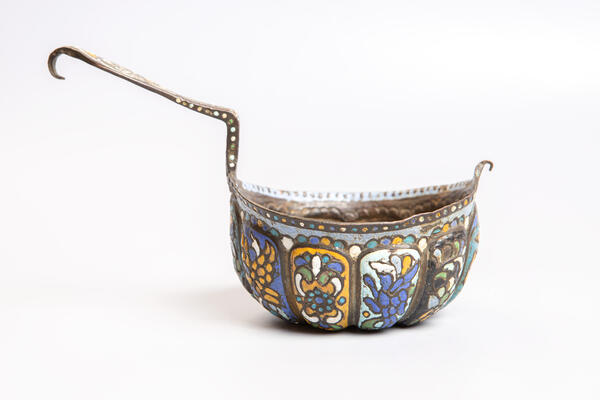
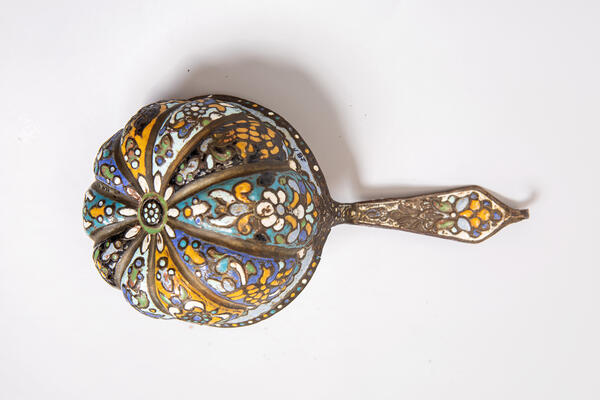
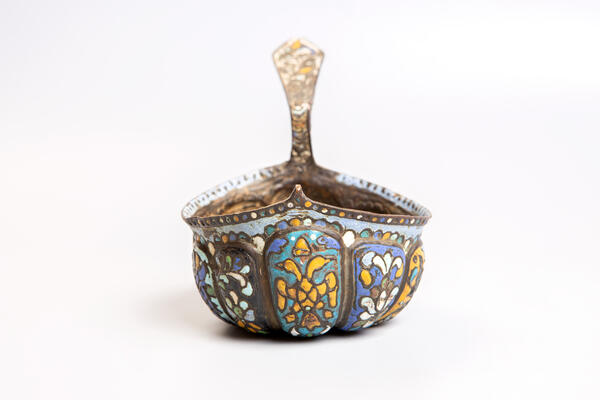
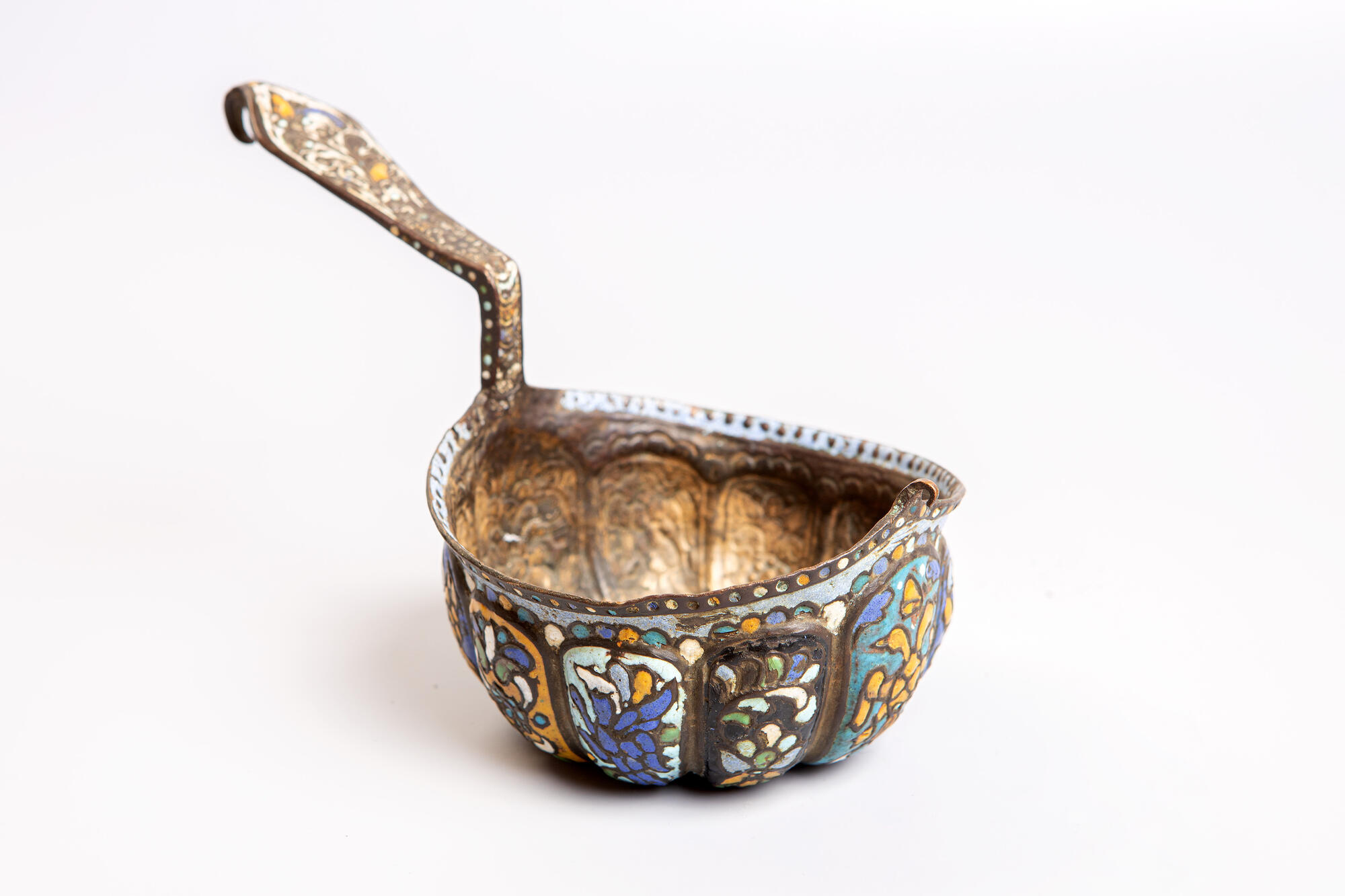
The tableware was manufactured for people of different social and financial background — princes and nobles, townspeople and peasants. The festive kovsh from the museum’s collection was also made at one of the Demidov Ural plants.
The kovsh is made of brass — an alloy of zinc and copper with various additives. Zinc added the golden hue, although, depending on its amount, the product could turn out to be yellow or even greenish. Such an alloy cost much less than pure copper, not to mention gold.
Brass was chosen to produce tableware since it was resistant to corrosion, malleable and hard. However, the artisans had to apply varnish to the surface, otherwise the metal would tarnish over time.
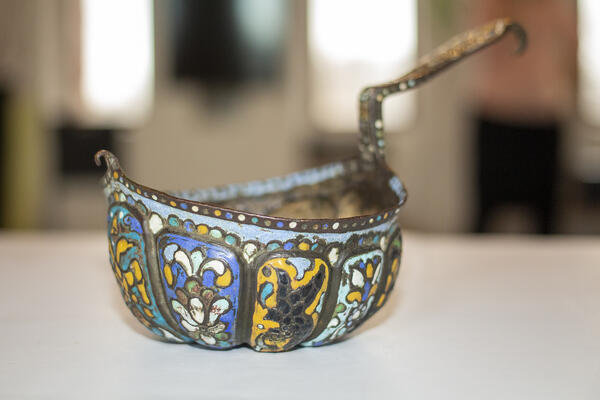
The kovsh is decorated with yellow, black, green, dark and light blue enamel. Artisans had mastered the technique of artistic enamel by the 17th century. It was used to decorate both flat surfaces and vessels.
In the 19th century, the interest in the kovsh increased. The influence of the pseudo-Russian style led to the massive production of 18th-century items at Russian metallurgical plants that began to appear in the Urals. This upsurge was largely brought about by the Berg privilege of 1719, which encouraged mining industry in Russia.
In the middle of the 18th century, the Demidovs, the first industrialists who launched large-scale activities in the Urals, owned more than 30 enterprises, that smelted 40% of all Russian pig iron. The enterprises were mainly involved in arms production, mining, extraction and processing of precious and semi-precious stones, gold and silver. However, in addition to this, they produced copper and brass tableware. Despite the mass production, the plants managed to retain high quality of their products.
The tableware was manufactured for people of different social and financial background — princes and nobles, townspeople and peasants. The festive kovsh from the museum’s collection was also made at one of the Demidov Ural plants.
The kovsh is made of brass — an alloy of zinc and copper with various additives. Zinc added the golden hue, although, depending on its amount, the product could turn out to be yellow or even greenish. Such an alloy cost much less than pure copper, not to mention gold.
Brass was chosen to produce tableware since it was resistant to corrosion, malleable and hard. However, the artisans had to apply varnish to the surface, otherwise the metal would tarnish over time.
The kovsh is decorated with yellow, black, green, dark and light blue enamel. Artisans had mastered the technique of artistic enamel by the 17th century. It was used to decorate both flat surfaces and vessels.