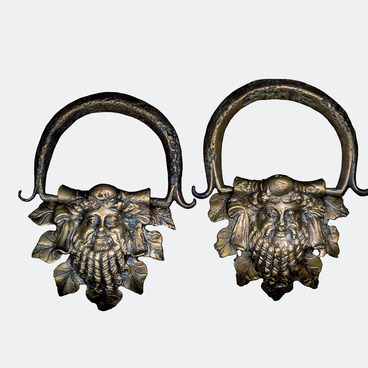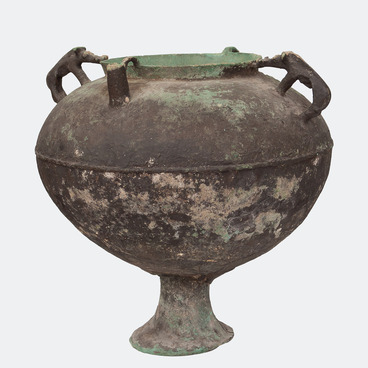
In the nomadic Sarmatian environment on the territory of the Volga-Don plains, such items have the status of imports and are concentrated in the mounds of the first centuries of our era. As it is known, the arrival of antique imports in the form of metal tableware acquires a massive character precisely from the turn of the era. Cases of finding forged boilers in mounds of mounds are found throughout all stages of development of Sarmatian cultures: early, middle and late.
It is generally believed that boilers were very important in the Sarmatian world. They were a symbol of unification. The boilers were placed in the graves of those who were senior in rank in the team. It is impossible to find two identical boilers, apparently each casting was made in one copy. The largest cauldron in Eurasia was found in a mound of the IV century BC in the Orenburg region — the diameter of its mouth was 1 m. The mound in which it was found undoubtedly belonged to the tsar. This discovery was a confirmation of the story described by Herodotus. According to her, after the death of the Scythian king, each tribe brought a bronze arrow, which was melted into a huge cauldron. Our boilers are somewhat more modest, apparently, corresponded to the status of their owners. On the boilers of the Sauromatian and Sarmatian times, there are often traces of “killing things”: they are torn, pierced, chopped. Perhaps in this way the nomads released the “soul” of the thing, and it followed its master to the “heavenly pastures”. Probably, with the death of the owner of the cauldron, the cult vessel itself had to go to the other world.
Bronze pots forged from sheet copper or bronze are also found among metal vessels. Often such pots came to the Sarmatians from ancient production centers. Imported metal vessels were of great value and are usually found in rich burials.
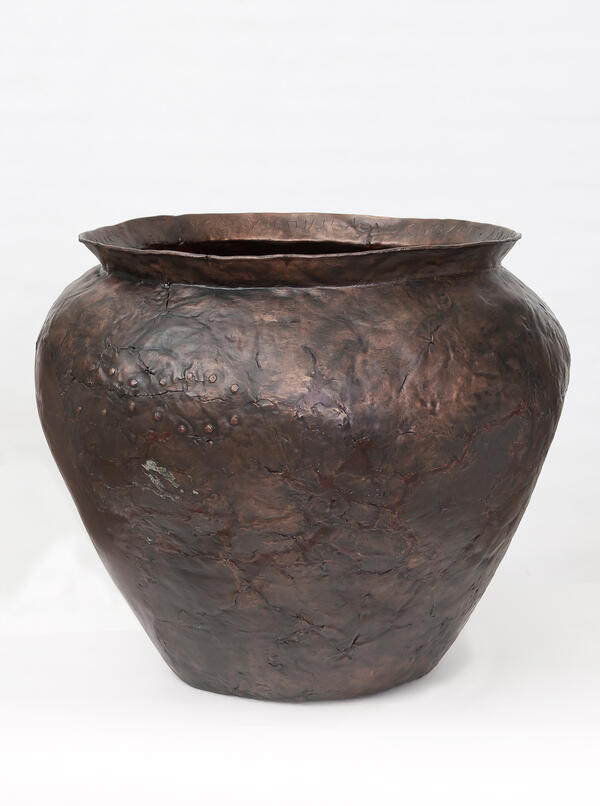
This boiler was discovered in 1972 near the village settlement of Sosnovka in the Kotovsky district of the Volgograd region.