Sometimes objects in the so-called animal style are found in the burials of the Sarmatian period. Most often these are images of animals such as deer, elk, mountain goat, predators of feline breeds or fantastic creatures. The most frequent are the scenes of fighting animals.
The animal style in the art of the Sarmatians played not only a decorative role. It also reflected the complex spiritual world of ancient peoples. The roots of this style should be sought in such a phenomenon as totemism — a person’s idea of the origin of his family from a particular animal. The totem of the genus was deified and people believed that luck and well-being depended on its location. Most often, deified animals, predatory beasts, birds and fantastic creatures (griffins) were depicted.
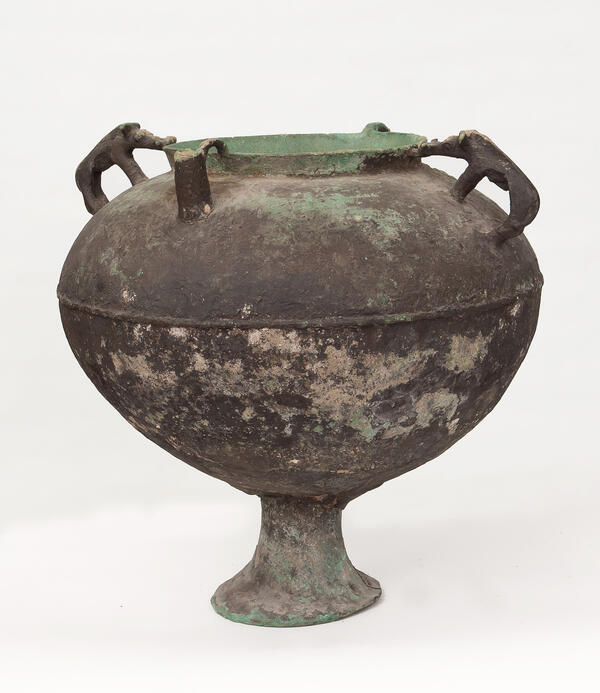
The figurine of a ram, a boar, a horse is decorated with bronze pots and boilers of the Sarmatian period. Almost always, animals were depicted with their muzzles facing the edge of the vessel, as if protecting its contents. Masters who make things in the animal style created in this way a kind of amulets that can ward off evil spirits. The belief in the miraculous power of such jewelry has been preserved to this day on the territory of Dagestan. There is even a saying: “A vessel without a handle must be closed, but Shaitan will not enter a vessel with a handle”.
This boiler was discovered near the railway station of Berdiya in the Ilovlinsky district of the Volgograd region by the expedition of I.V. Sergatskov in 1991.