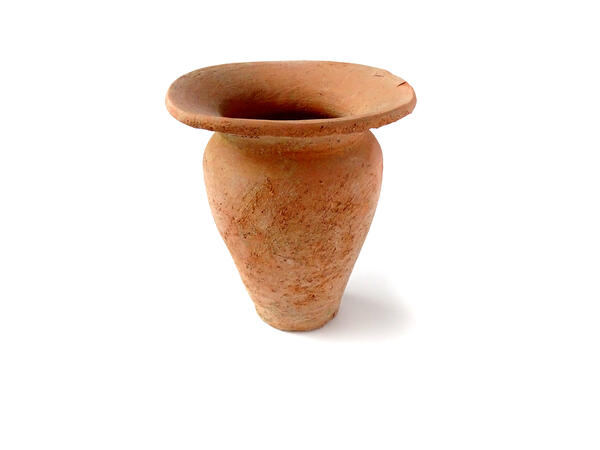
A tuvak is a flared vessel with a flat rim resembling a modern flower pot. In archaeological literature it is usually referred to as a chamber pot.
Such vessels are often found during excavations of cities from the Golden Horde and Central Asia. They vary in shape, but they are similar with a flat rim necessary for the vessel to fit snugly to the bottom of a child’s cradle. These vessels, along with a bone tube called Sunak, formed a kind of ancient diaper.
Tuvaks were intended for the youngest inhabitants of medieval Eastern cities and another areas. They were used in the Beshik cradles which are a narrow and cramped traditional oriental cradle. In these cradles, a vessel was inserted into the bottom of the cradle and a bone tube was placed into it while a baby was secured. Such construction allowed the baby to always be dry and clean. Thus, a cradle with a tuvak allowed the mother to swaddle the child less frequently, leaving more time for other work.
The vessel was discovered by an expedition led by Andrey Sergeevich Lapshin during excavations at the Vodyansky settlement in 2013.