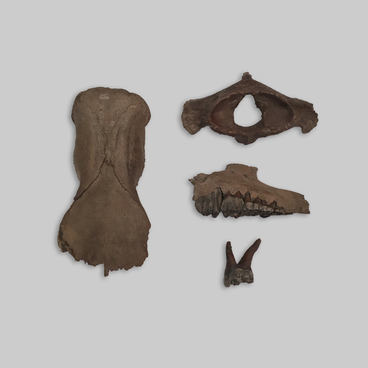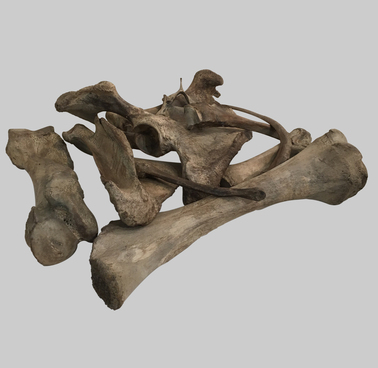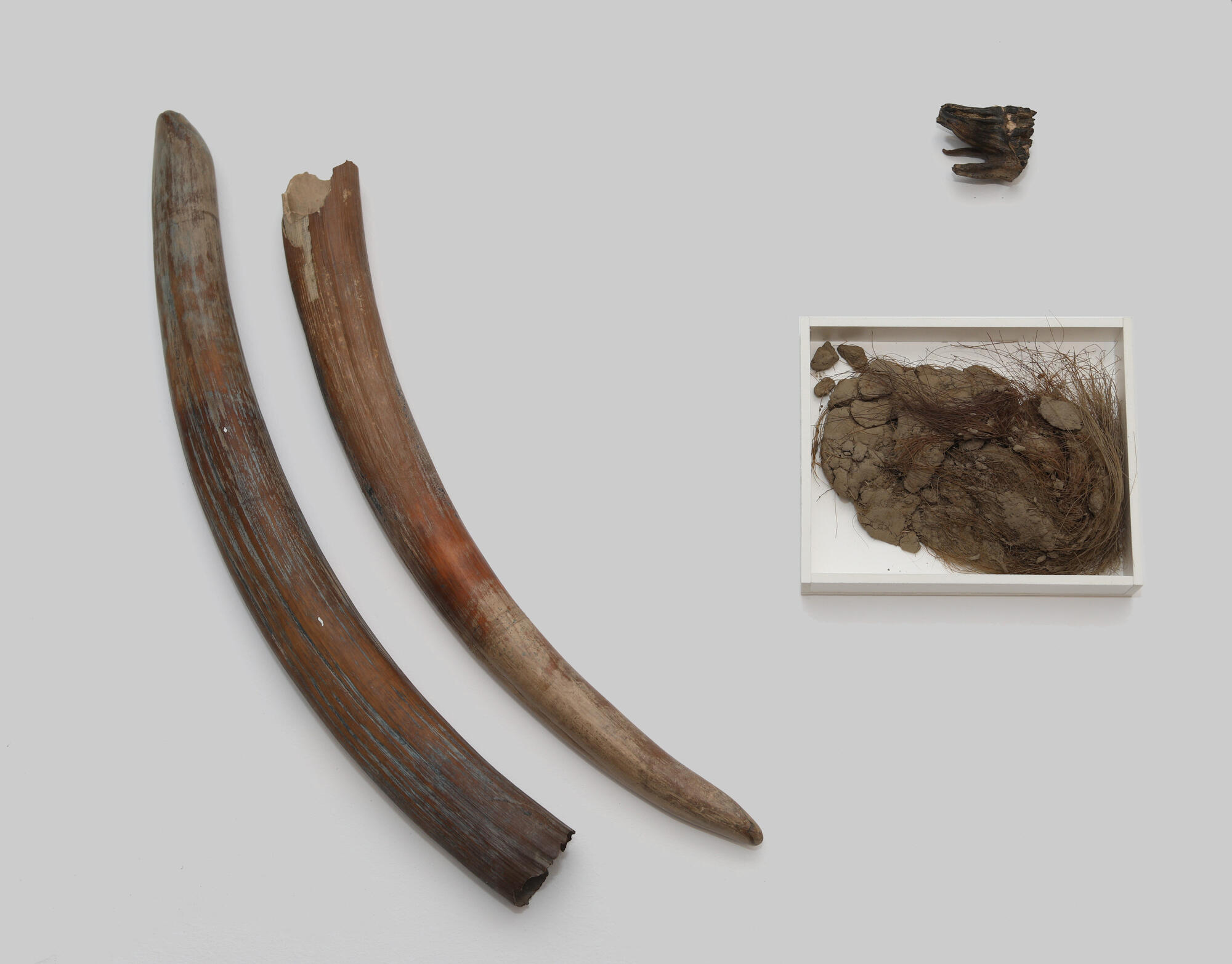


The remains of mammoths are a rare paleontological find. The exposition of the ‘Museum of Nature and Man’ presents the wool of an elephant baby found on the territory of Yakutia, as well as mammoth bones and tusks from the Lugovskoye site. The researchers found that the bones belonged to an unborn mammoth - he died more than 10 thousand years ago with his mother.
Scientists believe that ‘animal cemeteries’, similar to the one found at the Lugovskoye site, became places of mass death due to a combination of circumstances. In ancient times, near modern Khanty-Mansiysk, rocks of animal solonetz, a natural delicacy and a source of valuable minerals, came to the surface of the earth. For thousands of years, herds of mammoths came here for these minerals. But during the melting of the glaciers, the local clay soils became too swampy for the northern giants: mammoths got stuck in natural traps and died en masse.
In the territory of the Khanty-Mansi paleontological site, scientists have found more than 6.5 thousand bones of woolly elephants. Wool was not preserved in local conditions - scientists obtained information about it thanks to the finds of mammoths in the permafrost layers. It consisted of hair of two colors: a soft light brown undercoat about 5-15 cm long and hard, thick guard hairs up to 1 m long. The guard hairs hung from the back and sides of the mammoth in reddish-brown or black strands. Under the belly, they dropped almost to the ground and formed a kind of ‘skirt’.
Paleontologists have learned to determine the age of mammoth cubs by their teeth: by eruption and the degree of their wear. The teeth changed six times during the life of an elephant - this allowed scientists to build a ‘dental scale’ of age. The study of mammoth cubs showed that they grew faster than modern elephants and could get strong enough in a short summer to withstand their first winter in a cold climate.
Another discovery was related to the composition of body tissues. The mammoths had a fat hump on the nape, and scientists were able to study its contents thanks to the discovery of a mammoth’s body in the permafrost. It turned out to be similar in composition to the subcutaneous fat of marmots. The special substances of this fat allow rodents to hibernate when the body temperature and the need for food are reduced. It is possible that mammoths in winter could fall into a half-sleep state and needed less food. This mechanism allowed woolly mammoths to survive on average up to 45 years, even in a harsh climate.
Scientists believe that ‘animal cemeteries’, similar to the one found at the Lugovskoye site, became places of mass death due to a combination of circumstances. In ancient times, near modern Khanty-Mansiysk, rocks of animal solonetz, a natural delicacy and a source of valuable minerals, came to the surface of the earth. For thousands of years, herds of mammoths came here for these minerals. But during the melting of the glaciers, the local clay soils became too swampy for the northern giants: mammoths got stuck in natural traps and died en masse.
In the territory of the Khanty-Mansi paleontological site, scientists have found more than 6.5 thousand bones of woolly elephants. Wool was not preserved in local conditions - scientists obtained information about it thanks to the finds of mammoths in the permafrost layers. It consisted of hair of two colors: a soft light brown undercoat about 5-15 cm long and hard, thick guard hairs up to 1 m long. The guard hairs hung from the back and sides of the mammoth in reddish-brown or black strands. Under the belly, they dropped almost to the ground and formed a kind of ‘skirt’.
Paleontologists have learned to determine the age of mammoth cubs by their teeth: by eruption and the degree of their wear. The teeth changed six times during the life of an elephant - this allowed scientists to build a ‘dental scale’ of age. The study of mammoth cubs showed that they grew faster than modern elephants and could get strong enough in a short summer to withstand their first winter in a cold climate.
Another discovery was related to the composition of body tissues. The mammoths had a fat hump on the nape, and scientists were able to study its contents thanks to the discovery of a mammoth’s body in the permafrost. It turned out to be similar in composition to the subcutaneous fat of marmots. The special substances of this fat allow rodents to hibernate when the body temperature and the need for food are reduced. It is possible that mammoths in winter could fall into a half-sleep state and needed less food. This mechanism allowed woolly mammoths to survive on average up to 45 years, even in a harsh climate.