

The Upper Paleolithic epoch covers the period from 40,000-12,000 years ago. At that time, the material culture of Europe began to change dramatically: new forms of stone tools and more advanced techniques for processing bone originated. These processes can be traced by finds made at prehistoric human sites. Archaeological research helps collect evidence of how ancient hunter-gatherers used the bones, horns, and tusks of prehistoric animals that lived at the same time they did, and also helps understand how - and for what purposes - primitive humans made a variety of household items, jewelry, figurines of people and animals, and weapons.
Some details on life in the Stone Age became known thanks to the finds made at Lugovskoye - this unique paleontological and archaeological site is located in the valley of the Ob River, near Khanty-Mansiysk. This place where the bones of ancient animals accumulated in Lugovskoye was well-known to the inhabitants of the surrounding villages. Since 1998, employees of the Department of Paleontology of the ‘Museum of Nature and Man’ have been conducting annual field research at Lugovskoye. And, in 2007, a systematic study of the archaeological site began - the prehistoric human sites that are directly adjacent to the paleontological site.
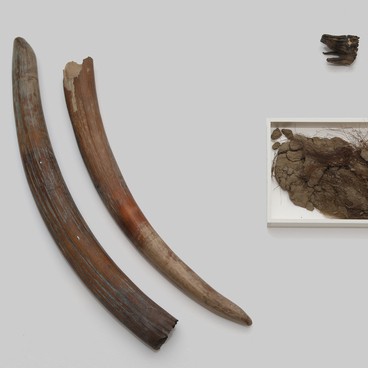
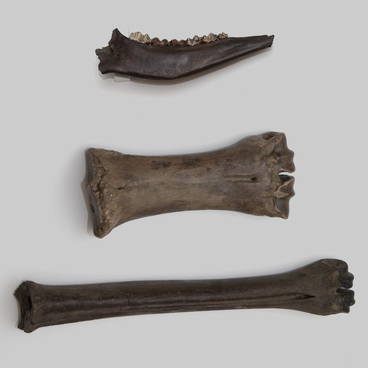
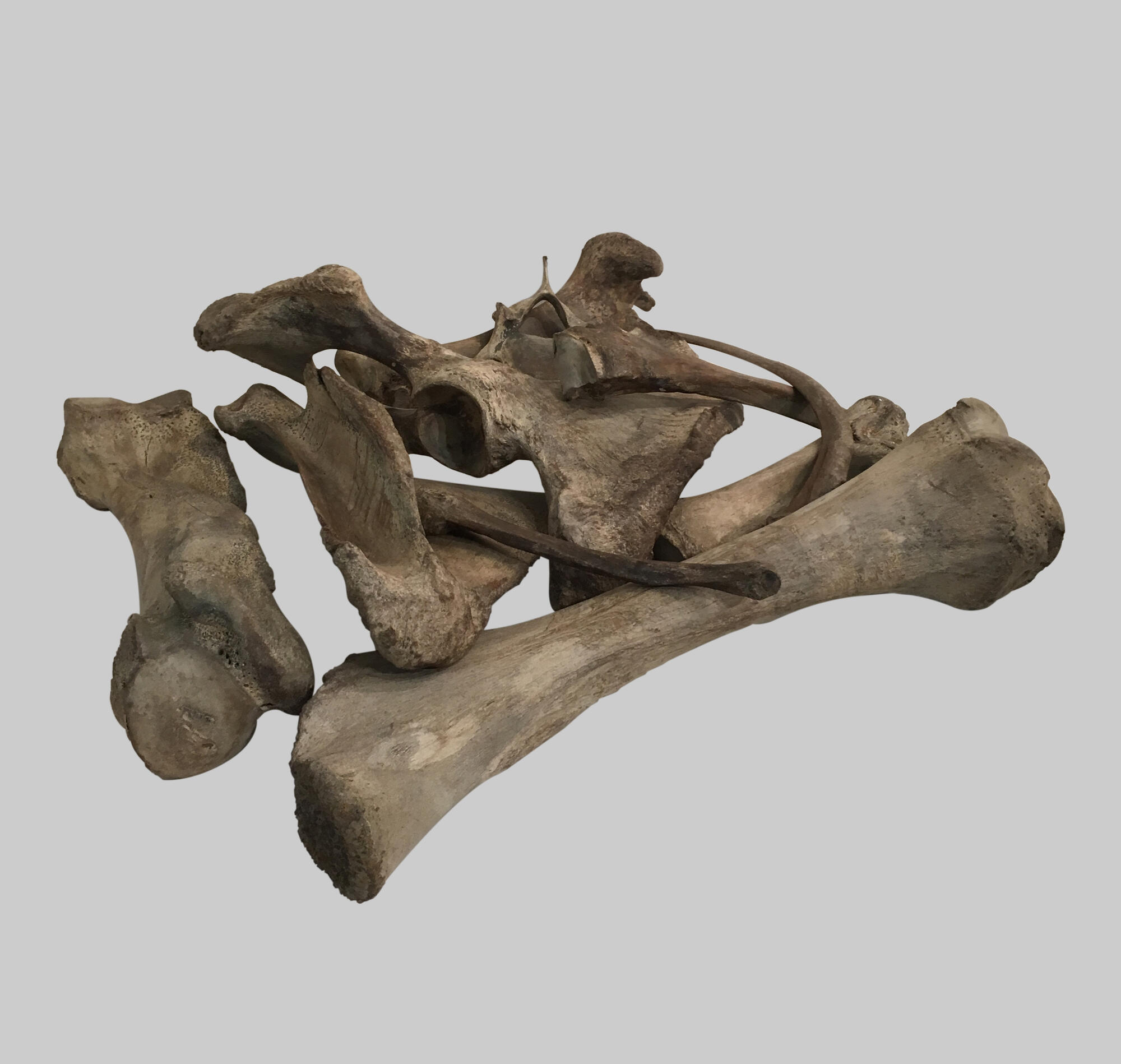
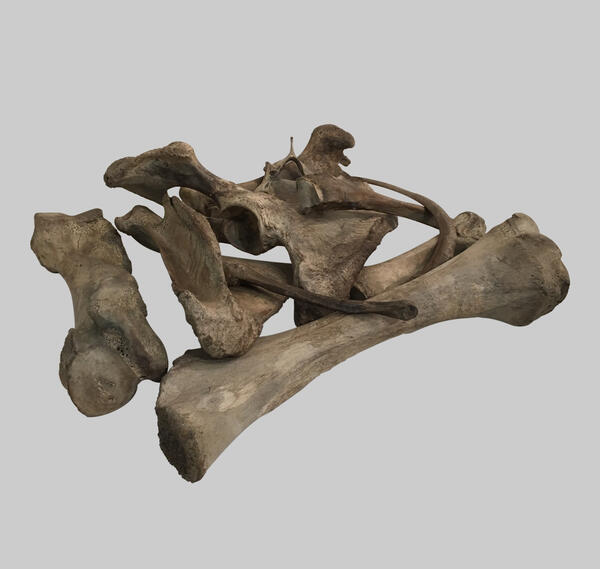
In addition to paleontological finds - bones of woolly mammoths and rhinoceroses, an ancient horse, bison, elk and reindeer - one of the northernmost sites for prehistoric humans in West Siberia has been found at Lugovskoye. At the site, there are traces of the work activities done by the local residents during the Paleolithic era: about 3,000 tools and waste products from the stone industry. These finds date back to the period from 16,000-12,000 years ago.
The most interesting of the finds - a mammoth thoracic vertebra with stone plates from the tip of a spear or dart stuck in it - was acknowledged as unique on a global scale. This is one of the few direct pieces of evidence in the world of a human hunting for a mammoth. According to researchers, prehistoric humans could attack an animal trapped in a mud trap. The mammoth was almost immobilized, so the hunter managed to inflict this wound at close range. In and of itself, it was not fatal, but it may not have been the only thing that hastened the death of the mammoth.
Some details on life in the Stone Age became known thanks to the finds made at Lugovskoye - this unique paleontological and archaeological site is located in the valley of the Ob River, near Khanty-Mansiysk. This place where the bones of ancient animals accumulated in Lugovskoye was well-known to the inhabitants of the surrounding villages. Since 1998, employees of the Department of Paleontology of the ‘Museum of Nature and Man’ have been conducting annual field research at Lugovskoye. And, in 2007, a systematic study of the archaeological site began - the prehistoric human sites that are directly adjacent to the paleontological site.
In addition to paleontological finds - bones of woolly mammoths and rhinoceroses, an ancient horse, bison, elk and reindeer - one of the northernmost sites for prehistoric humans in West Siberia has been found at Lugovskoye. At the site, there are traces of the work activities done by the local residents during the Paleolithic era: about 3,000 tools and waste products from the stone industry. These finds date back to the period from 16,000-12,000 years ago.
The most interesting of the finds - a mammoth thoracic vertebra with stone plates from the tip of a spear or dart stuck in it - was acknowledged as unique on a global scale. This is one of the few direct pieces of evidence in the world of a human hunting for a mammoth. According to researchers, prehistoric humans could attack an animal trapped in a mud trap. The mammoth was almost immobilized, so the hunter managed to inflict this wound at close range. In and of itself, it was not fatal, but it may not have been the only thing that hastened the death of the mammoth.