In the 16th and 17th centuries, the purse became an integral part of the women’s wardrobe. Women wore a waist purse under their overskirt with a special slit made for convenience. The purse was used to store not only coins, but also personal items: keys, a miniature prayer book, and love letters. Women’s purses were often made of textiles, including the finest silk. Most often, such purses looked like reticules and played a decorative role. Such reticules had inner compartments for storing various small things, including money.
The women’s purse of the 19th century was not particularly spacious. As a rule, it could accommodate a very modest amount of money, that was just enough to pay the coachman or give alms to the beggar. There were even specific purses for this purpose, which offered a considerable variety of materials and designs. There were purses made of metal, ceramics, and beads, and the shape usually symbolized the intention of the one who gave alms. The heart was the personification of sincerity and kindness; the seed meant good fruits brought by mercy. At the beginning of the 20th century, reticules received new decorative elements —metal inserts. Instead of straps, handles and pressure mechanisms came into use. Women could open their purses with just touching the latch.
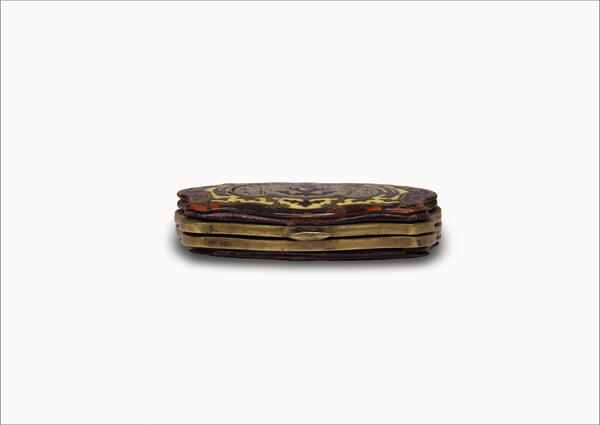
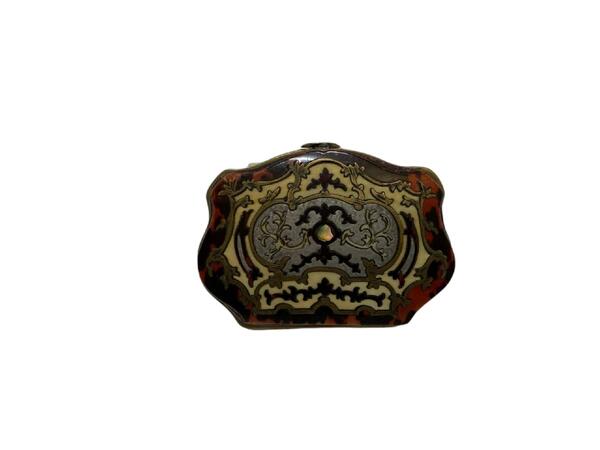
This purse was decorated with mother-of-pearl — the inner layer of shells of mollusks that live in fresh water and the sea. It is secreted by the mantle’s epithelial cells. Mother-of-pearl, an organic-inorganic composite, is a tough yet elastic natural material. Pearls and mother of pearl are made of the same substance. The iridescent effect, for which this material is so valued, is created due to the fact that light passing along the axis of one crystal is reflected and refracted by the rest of the crystals. Tortoiseshell was also used in the manufacture of the purse, since products made from this material are beautiful, durable, and have a pleasant touch.
The women’s purse of the 19th century was not particularly spacious. As a rule, it could accommodate a very modest amount of money, that was just enough to pay the coachman or give alms to the beggar. There were even specific purses for this purpose, which offered a considerable variety of materials and designs. There were purses made of metal, ceramics, and beads, and the shape usually symbolized the intention of the one who gave alms. The heart was the personification of sincerity and kindness; the seed meant good fruits brought by mercy. At the beginning of the 20th century, reticules received new decorative elements —metal inserts. Instead of straps, handles and pressure mechanisms came into use. Women could open their purses with just touching the latch.
This purse was decorated with mother-of-pearl — the inner layer of shells of mollusks that live in fresh water and the sea. It is secreted by the mantle’s epithelial cells. Mother-of-pearl, an organic-inorganic composite, is a tough yet elastic natural material. Pearls and mother of pearl are made of the same substance. The iridescent effect, for which this material is so valued, is created due to the fact that light passing along the axis of one crystal is reflected and refracted by the rest of the crystals. Tortoiseshell was also used in the manufacture of the purse, since products made from this material are beautiful, durable, and have a pleasant touch.