It is not known exactly when the first hat boxes appeared, but they served to protect hats from dust and insects as early as the 15th century. The first boxes were made of fabric, which was stretched on flexible rods. This method of production was widespread until the 18th century. A less common method was to use whalebone, which increased the cost of the finished product.
In the 19th century, hats became fashionable and were deemed to mark the high society. The increased demand for hats led to a wider range of boxes, and cardboard was introduced as a new material. The range of materials used to produce packaging included leather, wood and metals. In the mid-19th century, plywood boxes appeared, the advantages of which were their light weight, durability and moisture resistance.
Traditionally, hat boxes were round or square, less often they repeated the shape of a specific hat. The most luxurious models for protecting hats had padding and lining made of expensive materials, such as silk or velvet.
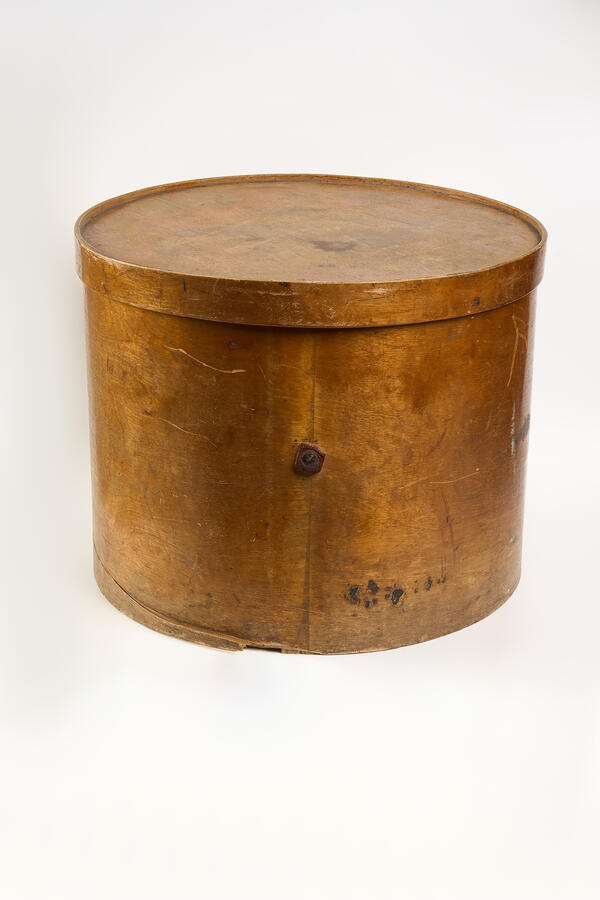
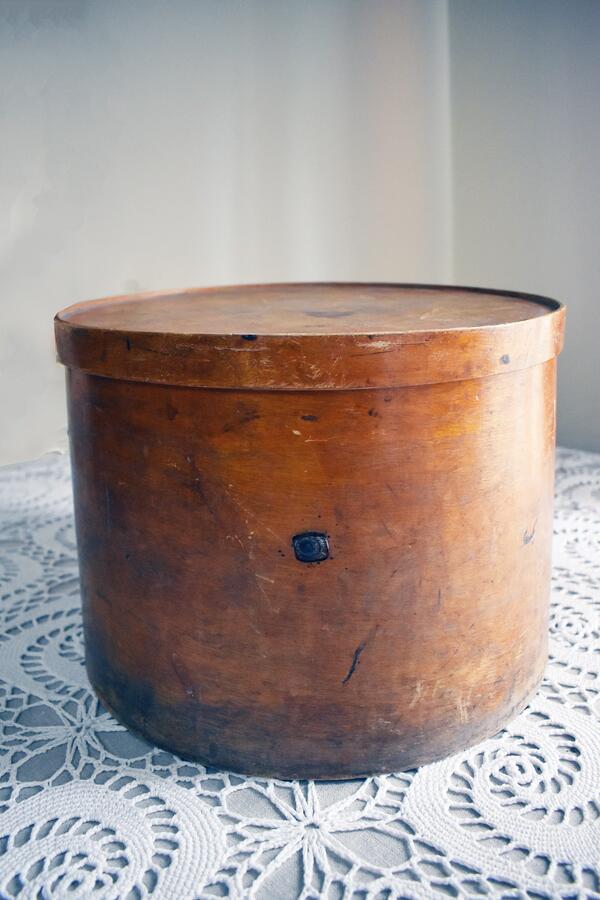
The hat box on display at the museum and cultural center “House of Merchant Grigory Tetyushinov” used to belong to Cleopatra Petrovna Lugakovskaya. The grand-niece of the merchant Grigory Tetyushinov lived in his house from 1912 to 1958.
In 2020, the hat box was donated to the museum by Irina Mikhailovna Oberemko, granddaughter of Cleopatra Lugakovskaya.
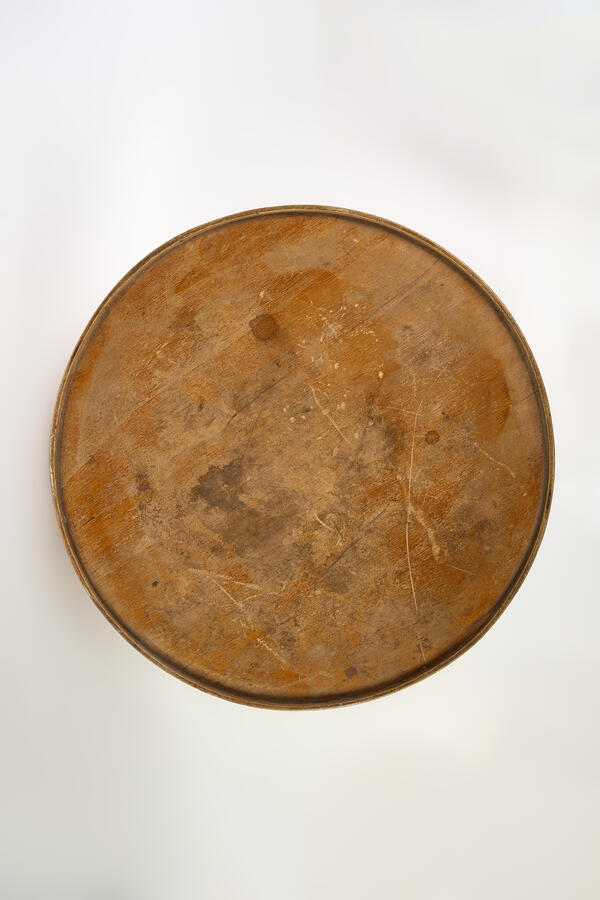
The box presented in the exhibition is made of plywood. The upper part of the box retains the attachment parts of the leather strap, which has been lost. Such items with a carrying strap were called travel boxes. Lightweight and durable, they retained their shape perfectly.
The advertisement on the inside of the lid says that
this box was purchased in the store of Andrey Alexandrovich Alexandrov in
Moscow. In the early 20th century, both hats and their boxes could be also
purchased in Astrakhan. Hats were sold in haberdashery stores, which were
located on the central streets, on Ekaterininskaya Street and in Tobacco Row.