The first hat boxes appeared in Europe between the 15th and 16th centuries. Back in those days, headwear was quite heavy, abundant with fragile ornaments, and furthermore, had to be protected from dust and insects. It was then that hats began to be stored in special boxes, rather than on shelves. At first, these containers were woven from fabric or wicker, but starting in the 18th century, they were made from cardboard, which simplified the production process. But such packaging, along with its valuable contents, was prone to rain and was especially at risk of being damaged when dropped into water.


Hat box
Creation period
Late 19th–early 20th century
Place of сreation
Russian Empire
Dimensions
34x22 cm
Technique
Industrial production
Collection
Exhibition
4
Open in app#1
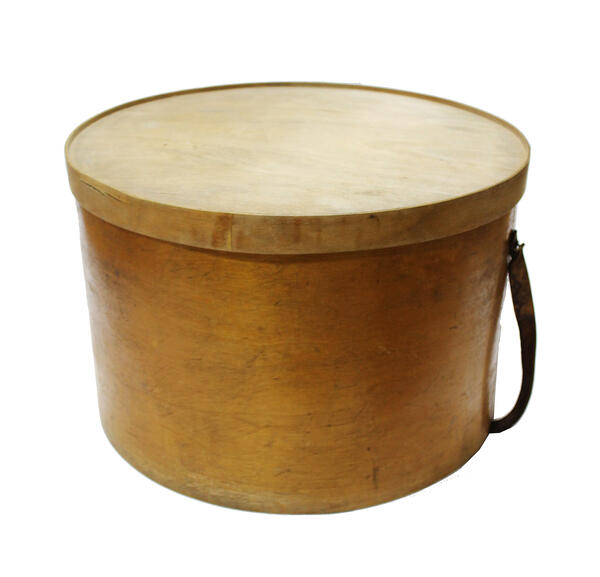
Hat Box
#3
#4
The invention of plywood in the second half of the 19th century became a revolutionary event. This material began to be utilized in the production of many useful items, including hat boxes. Plywood boxes were not as prone to damage from moisture and falls, could easily maintain their shape, were almost insusceptible to external influence, and reliably protected the hat inside.
#5
The box on display in the Tomsk History Museum was manufactured in Revel, at a factory established by the carpenter Alexander Luther and the merchant Markel Makarov. At the time, the city of Revel (present-day Tallinn, the capital of Estonia) was part of the Russian Empire. In 1870, Luther and Makarov started trading wooden building materials, and sometime later launched a sawmill, which allowed them to produce their own goods. After the death of Alexander Luther in 1880, his son Christian Luther became one of the factory managers. He decided to switch the company to furniture production. Christian Luther took interest in the latest technological breakthroughs and cutting-edge woodworking techniques.
#6
In 1885, Luther and Makarov’s factory in Revel became the first Russian producer of plywood and plywood furniture, which included light and durable chair seats, cabinets, tables, and stools. Plywood hat boxes occupied a prominent place in the company’s product line as well. The demand for these items exceeded all expectations. In 1898, the company established sales offices not only in major cities of Russia but also in Western Europe. After the Revolution and the collapse of the Russian Empire, the enterprise continued to operate and develop up until 1940, when the Soviet regime came to power in Estonia, nationalizing the factory.
#7
Tomsk History Museum
read morehide
00:00
00:00
1x
Hat box
Creation period
Late 19th–early 20th century
Place of сreation
Russian Empire
Dimensions
34x22 cm
Technique
Industrial production
Collection
Exhibition
4
 Point your smartphone camera to open in the app
Open in app
Share