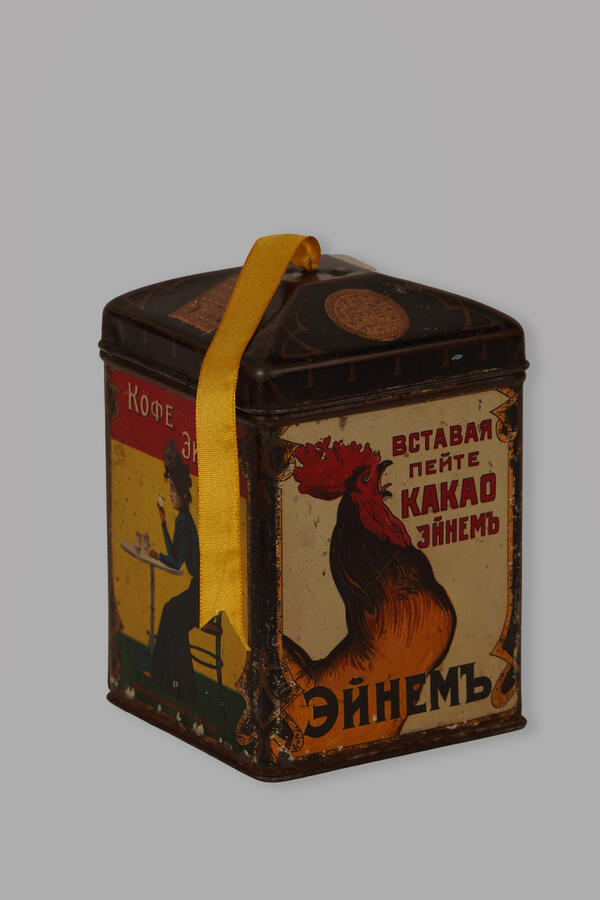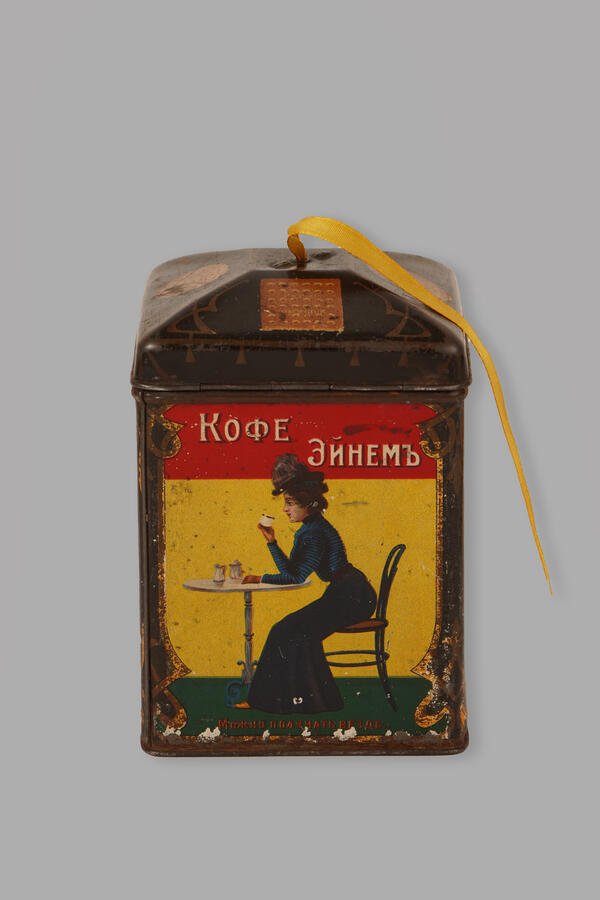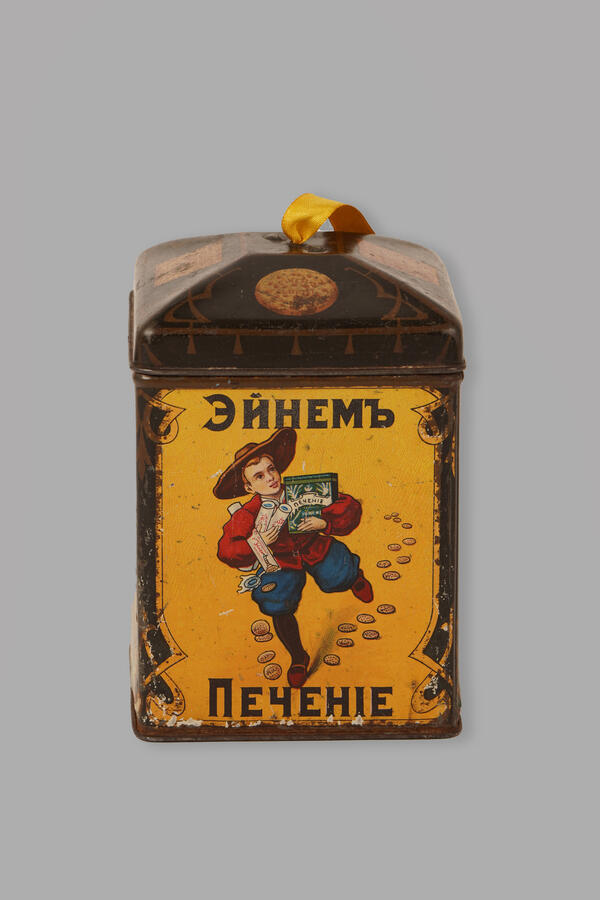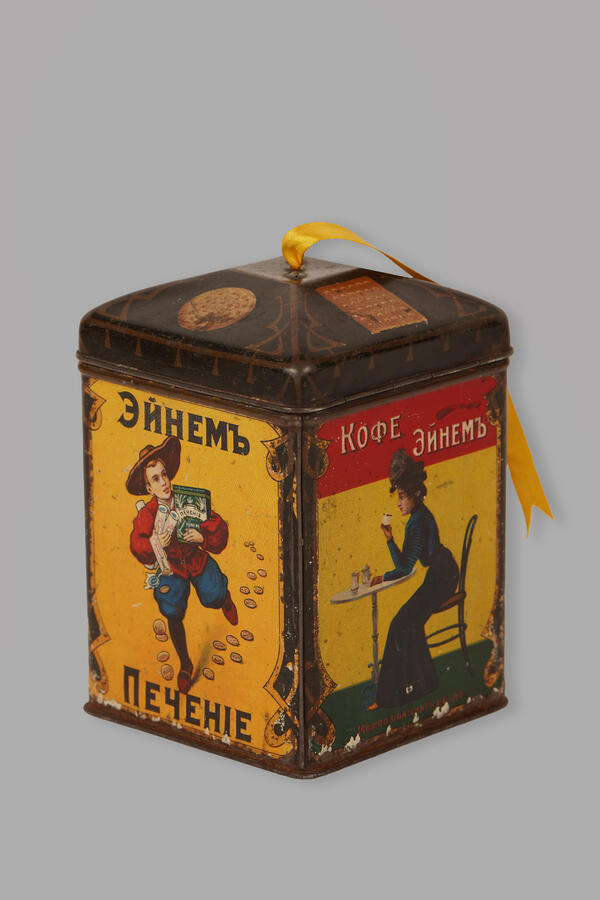


Born in Prussia, Ferdinand Theodor von Einem came to Moscow in the middle of the 19th century. He chose this city of developed trade and industrial enterprises to open his own confectionery production. Having agreed with merchants and industrialists on the supply of raw materials, Einem began his business by selling sugar that was cut into pieces and syrups. In 1851, in his small confectionery café on the Arbat, visitors enjoyed drinking cocoa and tasting solid chocolate bars.
At the beginning of the Crimean War, Theodor Einem signed a contract to supply sweet products (such as preserves and syrups) to the army and in three years he earned an impeccable reputation and sufficient revenue to expand the business.
In 1857, together with his partner and future successor, entrepreneur Julius Geiss, he began the construction of a chocolate factory. At that time, steam engines were very rare in Russia and Europe. Einem and Geiss ordered one of these technical innovations to be shipped from Europe to their factory. Such equipment enabled the production of vanilla chocolate and chocolate candies. The company also developed new types of products. Cookies, biscuits, marshmallows, caramel, marmalade, small lollipops, and later even chocolate-coated pieces of fruit were produced at the factory. Professional confectioners and housewives also bought useful cooking utensils there.
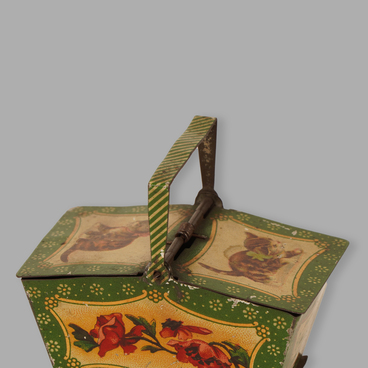
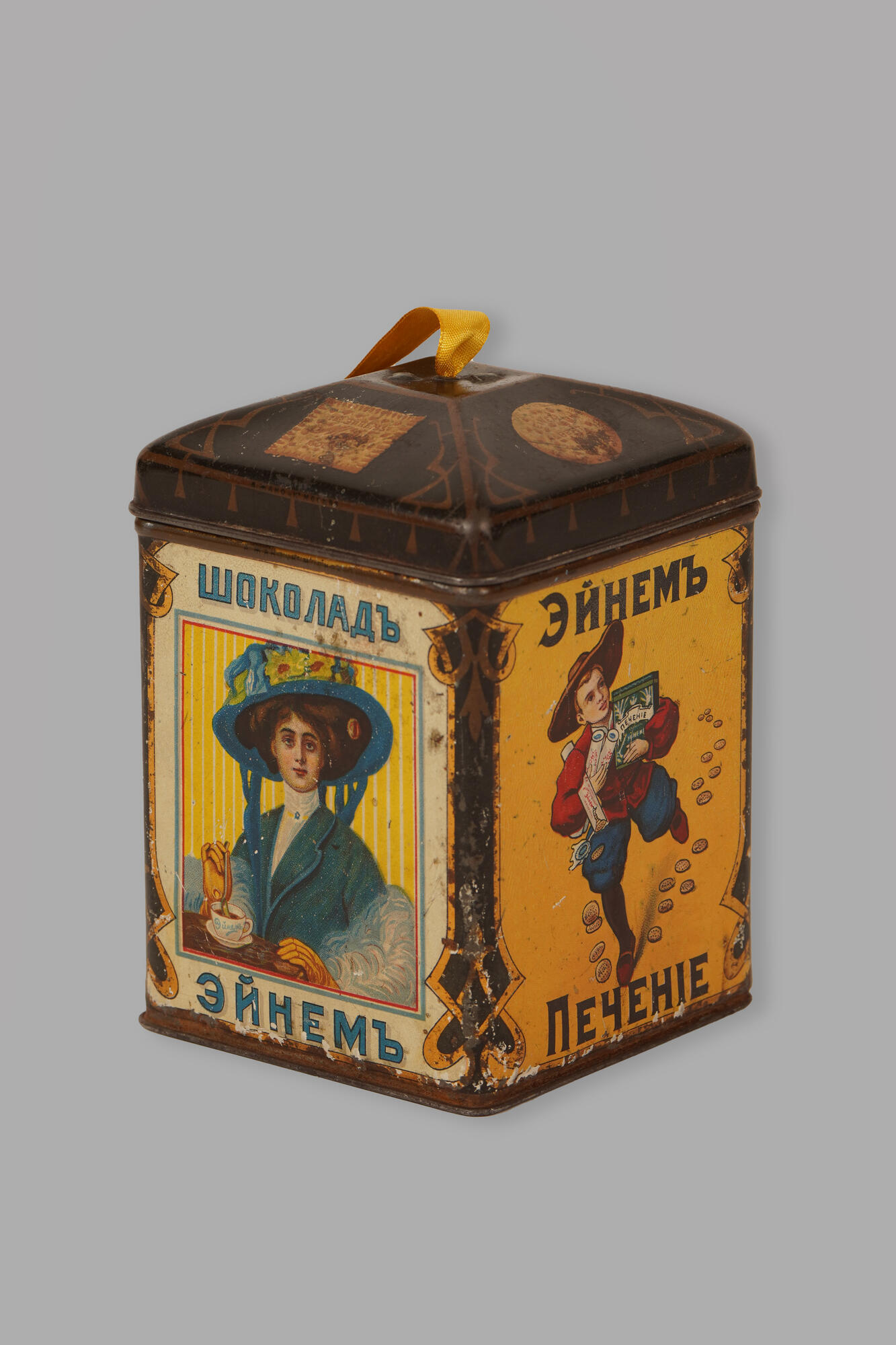
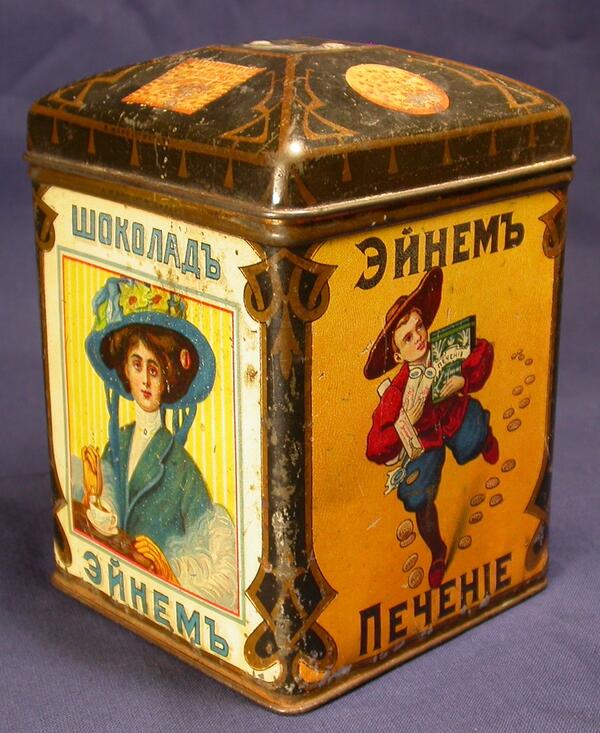
After 1867, Einem’s company became known as the “Association of the steam factory of chocolate confections and tea biscuits”. After Einem’s death in 1876, his business partner Geiss took up the management of the business. Under his leadership, the company became famous not only for the range of its products, but also for its advertising campaigns. Gift boxes were trimmed with silk, leather and velvet. Inside, along with sweets, customers found postcards, figurines of angels, theater brochures and napkins with company advertisements, candy tongs, and even musical scores. The branded stores attracted visitors by vending machines selling miniature chocolate bars. There were colorful themed sets of sweets and chocolate, with twelve wrapped pieces in each set. There were series devoted to the war of 1812, paintings by Russian artists, Russian hunting traditions, famous monuments, and even the study of the peoples from around the world.
“Einem” repeatedly became the winner at prestigious exhibitions in Russia and Europe. In the year that marked the tercentenary of the Romanov dynasty, the company was awarded the title of the Supplier of the Court of His Imperial Majesty.
After nationalization, the factory was renamed “Krasny Oktyabr” (Red October). But for a long time, the wrappers had a line printed next to the official name: “Former Einem”.
At the beginning of the Crimean War, Theodor Einem signed a contract to supply sweet products (such as preserves and syrups) to the army and in three years he earned an impeccable reputation and sufficient revenue to expand the business.
In 1857, together with his partner and future successor, entrepreneur Julius Geiss, he began the construction of a chocolate factory. At that time, steam engines were very rare in Russia and Europe. Einem and Geiss ordered one of these technical innovations to be shipped from Europe to their factory. Such equipment enabled the production of vanilla chocolate and chocolate candies. The company also developed new types of products. Cookies, biscuits, marshmallows, caramel, marmalade, small lollipops, and later even chocolate-coated pieces of fruit were produced at the factory. Professional confectioners and housewives also bought useful cooking utensils there.
After 1867, Einem’s company became known as the “Association of the steam factory of chocolate confections and tea biscuits”. After Einem’s death in 1876, his business partner Geiss took up the management of the business. Under his leadership, the company became famous not only for the range of its products, but also for its advertising campaigns. Gift boxes were trimmed with silk, leather and velvet. Inside, along with sweets, customers found postcards, figurines of angels, theater brochures and napkins with company advertisements, candy tongs, and even musical scores. The branded stores attracted visitors by vending machines selling miniature chocolate bars. There were colorful themed sets of sweets and chocolate, with twelve wrapped pieces in each set. There were series devoted to the war of 1812, paintings by Russian artists, Russian hunting traditions, famous monuments, and even the study of the peoples from around the world.
“Einem” repeatedly became the winner at prestigious exhibitions in Russia and Europe. In the year that marked the tercentenary of the Romanov dynasty, the company was awarded the title of the Supplier of the Court of His Imperial Majesty.
After nationalization, the factory was renamed “Krasny Oktyabr” (Red October). But for a long time, the wrappers had a line printed next to the official name: “Former Einem”.