

The Karasuksky Regional Museum’s Numismatics collection includes a 930 silver kopek, minted at the Provisional Moscow Mint during the Second People’s Militia, under the leadership of Prince Dmitry Pozharsky and village elder Kuzma Minin.
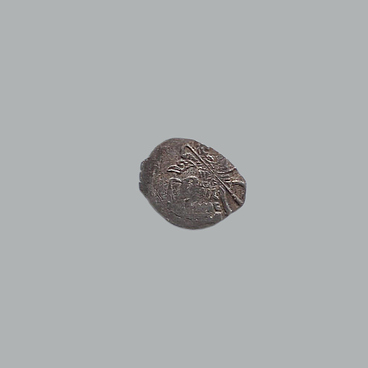
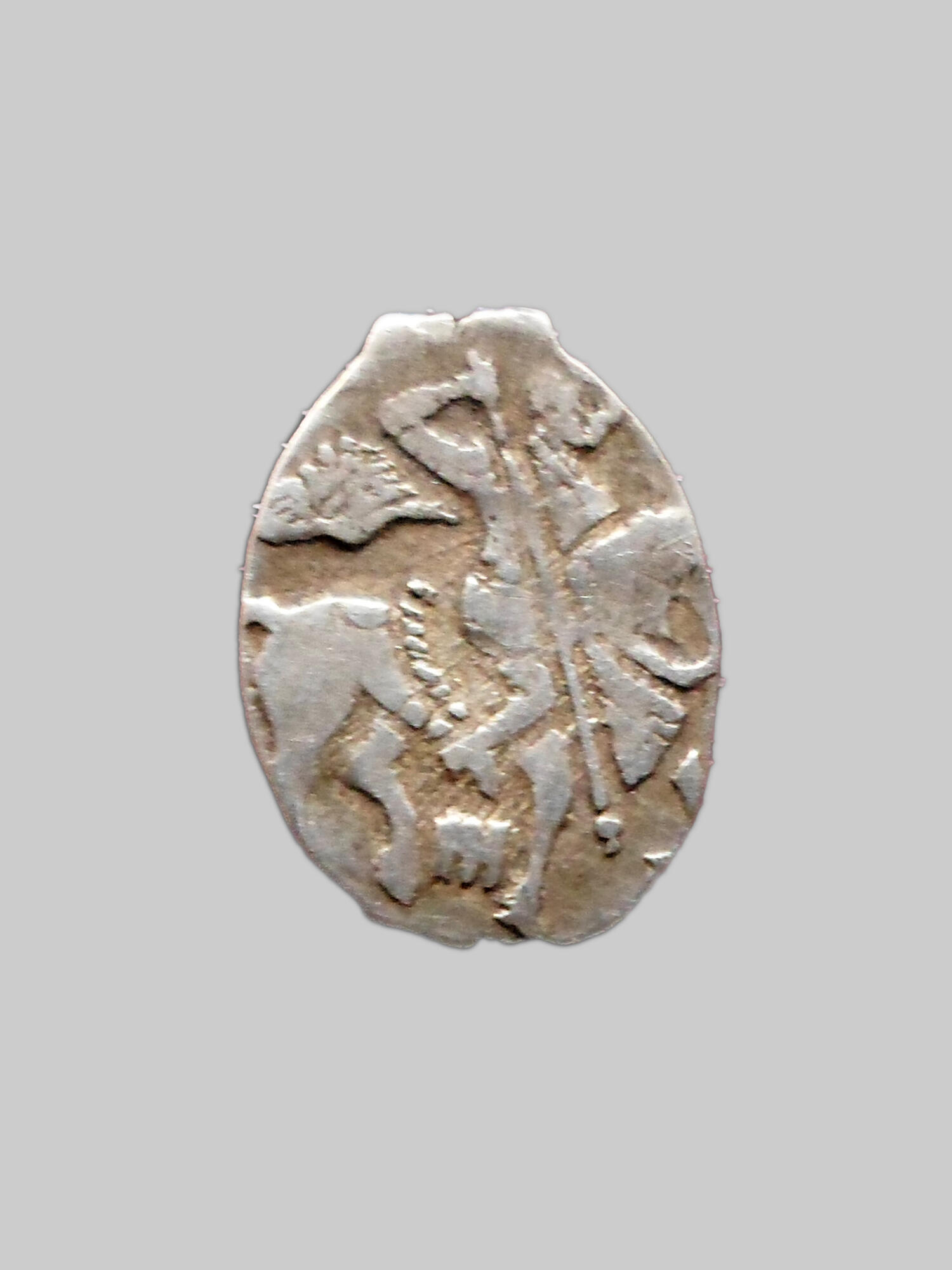
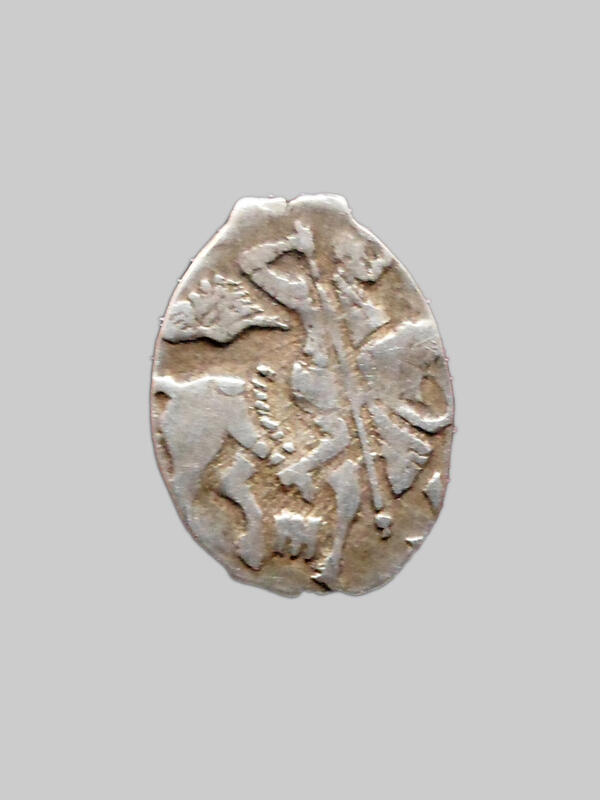
It is oval-shaped with a weight of 0.48 grams. A rider with a flowing greatcoat, on a horse facing the right of the coin, holding a spear in his right is depicted on the coin’s obverse. The letter indicating the designation of the coin’s mint is illegible - it could be M or o/M. The coin’s reverse has a five-line inscription, formed of the ruler’s name and title - ‘Tsar and Grand Prince of all Rus’ Feodor Ivanovich.’
In the autumn and winter of 1611, at the height of the Polish intervention, the Second People’s Militia gained momentum in Nizhny Novgorod. In February 1612, the militia transferred to Yaroslavl, and among other actions, established a mint. However, they ran into a number of difficulties. Firstly, production of money was far from smooth. Secondly, it was difficult to choose the name of the tsar for the inscriptions. For political reasons, they settled on the name of the last member of the Rurik dynasty - Prince Feodor Ivanovich. There was a massive difficulty in finding a supply of raw materials for the mint’s production. Nevertheless, the Second People’s militia started to mint coins and were able to lead the Russian monetary industry out of the crisis it had been plunged into due to the events between 1610 and 1612.
In August 1612, the Second Zemstvo Militia and the remains of the First Militia besieged the Polish troops in the Kremlin and Kitay-Gorod. After a two month siege, the starving Polish troops and Moscow boyars surrendered to the mercy of the conquerors. In the autumn of 1612, the Provisional Mint was set up in Moscow. The first issuance of coins by this mint might have occurred between November 1612 and March 1613. The coins were minted at two standardized weights - 0.60 grams and 0.51 grams. The Yaroslavl mint was shut down in May 1613, whilst the Provisional Moscow Mint continued operations until November 1613, when Mikhail I took to the throne.
The museum’s kopek was minted at the Provisional Moscow Mint between November 1612 and January 1613. According to Melnikov’s coin catalogue, this coin was embossed by stamp No. 1. However, if you were to compare it with the images in Kleschinov and Grishin’s ‘Catalogue of Russian Medieval Coins 1533 - 1617’, it’s rarity rating of 8 means that it is ‘not at all a common coin’. If one assumes that the letter under the horse’s legs is ‘M’, rather than ‘o/M’, that means that the obverse was stamped by stamp No. 4, used at the Yaroslavl Mint between 1612 and 1613. In this case, the reverse stamp would have to be No. 7, however the inscription on the museum’s coin is not at all similar to this stamp.
There are hundreds of examples of the coins produced at the Provisional Moscow Mint during this period, stored with buried treasure as well as in collections, whilst there are only a handful of coins produced by the Yaroslavl mint.
It is oval-shaped with a weight of 0.48 grams. A rider with a flowing greatcoat, on a horse facing the right of the coin, holding a spear in his right is depicted on the coin’s obverse. The letter indicating the designation of the coin’s mint is illegible - it could be M or o/M. The coin’s reverse has a five-line inscription, formed of the ruler’s name and title - ‘Tsar and Grand Prince of all Rus’ Feodor Ivanovich.’
In the autumn and winter of 1611, at the height of the Polish intervention, the Second People’s Militia gained momentum in Nizhny Novgorod. In February 1612, the militia transferred to Yaroslavl, and among other actions, established a mint. However, they ran into a number of difficulties. Firstly, production of money was far from smooth. Secondly, it was difficult to choose the name of the tsar for the inscriptions. For political reasons, they settled on the name of the last member of the Rurik dynasty - Prince Feodor Ivanovich. There was a massive difficulty in finding a supply of raw materials for the mint’s production. Nevertheless, the Second People’s militia started to mint coins and were able to lead the Russian monetary industry out of the crisis it had been plunged into due to the events between 1610 and 1612.
In August 1612, the Second Zemstvo Militia and the remains of the First Militia besieged the Polish troops in the Kremlin and Kitay-Gorod. After a two month siege, the starving Polish troops and Moscow boyars surrendered to the mercy of the conquerors. In the autumn of 1612, the Provisional Mint was set up in Moscow. The first issuance of coins by this mint might have occurred between November 1612 and March 1613. The coins were minted at two standardized weights - 0.60 grams and 0.51 grams. The Yaroslavl mint was shut down in May 1613, whilst the Provisional Moscow Mint continued operations until November 1613, when Mikhail I took to the throne.
The museum’s kopek was minted at the Provisional Moscow Mint between November 1612 and January 1613. According to Melnikov’s coin catalogue, this coin was embossed by stamp No. 1. However, if you were to compare it with the images in Kleschinov and Grishin’s ‘Catalogue of Russian Medieval Coins 1533 - 1617’, it’s rarity rating of 8 means that it is ‘not at all a common coin’. If one assumes that the letter under the horse’s legs is ‘M’, rather than ‘o/M’, that means that the obverse was stamped by stamp No. 4, used at the Yaroslavl Mint between 1612 and 1613. In this case, the reverse stamp would have to be No. 7, however the inscription on the museum’s coin is not at all similar to this stamp.
There are hundreds of examples of the coins produced at the Provisional Moscow Mint during this period, stored with buried treasure as well as in collections, whilst there are only a handful of coins produced by the Yaroslavl mint.