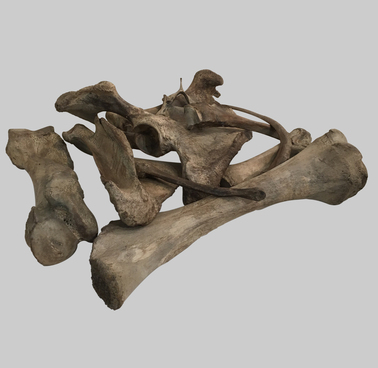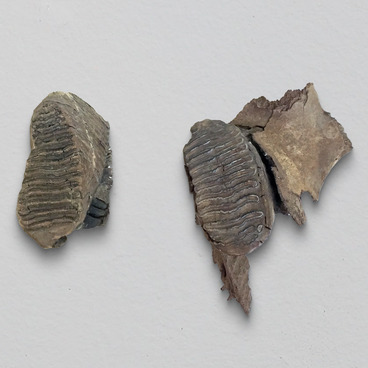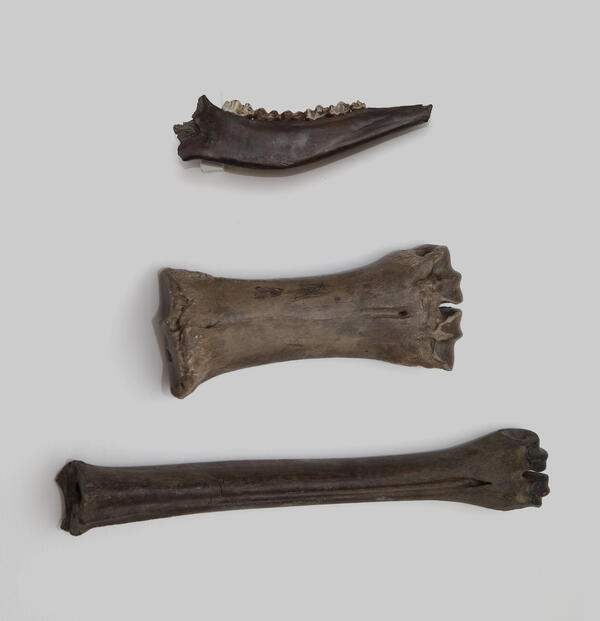
Mammals living at the same time and in the same territory as woolly mammoths are united by scientists under the term ‘mammoth fauna’. Its representative species lived in the tundra-steppes of Eurasia and North America in the period from 100 thousand to 10 thousand years ago. This fauna, in addition to mammoths, included about 80 species of animals: ancient horses, woolly rhinos, bison, turs, musk oxen, deer, elk, saber-toothed cats, cave bears, lions and hyenas, as well as wolverines, gophers and many others. Some of them have survived to this day, and some have died out, leaving no offspring.
All animals of the mammoth fauna adapted well to living conditions in the low-temperature zone: they had small ears and tails compared to southern species, and rather massive bodies with thick wool. The degree of preservation of the fossil depends on the circumstances regarding how the animals died and where their bodies were buried. Most often, scientists get individual bones or their fragments, less often whole skeletons are found, unique finds of whole mammoth carcasses are found only in the permafrost zone.
Not so far from Khanty-Mansiysk large ungulate species of the mammoth fauna have been found at the Lugovskoye site. This cluster of primitive animal remains has been known to the locals for many years. Since 1998, employees of the Department of Paleontology of the ‘Museum of Nature and Man’ have been conducting annual field research at Lugovskoye. To date, the collection of the museum is bolstered not only with animal bones, but also stone tools of ancient people: not so far from the ‘animal cemetery’ archaeologists have found one of the most northern sites of primitive man in the history of Siberia.
According to one version, animals were attracted here by salt licks - a valuable source of minerals for wild mammals. But the swampy clays, pierced by springs, created a natural mud trap, into which not only mammoths fell, but also woolly rhinoceroses, bison, moose and reindeer. Following the game, hunters and scavengers came here: Arctic foxes, wolves and people.
With the warming, the living conditions changed: the winters became snowy, and not all species could find food for themselves under meter-long snowdrifts. The spring melts of snow turned the habitats of mammoth fauna into swamps with many traps. The number of different species began to decline, and some of them, such as rhinos and mammoths, became extinct.
All animals of the mammoth fauna adapted well to living conditions in the low-temperature zone: they had small ears and tails compared to southern species, and rather massive bodies with thick wool. The degree of preservation of the fossil depends on the circumstances regarding how the animals died and where their bodies were buried. Most often, scientists get individual bones or their fragments, less often whole skeletons are found, unique finds of whole mammoth carcasses are found only in the permafrost zone.
Not so far from Khanty-Mansiysk large ungulate species of the mammoth fauna have been found at the Lugovskoye site. This cluster of primitive animal remains has been known to the locals for many years. Since 1998, employees of the Department of Paleontology of the ‘Museum of Nature and Man’ have been conducting annual field research at Lugovskoye. To date, the collection of the museum is bolstered not only with animal bones, but also stone tools of ancient people: not so far from the ‘animal cemetery’ archaeologists have found one of the most northern sites of primitive man in the history of Siberia.
According to one version, animals were attracted here by salt licks - a valuable source of minerals for wild mammals. But the swampy clays, pierced by springs, created a natural mud trap, into which not only mammoths fell, but also woolly rhinoceroses, bison, moose and reindeer. Following the game, hunters and scavengers came here: Arctic foxes, wolves and people.
With the warming, the living conditions changed: the winters became snowy, and not all species could find food for themselves under meter-long snowdrifts. The spring melts of snow turned the habitats of mammoth fauna into swamps with many traps. The number of different species began to decline, and some of them, such as rhinos and mammoths, became extinct.