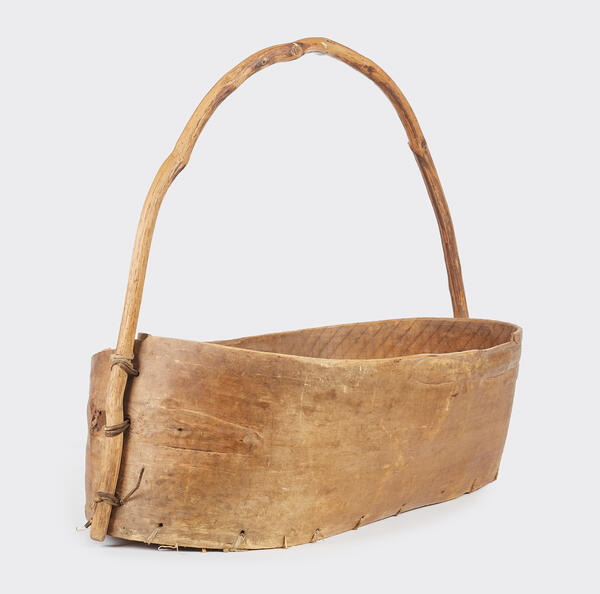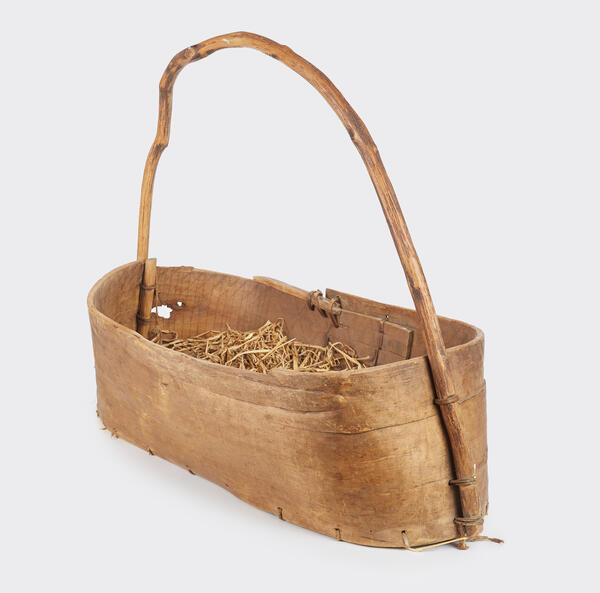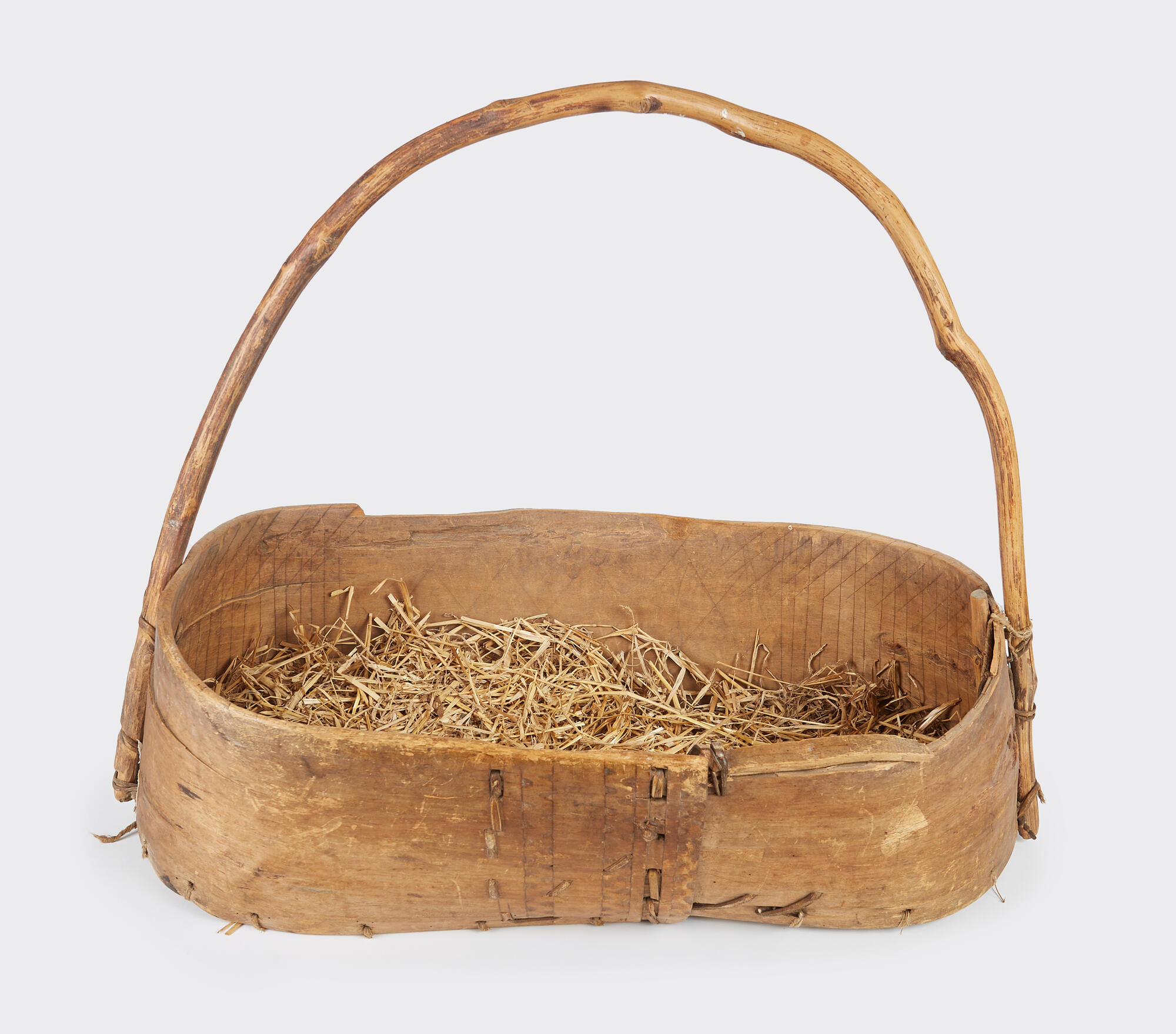


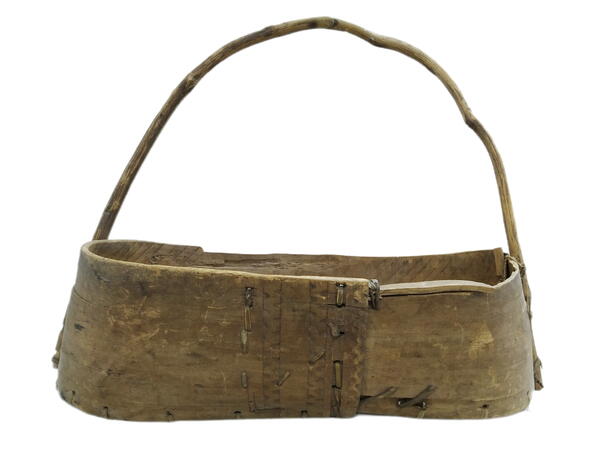
The Zheleznodorozhny Local Lore Museum presents a “zybka” cradle made in the mid-19th century in the Lashino village, Orekhovo-Zuyevsky District, the Moscow region.
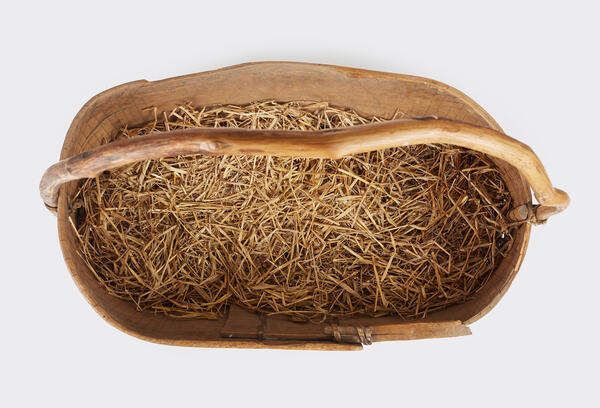
The sides of the cradle are made of bast. Bast is a thin layer of living tissue under the bark of a tree. During excavations in Novgorod, bast cradles made in the 11th century were found, which indicates the durability of this material. There were certain rules when it came to choosing wood for the future cradle. For example, aspen could not be used since it was believed to attract evil spirits. The most preferred options were willow, walnut and hawthorn — fast-growing wood species so that the child grows well and fast. The handle of the cradle is made of young birch, which, unlike pine and spruce, does not crack easily and bends well. The cradle is secured with leather straps. The bottom of the cradle was covered with straw and then with rags or old clothes. Rich families could afford a featherbed filled with swan’s down for their babies.
As a rule, the cradle was hung from the ceiling, given that the warm air accumulated at the top and kept the child from getting cold even in winter. Moreover, the Slavs believed that a baby raised above the ground was protected by the forces of heaven.
There were many beliefs associated with cradles.
For instance, it was forbidden to rock the cradle without the baby in it. Also,
it was not allowed to shorten or burn the cradle since it could harm the baby.
Every family had its own lucky cradle, and if there was none, they made a new
one, praying and imbuing it with love. Then it was passed on to the next
generation. Various bright objects were attached to the cradle, such as
multi-colored strips of fabric and painted spoons. Small icons and crosses were
placed inside. The main advantage of a zybka cradle is that it can be hung both
inside and outside the house, for example, in the field or in the forest. When
the time came to wean the baby off the cradle, the parents came up with various
tricks. For example, they asked a male friend to dress up as a “Buka”, wearing
a sheepskin coat turned inside out and a fake beard, and gave him a walking
stick. The man would run into the room, grab the cradle and run away with it.
The parents then explained to the surprised child: “Buka took the zybka cradle
into the forest for his own child.” For children, this story was convincing
enough.