Font
Color
Graphics
Изображение точки

To see AR mode in action:

1. Install ARTEFACT app for iOS or Android;

2. Find the exhibition «Museum of the History of Orthodoxy in Siberia»

3. Push the «Augmented reality» button and point your phone's camera at the exhibit;

Скрыть точки интересаПоказать точки интереса
Показать в высоком качестве

Bell

Creation period
1730
Place of сreation
Yekaterinburg
Dimensions
45x36 cm
Technique
casting
0
Open in app
#1
Bell
#2
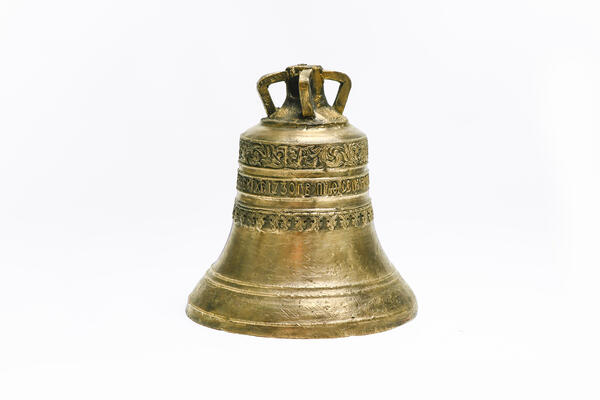
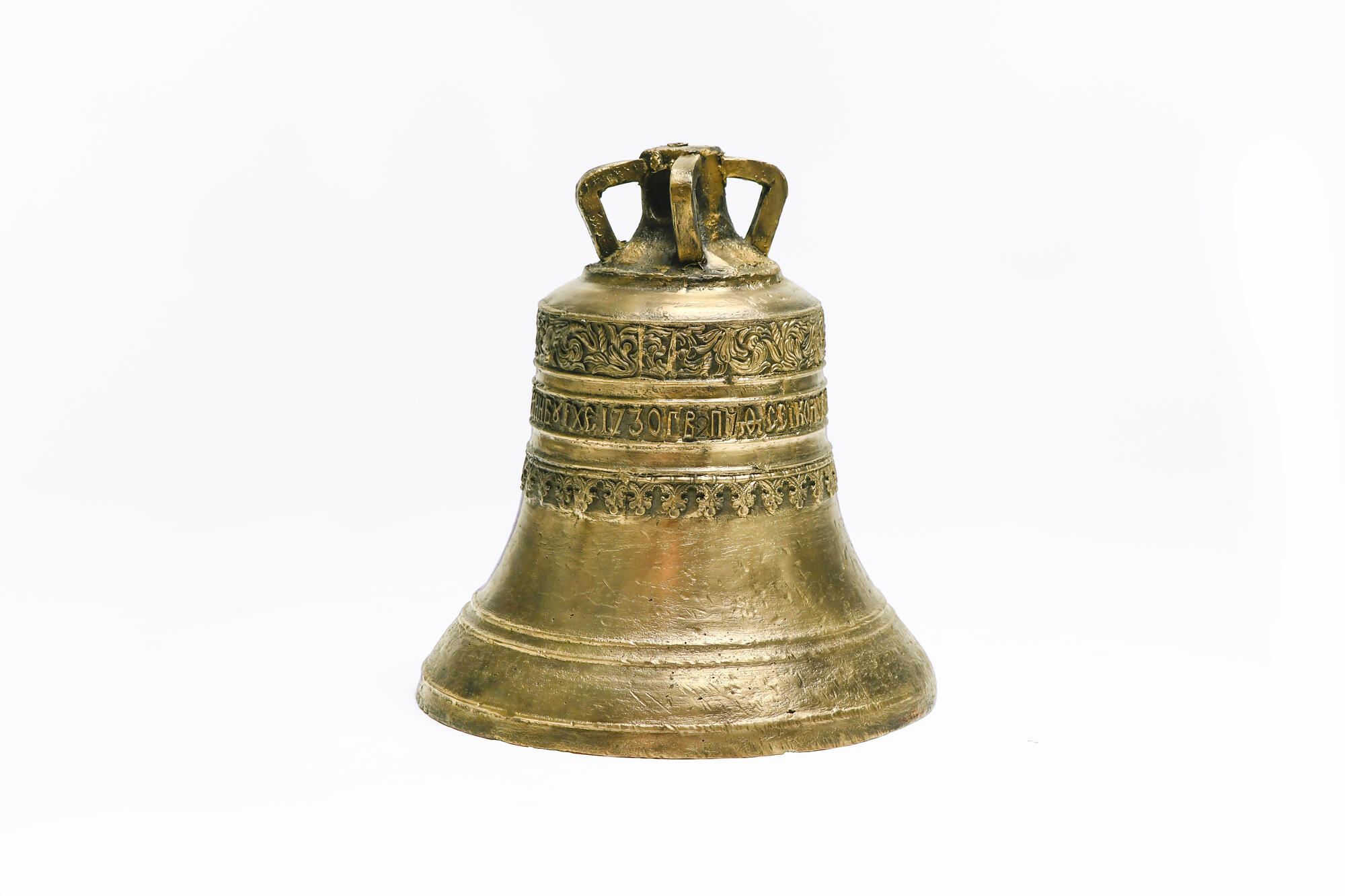
The bell from the exposition of the Bishop’s House was molded in the Urals, where since ancient times copper production has flourished. This product is relatively small: its height is only 45 centimeters. On top there is a round hole for fastening, on the sides of it there are four additional loops.
 
The top of the body, the main part of the bell, is banded with a floral pattern of climbing stems. There is an inscription close to the middle which can be read only partially:
#5
This bell is cast from Siberia Polevskoy…1730.
#4
Under it is a border with a shaped edge in the form of trefoils. At the bottom there are two more ornamental bands, not as wide as the upper one.
 
Bell ringing was used in Russia not only during divine services. It warned of fire, floods and enemy attacks. It was used to measure time, to gather people for assemblies, and to welcome honorable guests.
 
Among the church bells, there were four main, or canonical, bells. Church bell signalized the beginning of a service. A death knell was a funeral bell, which expressed sorrow for the deceased. The chime was played on all the bells in turn from the largest to the smallest ones. The festive bell ringing was the most complicated of all these types — it had a complex rhythm and many variations, depending on the occasion for which it was rung.
 
Bells were cast from a mixture of tin and copper; it was believed that such an alloy gave the clearest and loudest sound. The shape of the dome and the thickness of the side walls were also chosen so as to provide a strong, long and beautiful ringing. The outer walls of the bell were covered with gold or silver, ornamented with relief images of kings or saints, scenes based on historical events. Spiritual inscriptions and texts of prayers were also placed there.
 
Many folk signs and beliefs were connected with bells. Their ringing was believed to drive away evil and predict the weather: clear sound meant a sunny day, dull sound meant bad weather. If a bell broke, it was perceived as a sign of great misfortune: a future war, epidemic, or natural disaster.
#3
View in the State Catalogue
read morehide
00:00
00:00
1x

Bell

Creation period
1730
Place of сreation
Yekaterinburg
Dimensions
45x36 cm
Technique
casting
0
Point your smartphone camera to open in the app
Share
VkontakteOdnoklassnikiTelegram
Share on my website
Copy linkCopied
Copy
Open in app
To see AR mode in action:
  1. Install ARTEFACT app for 
  2. iOS or Android;
  3. Find and download the «Paintings in Details» exhibition
  4. Push the «Augmented reality» button and point your phone's camera at the painting;
  5. Watch what happens on your phone screen whilst you flip through the pictures.
 
We use Cookies
Cookies on the Artefact Website. We use cookies to ensure that we give you the best experience on our website. If you continue without changing your settings, we'll assume that you are happy to receive all cookies on the Artefact website. However, if you would like to, you can change your cookie settings at any time.
Learn more about useHide
Content is available only in Russian

X

Нашли опечатку?...

%title%%type%