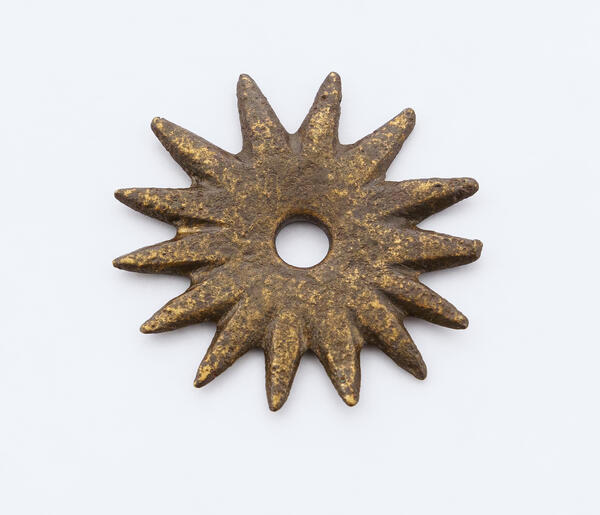
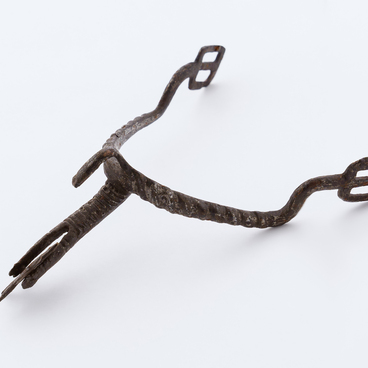
The exhibition of the State Museum-Reserve “Kulikovo Field” includes a spur rowel (wheel) that can be seen in the main hall “Rus and Horde: 14th Century Warfare”. This is a part of the equipment for a horseman from the 14th–15th centuries. The wheel has the shape of a 14-pointed star and is made of non-ferrous metal. It was modified using a file.
A spur is a device used to control a horse that was attached to a rider’s boot. It had the shape of an arc curved following the heel and either a spike or a wheel (rowel) at the end.
According to archaeological findings, the first spurs appeared in the Balkans in the 5th century BCE, before stirrups were invented.
The rowel on display in the museum is a part of a wheel spur that was considered the most advanced design in the Middle Ages.
In medieval European heraldry, the wheel spur is a highly significant symbol. It is because spurs were originally an integral part of a knight’s equipment, and they were awarded to those who were initiated into the knighthood. This symbolized the new knight becoming a horseman.
The heraldic spur is typically depicted as quite a large rowel on a smaller background of arches. In 1539, the Papal See created the Order of the Golden Spur, which was awarded by the Pope himself. Recipients of this order received both knighthood and hereditary nobility, and the badge of the order featured a Maltese cross coated with white enamel, with a golden wheel spur on it.
Most likely, there was also a special attitude towards spurs in Russia. Therefore, among the archaeological material, many artifacts are richly decorated with gold and silver. In addition, in the “Typographic Chronicle”, when describing the battle on the Shelon River, which took place on July 14, 1471, the attack of the Novgorod coalition began with the Moscow commanders spurring their horses.