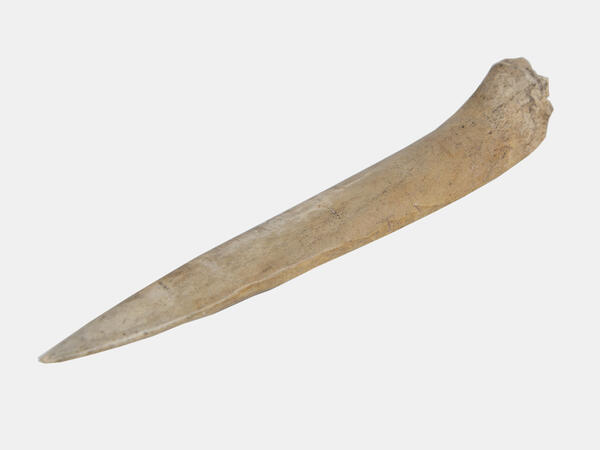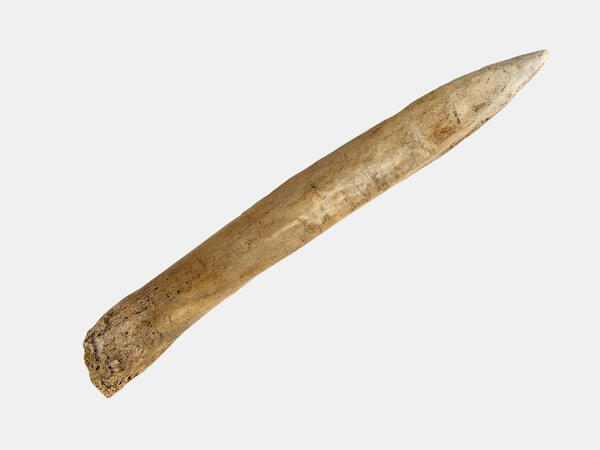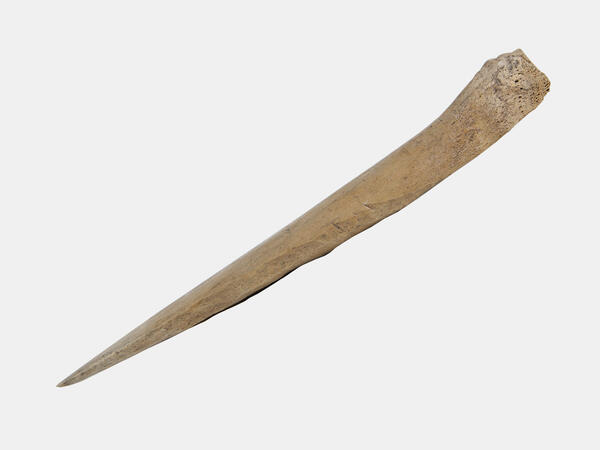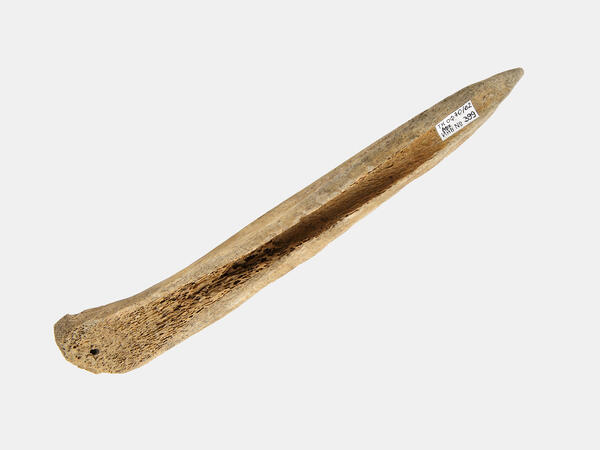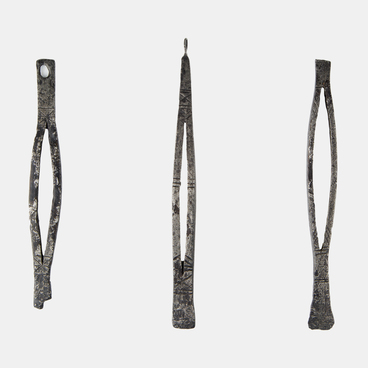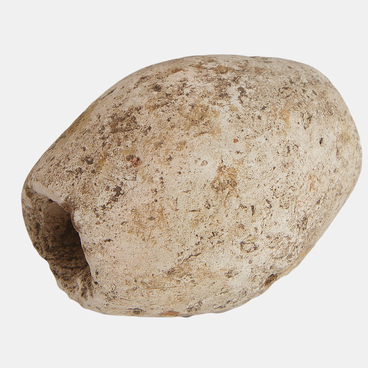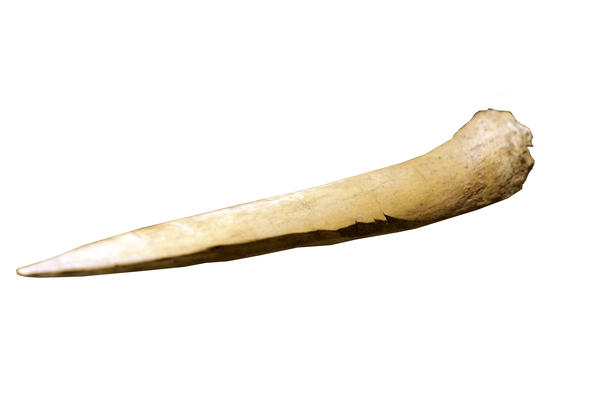
A kochedyk is an awl for weaving bast shoes, as well as making nets and bags from bast and birch bark. This is one of the oldest tools known since the Stone Age. Its name has several variations: kochetyk, kochetok, kotochig, kotochik. According to one version, it is based on the word “kochet”, which in the Proto-Slavic language meant a “hook”, according to another it originated from the words meaning “weave” and a “wooden handle”.
Kochedyks were made from ribs and split tubular bones of large animals. The softened bone that had been boiled in sour milk or sorrel decoction, was cut with a knife, polished and a hole was drilled to fasten the bone to the handle.
An iron kochedyk on a wooden handle was less common. It looked like a small, weakly curved sickle or a thick, curved awl. The length of the kochedyks averaged from 14 to 23 centimeters, but some instruments were over 30 centimeters long.
Weaving bast shoes took place in several stages and began without a kochedyk. First, people wove the heel, then the sole, and then the “head” of the bast shoe. When the sole was long enough, it was bent upward and the ends of the bast were woven together, forming the second, outer layer of the bast. It was at this stage that the kochedyk was needed.
The kochedyk was used to lift the loops, pass the loose ends through the loops and lower. There was even a Russian tongue twister describing this process. The kochedyk also helped repair bast shoes when the top layer wore out. The worn-out outer layer was replaced by new strips and a kochedyk was used to insert them. Peasants had a name for this process — “picking up, ” but it was believed that only poor people who could not afford new bast shoes resorted to “picking up”.
To make one bast shoe, seven strips, each two meters long, were required. The width of one strip was equal to the width of the thumb on the hand of a man who himself prepared the bast and wove bast shoes. For weaving, craftsmen used the smooth part of a linden trunk, without defects along the entire length, so they chose smooth, tall trees.
Often, after the loss of bark suitable for weaving, the tree stood with a bare, “stripped” trunk. This is reflected in the Russian language in the form of a figurative expression meaning “to take away everything there is.”