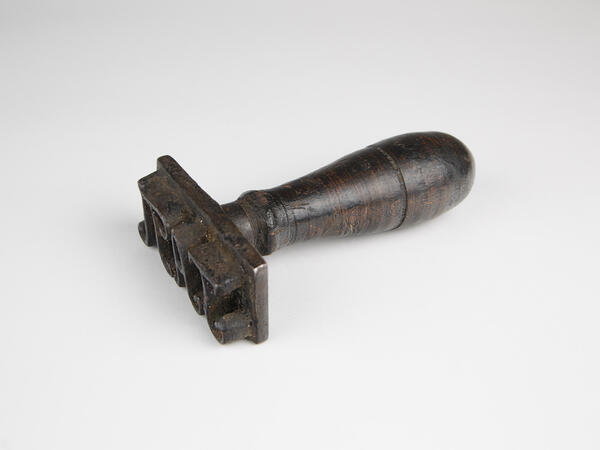
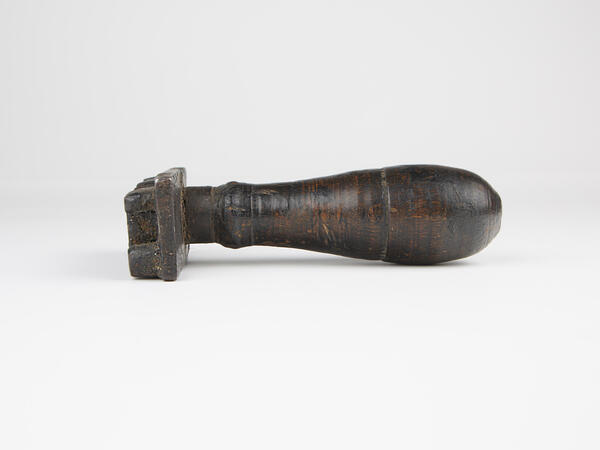
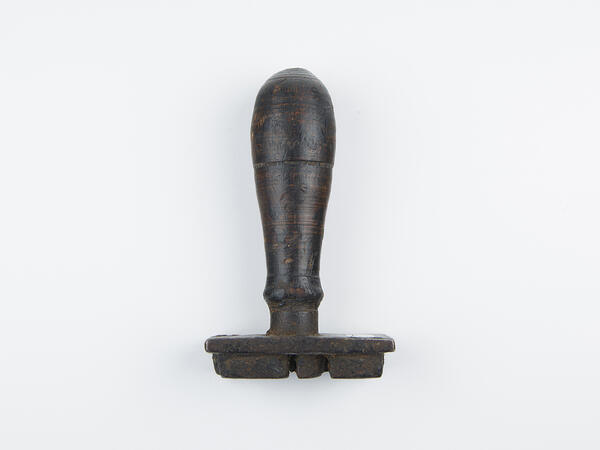
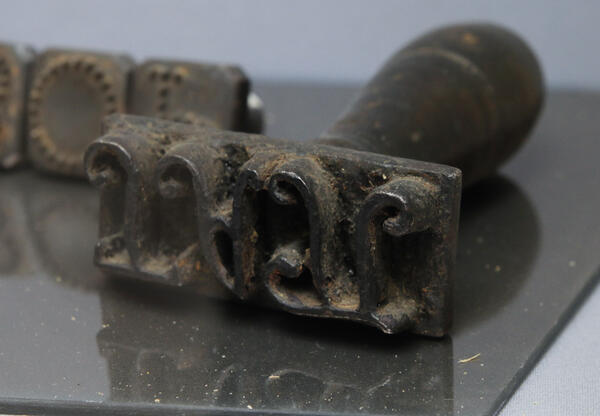
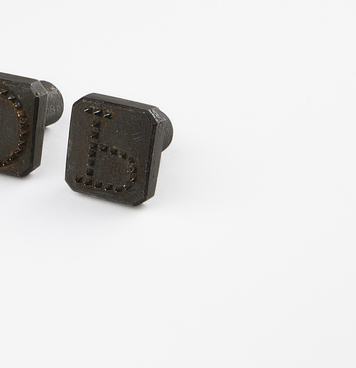
The branding iron was an instrument of corporal punishment for serious crimes. This method of punishment was mentioned at the end of the 14th century. Branding was used mainly for those charged with offenses against someone else’s property, that is, for thieves. The purpose of branding is to separate criminals from civilians and prevent escapes.
The tradition of branding criminals has been practiced by many peoples. Russia adopted the custom of branding criminals from Byzantine law and the Tatars. It was mentioned for the first time in the Charter of Dvina Land of 1398, where it was established that the third theft was punishable by death and added: “And every criminal shall be marked.” By decree of February 5 (16), 1705, Peter I introduced a new way of branding for all those accused of “tatba [serious crimes] and robberies and all sorts of theft” and ordered “to rub those spots with gunpowder repeatedly and thoroughly so that those spots on the thieves were prominent until their death.” In the early 19th century, convicts began to be branded. This procedure was obligatory until a decree was issued abolishing corporal punishment. Criminals received marks in the form of letters on the shoulder blade, forearm or face. Judging by the brandings, one could tell whether a person had escaped from hard labor, and if they did, then it was possible to say how many times. Since many exiles made attempts to escape repeatedly, the expression “there is no place to put the marking” appeared.
The word “tat” has several meanings: “robber”, “thief as a state criminal”, and “murderer”. Just like with livestock, this brand was burned onto the shoulder of a person who was convicted of robbery. In practice, various branding irons were used to apply the stigmas. In 1754, this resulted in the Governing Senate deciding “to make as many branding irons as necessary for the justice board and to send them to all governorates, provinces and cities, so that they were equal everywhere.” In the area where the brand was applied, the skin was pierced with red-hot needles and rubbed with a special solution containing gunpowder and ink, thus giving the person a tattoo they would wear for the rest of their lives. In Russia, branding was finally abolished in 1863.