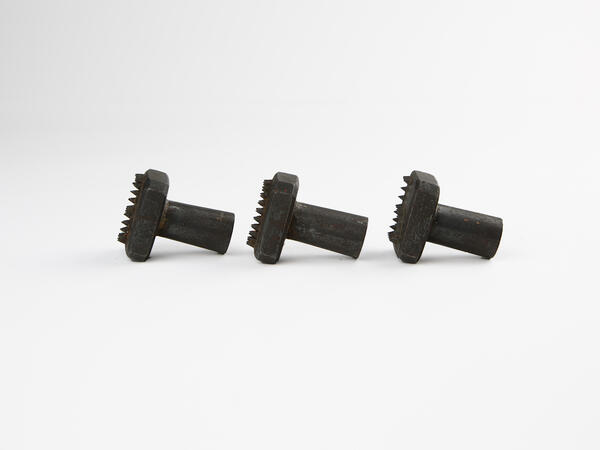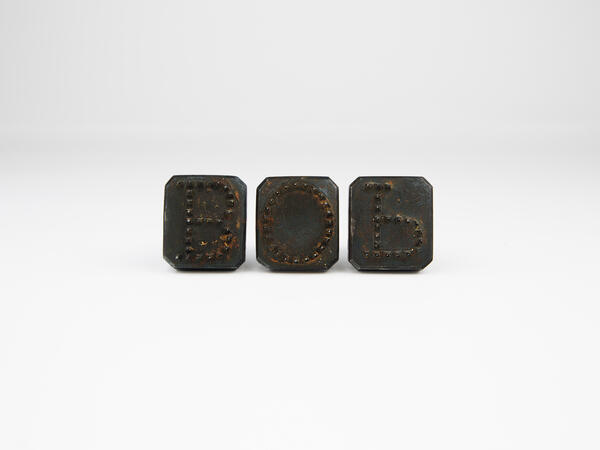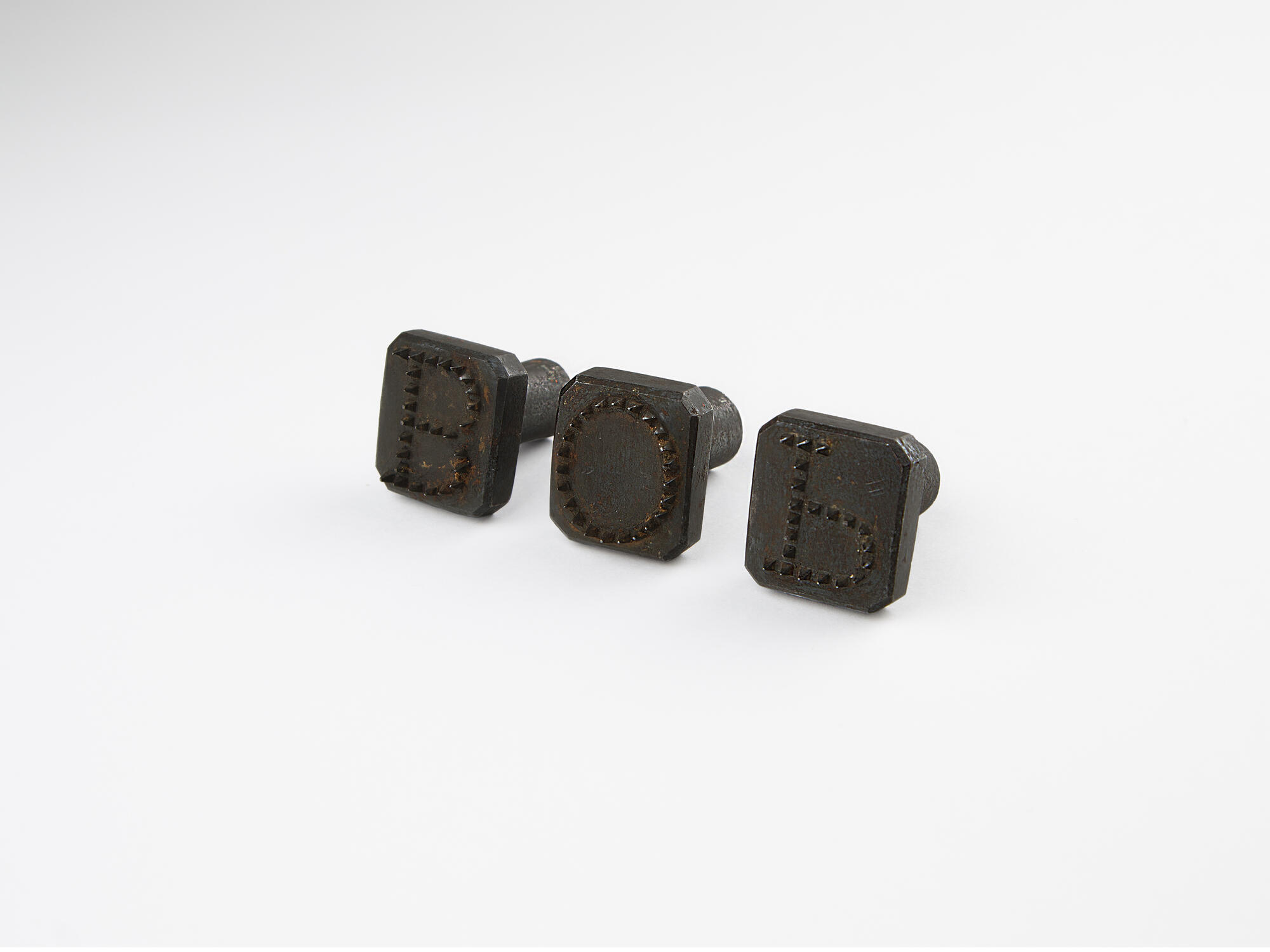


The exhibition of the Historical and Memorial Museum of the Demidovs presents a branding iron dating back to the beginning of the 19th century. The branding of criminals implied the application of permanent markings on their bodies in the form of emblematic images or initial letters indicating the crime committed or the sentence passed.
The history of branding goes back several thousand years. The Romans burned the letter “F” (Latin fugitivus — “fugitive”) on slaves who were on the run, and the stigma was also imposed on criminals convicted of working in the mines. Constantine the Great ordered that brands be applied to the arms, shoulders and calves, but not to the face as it was created in the image and likeness of God. In the Middle Ages, the branding of criminals was extremely common and supported by canon law and inquisitorial practices. In Switzerland, blasphemers were branded with red-hot iron on their lips. In France, the tradition of branding convicts on the right shoulder with the letters “TF” (“travaux forcés”, meaning penal labor) was preserved even in the Penal Code of 1810 and abolished only in 1832.
Russia adopted the custom of branding criminals from Byzantine law and the Tatars. It was mentioned for the first time in the Charter of Dvina Land of 1398, where it was established that the third theft was punishable by death and added: “And every criminal shall be marked.” The next time branding was mentioned in legislative acts only in the Decree of Tsar Mikhail Feodorovich issued on February 10, 1637, wherein the death penalty for coin forgers was replaced with a whipping and life imprisonment, and for identification, these people were branded with the word “thief” on their cheeks so that they were “notable”. In 1754, a new form of branding was prescribed: the letter “V” was burnt on the forehead, and the cheeks — with letters “O” and “R” (in Russian “vor” means “thief”). In practice, various branding irons were used to apply the stigmas, as a result of which the Governing Senate decided “to make as many branding iron as necessary for the justice board and to send them to all governorates, provinces and cities, so that they were uniform everywhere.”
From the times of Peter I, brands were applied via special stamps with steel needles bundled into letters. These needles would pierce the skin and produce wounds. Until 1846 they were rubbed with gunpowder to ensure permanence, and after that — with a special solution invented by the medical council. In Russia, branding was finally abolished in 1863.