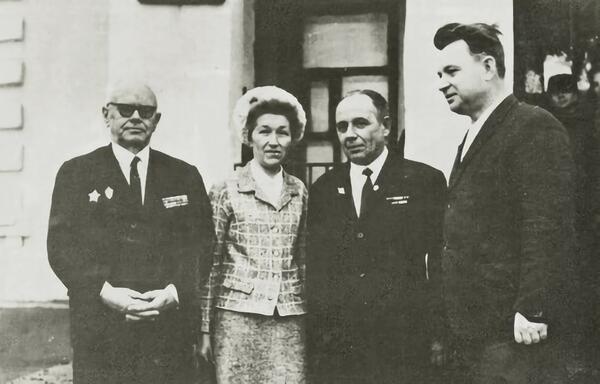
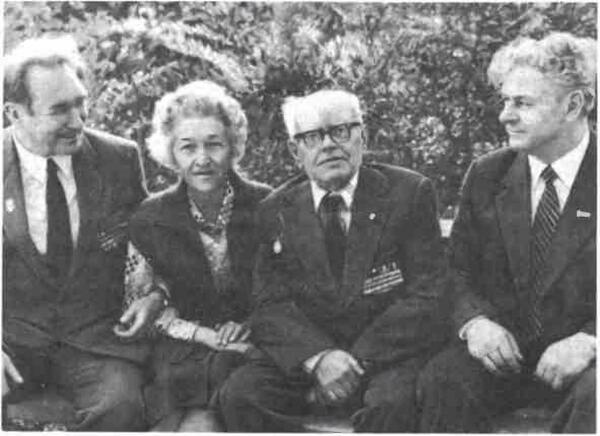
My meeting with Dmitry Nikolaevich Medvedev remains especially vivid in my memory. Picture this: a partisan camp, hushed voices, patrols on alert, the constant tension of imminent combat — and then a man strolling in as if carefree. I knew it wasn’t bravado. We had worked together for years in the Cheka in Ukraine back in the 1920s. Dmitry Nikolaevich had actively fought enemies of Soviet power in the Yekaterinoslav region (now Dnipropetrovsk Oblast), participated in the liquidation of White Guard bands, and uncovered and neutralized agents of foreign intelligence services.
‘Dmitry Nikolaevich!’ I shouted, forgetting all caution.
Medvedev didn’t recognize me at first, even though he had been told that his former colleague Kochetkov would soon welcome him into the task force behind enemy lines. With my overgrown beard and railroad worker’s uniform, I hardly resembled the young man he had known from operational meetings.
Dmitry Nikolaevich proposed merging our two independent groups into a single reconnaissance detachment. We reported our decision to Moscow, and the Center approved it. Thus, a unified detachment under D.N. Medvedev’s command was formed from the two operational groups.
Our primary mission remained intelligence gathering — a task whose success depended on every scout and on the collective effort of the entire unit. And here, one cannot remain silent about our Commander Dmitry Nikolaevich Medvedev and Commissar Sergei Trofimovich Stekhov — their exceptional skill in directing the detachment’s reconnaissance, combat, and propaganda activities. Even in the most dire circumstances, they never lost their composure. They always found a way out of seemingly hopeless situations and inspired the fighters with their words. Thanks to them, the unit not only fulfilled its missions successfully but also maintained strong ties with the local population <…>.
They obtained vast amounts of crucial intelligence, risking their lives hour by hour, day by day. Many residents of towns and villages in the Rovno region — and even most of the foresters whom the Nazis had armed to fight partisans — became our steadfast allies <…>.
Many of these heroes never lived to see Victory Day. Yet their courage and unwavering loyalty to their sacred duty never faded — and will never be forgotten by grateful descendants.