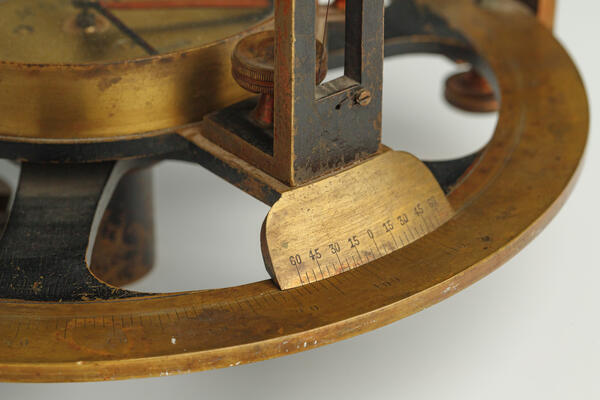
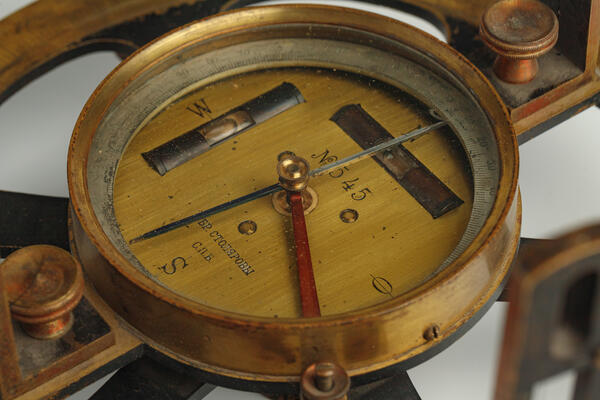
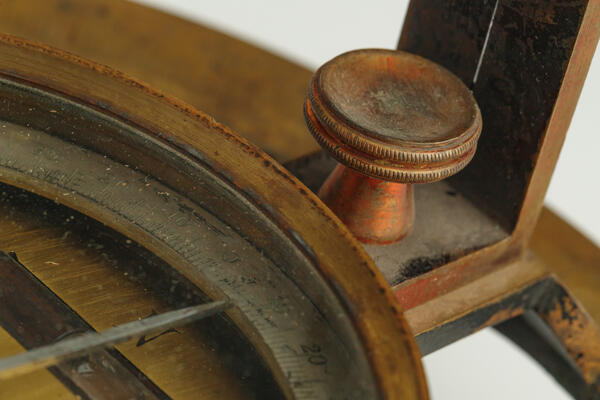
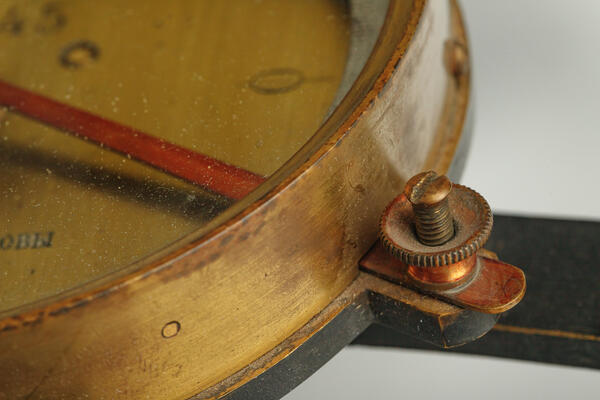
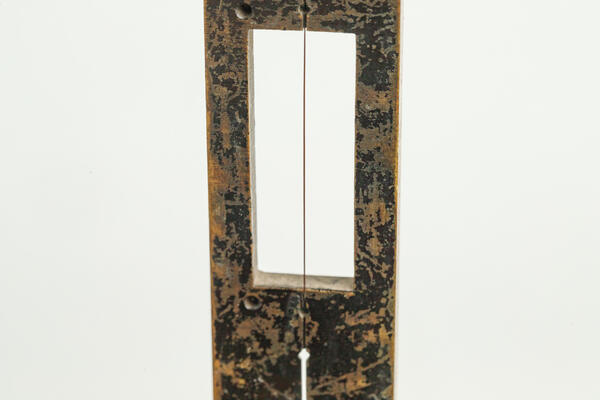
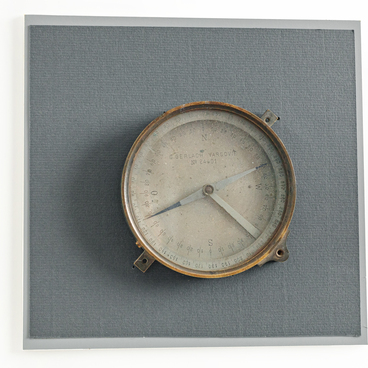
The Museum of Intelligence Officer Nikolai Kuznetsov houses an astrolabe, a device for measuring horizontal angles. A classical astrolabe helped to determine the position of celestial bodies in the sky.
A version of an astrolabe for land surveying was developed by the Flemish scholar Gemma Frisius in 1533. He proposed using triangulation — a method of measuring angles to visible landmarks and then calculating distances mathematically — to create accurate maps. For this purpose, Frisius designed a specialized tool: a horizontal circular plate marked with an angular scale and fitted with an alidade (a sighting rule), unlike traditional vertical astronomical astrolabes.
In Russia, the term “astrolabe” came to denote this type of geodetic angle-measuring instrument. The first such devices were brought to the country in the early 18th century by decree of Emperor Peter the Great. These instruments were actively used by land surveyors to map the boundaries and dimensions of land plots during cadastral and topographic surveys.
By the beginning of the 20th century, these “astrolabes” had been superseded by more advanced theodolites, capable of measuring angles in both horizontal and vertical planes. Nevertheless, simplified versions continued to be produced for educational purposes, as they clearly illustrated the fundamental principles of geodetic measurement.
During field practice at the Talitsa Forestry College, the future intelligence officer Nikolai Ivanovich Kuznetsov — like his fellow students — gained hands-on experience with this instrument. It was an indispensable tool for completing geodetic assignments, from mapping terrain to establishing survey lines.
Kuznetsov excelled in his studies. Subjects such as geodesy and topography came easily to him, and the practical skills he acquired would later prove invaluable in his intelligence work. In addition to operating measuring instruments, students mastered forest inventory, cartography, and the basics of land management — disciplines that demanded precision, attention to detail, and analytical thinking.
One such instrument, which served multiple generations of students, was donated to the museum by Talitsa Forestry College on September 17, 1979. Today, it holds an honored place in the collection, offering visitors a tangible connection to the tools once used by young Nikolai Kuznetsov as he mastered the foundations of forestry and surveying.